Article Summary
- BMW's S68 replaced the N63 as the brand's sole V8, and unlike previous engines, it's shared across M, M Performance, Alpina, and even Land Rover applications.
- Power ranges from 523 hp in the X5 M60i up to 630 hp in the Alpina XB7, with the same 4.4-liter twin-turbo block underneath every variant.
- The Defender OCTA's 626 hp S68 is the most unusual application — a proper BMW M engine in a British off-roader, complete with dry-sump lubrication.
BMW’s S68 is a 4.4-liter twin-turbocharged V8 — and it’s now in more places than you might expect. When BMW replaced its long-running N63 with an all-new engine in 2022, it made an unusual call: build only the M-division version, the S68, and use it across the board. So therefore, we got one engine shared between a $90,000 X5 and a six-figure M car. The result is a group of vehicles that range from a proper M Competition to a British off-roader, all drawing from the same 4.4-liter well.
Here are the five production cars currently running the S68.
BMW X5 M60i (G05)
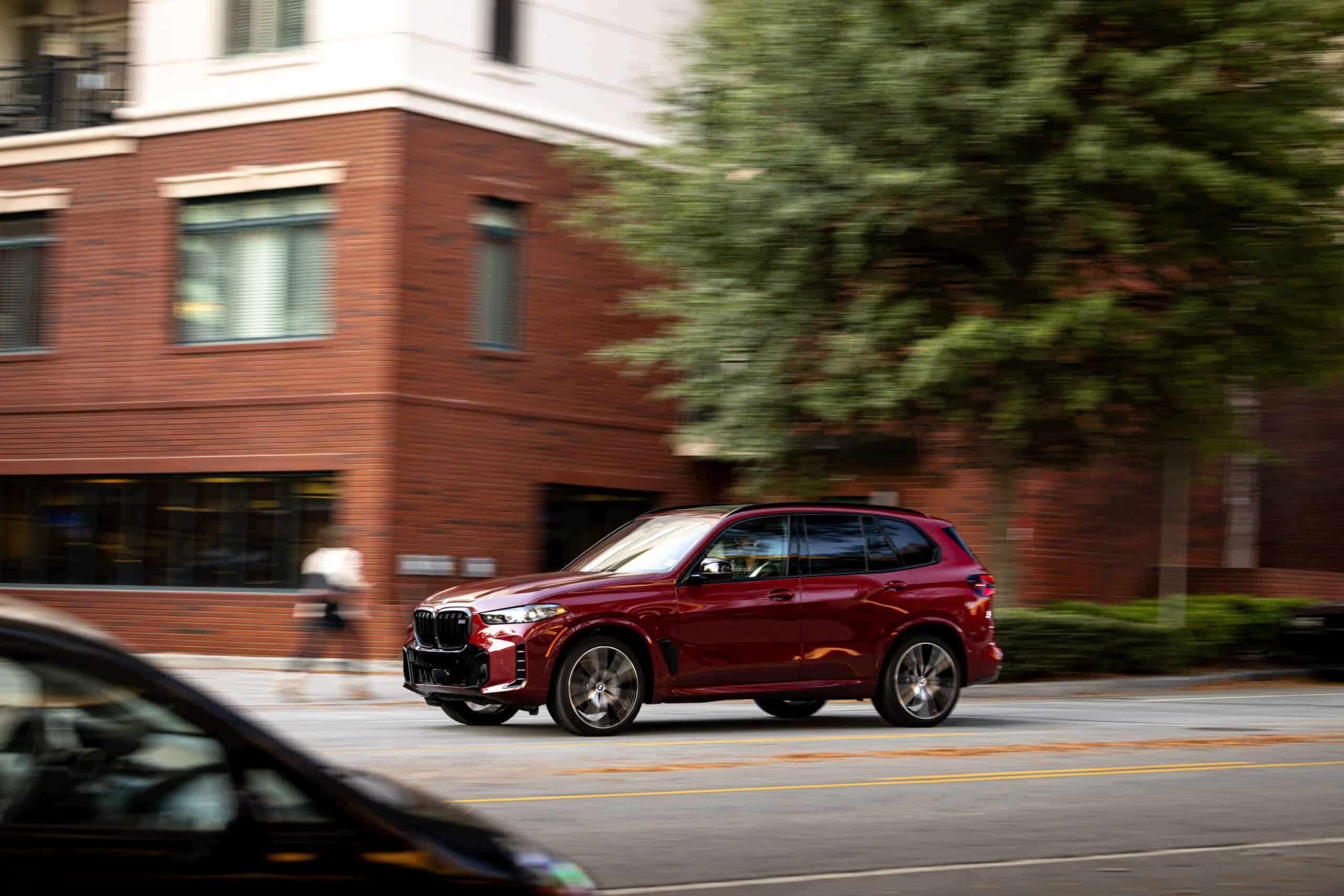
This is where the S68 started, and its existence here still feels a little strange. The X5 M60i — an M Performance model — was the first vehicle on sale with a genuine M-division engine under the hood. The G05 X5 M60i gets the most conservative S68 tune in the lineup: 523 horsepower and 553 lb-ft of torque, with 0-60 arriving in 4.3 seconds.
The mild caveat is that the S68 in M60i trim is not making M-tier numbers. The S63 it replaced in the X5 M put out 617 horsepower. Calling a 523-horsepower tune an M engine and installing it in a car that wears M badging on the kidneys but is not, in fact, an M model is the kind of marketing nuance BMW has gotten very good at. That said, the S68’s 48-volt mild-hybrid integration makes it noticeably smoother through the rev range than the N63, and the torque delivery from 1,800 rpm means the X5 M60i does not feel like it is working to keep up with traffic.
ALPINA XB7 (G07)

ALPINA took the S68 and did what ALPINA does: figured out how to get more out of it without the car feeling like it is trying too hard. In the G07 XB7, the S68 produces 630 horsepower and 590 lb-ft of torque — 107 horsepower up from the X7 M60i that shares the same platform, and available from just 1,800 rpm all the way to 5,600 rpm. The XB7 reaches 60 mph in 3.9 seconds, which is quick enough to feel absurd given the 5,986 pounds it needs to move. Top speed is 180 mph.
What makes the XB7 interesting is what ALPINA did beyond the engine number. Their specific cooling management and tune give the S68 a different character than it has in BMW’s own applications — broader and more effortless at the low end, less peaky higher up. That torque figure, matched with ALPINA’s Switch-Tronic gearbox tuning, means the XB7 does not feel like a large SUV being pushed hard. It feels like a large, but very smooth SUV that’s the perfect daily driver.
At $145,000 to start, it is also a significant financial commitment. The 2026 XB7 Manufaktur edition, marking the end of the model’s run, opens at $181,550.
BMW 760i xDrive (G70)
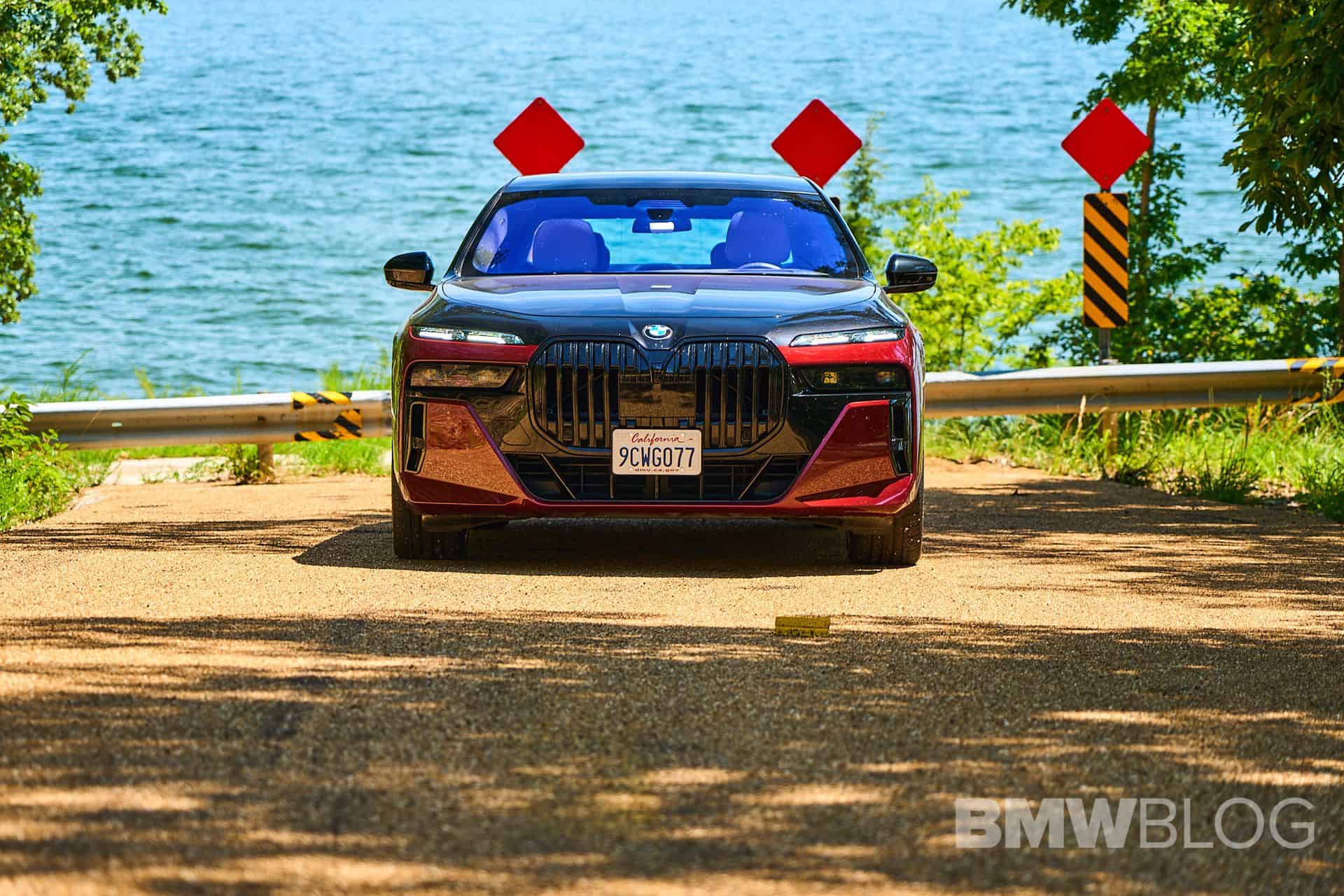
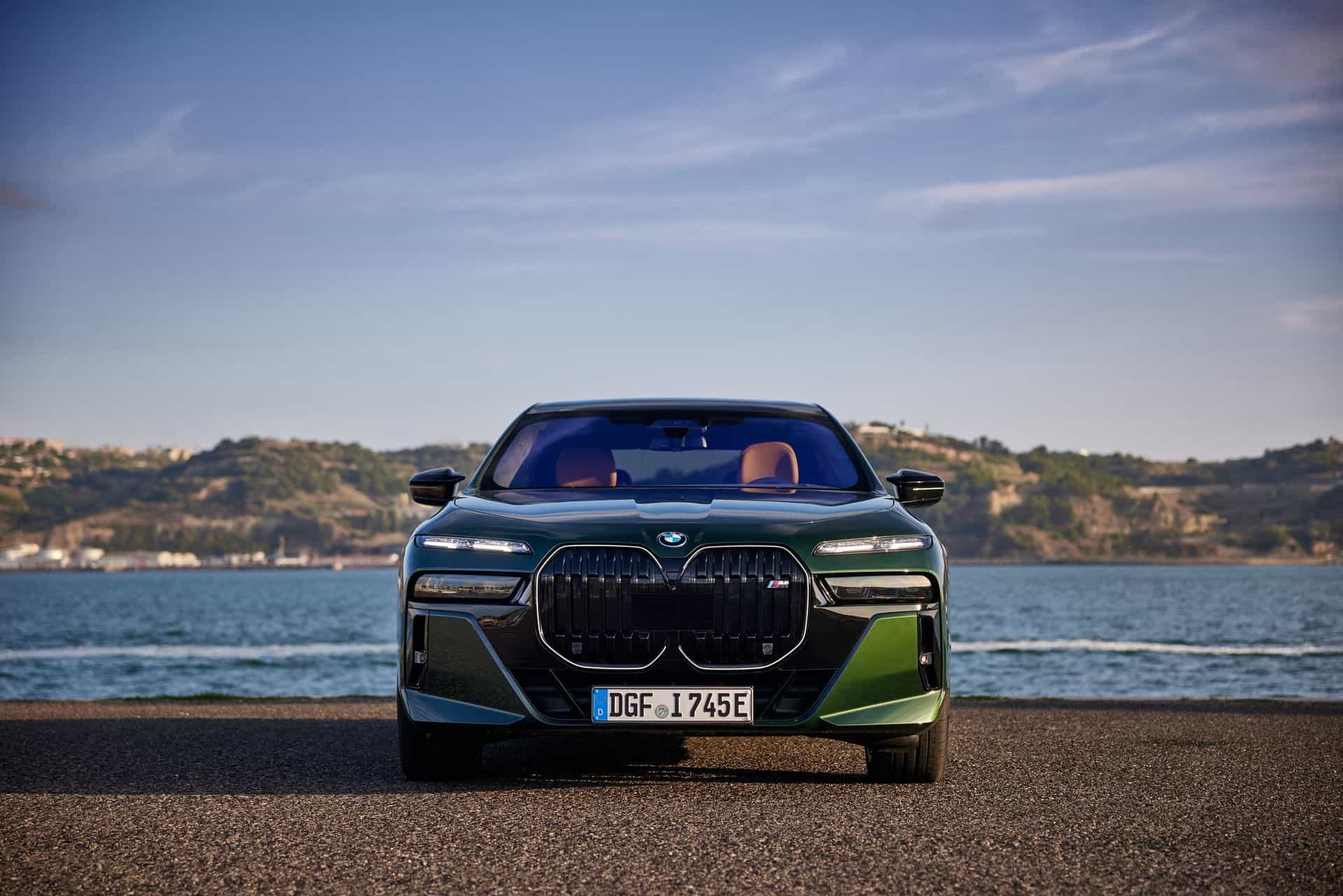
The G70 7 Series 760i is an odd member of this group because it sits on the exact opposite end of the character spectrum from the X5 M and the XB7. This is BMW’s flagship luxury sedan, not a performance vehicle, and yet it has an M-specification engine. The S68 in the 760i produces 536 horsepower and 553 lb-ft of torque — more than the X5 M60i, less than the ALPINA — and moves the 760i to 60 mph in 4.1 seconds.
What BMW was actually doing here is the more interesting story. The outgoing G12 7 Series had a V12 at the top. BMW dropped that engine, and rather than offer the range-topping V8 seven in a detuned state, they reached for the M engine instead. The G70 760i is, in that sense, the closest thing BMW has built to an M7 without actually building one. The S68’s smooth, broad power delivery works well in this application — the 760i does not feel like a track tool, but the engine provides genuine effortlessness that a detuned N63 or a comparable AMG inline-six would struggle to match.
Land Rover Defender OCTA

This one requires a moment of context. Land Rover and BMW have had a parts-sharing relationship for some time — Range Rover Sport SV was already running the S68 before the OCTA arrived — but seeing the Defender wear the same engine that goes in the M5 still lands differently than reading it on a spec sheet.
The OCTA’s S68 is tuned to 626 horsepower and 553 lb-ft of torque in standard running. In OCTA Mode with launch control active, it temporarily boosts to 590 lb-ft. Land Rover quotes 0-60 in 3.8 seconds for a vehicle that weighs just under 6,000 pounds and rides on 33-inch tires. The S68 here also runs a dry-sump lubrication system, which the M5 does not, presumably because a Defender gets tilted at angles that would starve a wet-sump system.
BMW X5 M Competition (F95)
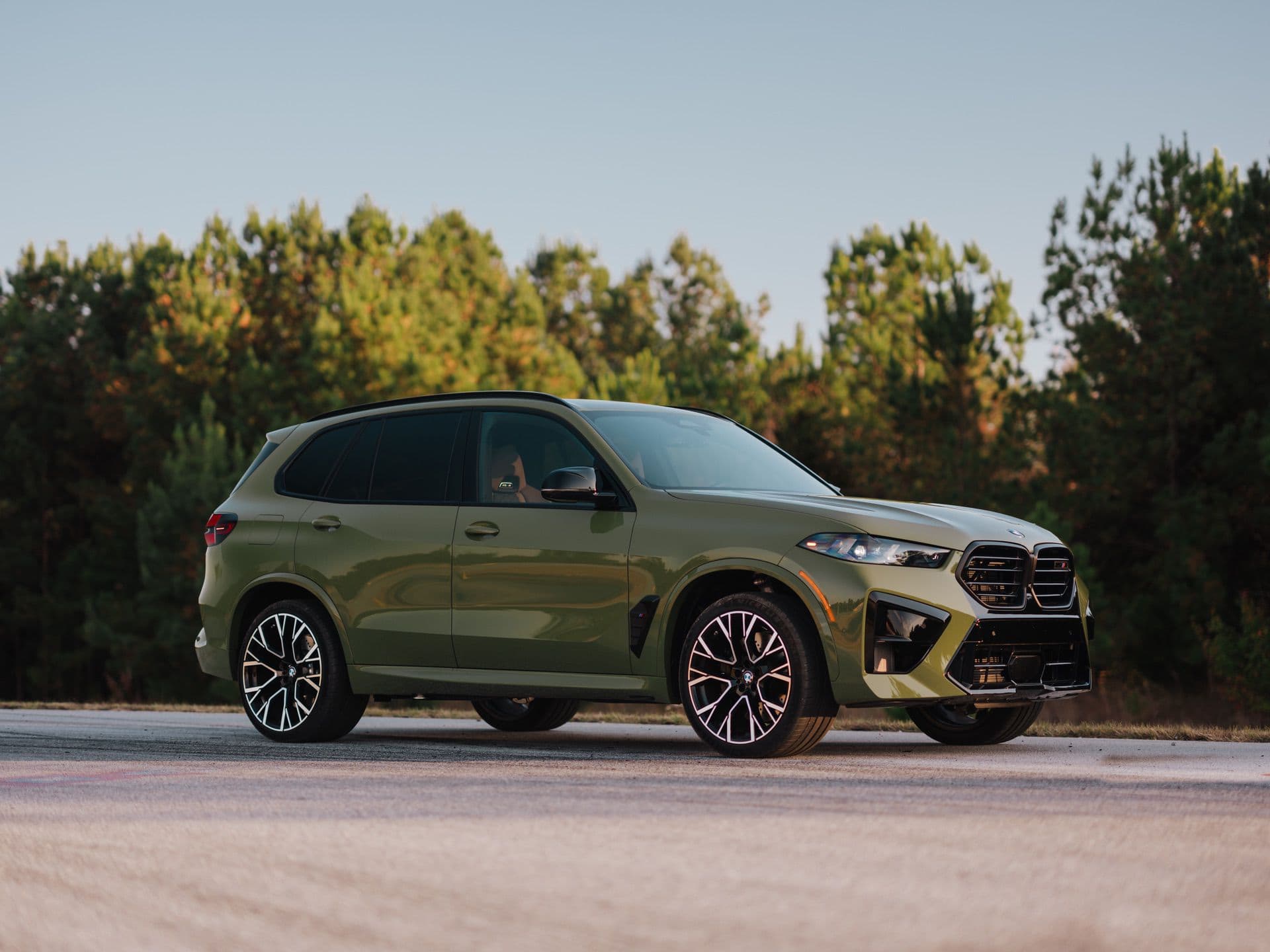
The F95 X5 M Competition is where the S68 is most at home. When the 2024 LCI arrived, BMW replaced the S63 with the S68 in its highest-output M application, tuning it to 617 horsepower and 553 lb-ft of torque. The 0-60 time is 3.7 seconds, making the X5 M Competition a tenth of a second quicker than the Defender OCTA.
The S68 in Competition spec is a different engine to drive compared to the M60i or 760i versions. The top-end is sharper, the transmission calibration is more aggressive, and the power does not plateau the way the lower-output tunes can feel on a wide-open-throttle pull. BMW also gave this version updated turbocharging with an electrically controlled blow-off valve, and a new air intake system — not just a software tune of the base S68.
The argument for the F95 M Competition over any other vehicle on this list is that it is the only one where the S68 is doing proper M work in a proper M context. The XB7 is closer to a grand tourer. The 760i is a limousine. The Defender OCTA is an off-road machine that happens to sprint. The X5 M Competition is, for better or worse, a sports car that got too large and never looked back.
The S68’s Unusual Position

The S68 is a genuinely well-engineered piece of kit: new crankshaft, electric VANOS (the first in any BMW), cross-pattern exhaust manifold, and a 48-volt hybrid motor integrated into the transmission rather than attached to the crankshaft. But what stands out most about its short production life so far is the breadth of vehicles it has ended up in. BMW’s decision to build one engine for everything may have been a business calculation. The result is one of the more versatile powertrain families the company has produced in years.