Article Summary
- BMW Group Q1 deliveries fell 3.5% to 565,780 units, with Europe up 3.1% as the only major region to grow
- The G45 X3 led all models with 18.5% growth, while MINI posted its sixth consecutive quarter of gains at 6.0%
- Global BEV share slipped from 18.7% to 15.5% as US and China subsidy cuts bit, though European EV order intake jumped over 60%
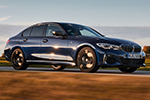
The BMW Group sold 565,780 cars in the first three months of 2026. That’s 20,337 fewer than the same period last year, a 3.5% drop. The BMW brand accounted for 496,006 of those deliveries, down 4.6% from 520,121 units in Q1 2025. Within that, the X family did the heavy lifting — as it has for years now.
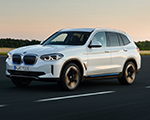
The G45 X3 was the standout, up 18.5% with 77,500 units across the X3/X4 lineup. That growth includes the early deliveries of the new BMW iX3, the first Neue Klasse model, which reached European customers in March and will launch in the U.S. this September.
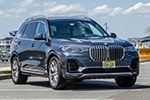
The X1/X2 family remained the highest-volume nameplate at 101,831 units, though that was down 4.4% from the prior year. The X5/X6 held roughly flat at 62,275 units combined, a 0.9% decline — practically steady in a quarter that saw several segments contract sharply.

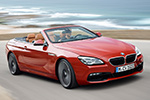
Where things got genuinely rough was in the sedan lineup. The 3/4 Series dropped 11.8% to 103,814 units. The 7/8 Series was down 16.5% to 11,269 units. The 5/6 Series fell 7.0% to 66,336. None of those declines are catastrophic in isolation, but together they signal that BMW’s traditional bread-and-butter models are facing real pressure — from pricing, from the shift to SUVs, and from a Chinese market that has turned decisively hostile.
MINI: 5 Quarters of Momentum, Still Going

MINI delivered 68,503 vehicles in Q1 2026, a 6.0% increase from 64,615 in the same period last year. That’s the sixth consecutive quarter of growth for the brand following its model lineup overhaul, and the trend is holding.
The Countryman and Cooper remained the top sellers. Both are now available with either an internal combustion engine or a fully electric drivetrain, and the EV variants are pulling their weight: MINI delivered 24,048 all-electric units in the first quarter, up 5.5%, with BEVs representing 35.1% of total brand deliveries. The MINI Aceman is gaining traction, and the new Convertible — with its admittedly anachronistic open-top formula — is reportedly impressing buyers enough to drive volume.
Rolls-Royce: Down 8%, and Cullinan Still Rules

Rolls-Royce delivered 1,271 cars in Q1 2026, compared to 1,381 in the prior year — a decline of 8.0%. The brand is guiding buyers toward order-specific production, so volume swings of this magnitude quarter to quarter aren’t unusual. The Cullinan remained the most requested model by a wide margin.
The quarter’s news from Goodwood was structural rather than volumetric: Rolls-Royce announced the Coachbuild Collection, with Project Nightingale as its debut. Only 100 examples will be built, fully electric. Whether that signals where the marque is headed or is simply a high-visibility proof of concept remains to be seen.
Electrification: Europe Grows, The Rest Retreats

The group delivered 87,488 BEVs in Q1 2026, down 20.1% from 109,513 a year ago. The all-electric share of total deliveries fell from 18.7% to 15.5%. Including plug-in hybrids, the electrified share dropped from 26.9% to 23.4%.
The story splits sharply by geography. In Europe, BEV deliveries rose to 59,936 units from 58,761, with a 25.3% BEV share in the region — and order intake for electric models up more than 60% year on year.

In the US and China, the subsidy picture went the wrong direction. The US discontinued federal tax credits for electrified vehicles; China cut BEV incentives. Both markets responded predictably — buyers either walked away from EVs or moved down-market to brands with lower base prices. BMW’s China BEV volumes, already compressed by the competitive environment there, fell further.
BMW’s internal combustion demand, however, held up. Demand for petrol and diesel models was described as slightly above the prior year’s high level. That makes the technology-open strategy look prudent in retrospect, even if it drew skepticism when BMW first articulated it.
Markets: Europe Rescues The Quarter
Europe delivered 236,770 units, up 3.1%. Germany was particularly strong at 62,582 units, a 7.0% gain. The UK fell 2.2% to 46,922 — notable given the Financial Conduct Authority’s motor finance compensation scheme announced at the end of March, which will cost BMW’s Financial Services segment real money.
The Americas region posted 110,057 units, a 4.0% decline. The US specifically dropped 4.3% to 90,883 units. Some of that was BEV weakness; BMW says the ICE shortfall largely made up the difference, which is why the decline wasn’t steeper.
China was the wound that didn’t close. At 144,072 units, the China sales region was down 10.0% — painful, but the overall Chinese market contracted 17.5% in the quarter. BMW outperformed the market, which is the correct way to frame it, and the one BMW will use in every earnings call this year.
Korea was the standout within the Asia-Pacific, Eastern Europe, Middle East and Africa region: 21,297 units delivered, up 5.9%. BMW describes Korea as its fifth-largest global market, which says something about how the volume mix has shifted over the past decade.
What Q2 Needs To Show
The Neue Klasse launch is the most consequential variable for the rest of 2026. The iX3 just started deliveries in Europe in March; volume will ramp through the second and third quarters. The BMW i3 electric sedan will go on sale by the end of the year as well.
The full-year guidance calls for deliveries roughly flat with 2025’s 2,463,681 units, with an Automotive EBIT margin between 4% and 6%. Q1 came in at exactly 5.0%. That’s on plan — just barely — and the tariff headwind of roughly 1.25 percentage points in Q1 isn’t getting much worse for the rest of the year under BMW’s current assumptions. Whether those assumptions hold is the open question every automaker is sitting with right now.