Article Summary
- BMW confirms the new electric sedan will be initially available as the i3 50 xDrive.
- It will inherit the iX3's dual-motor, all-wheel-drive setup and 400-kW charging capabilities.
- Production in Munich starts in the second half of the year.
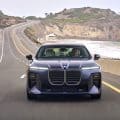
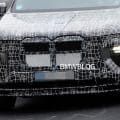
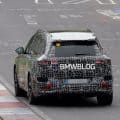
Hot on the heels of a teaser image released hours ago, BMW has some technical specs to share about the new i3 (NA0). Ahead of its world premiere on March 18, the electric sedan lets us in on some of its secrets. Well, the following numbers are hardly a secret for anyone who’s had a look at the iX3’s spec sheet.
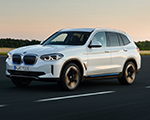
Indeed, the first-ever i3 sedan for global markets will inherit the dual-motor setup from its crossover sibling. BMW quotes an identical 463 horsepower and 476 pound-feet (645 Newton-meters) of torque. However, we’re told these are provisional numbers. Consequently, some changes could occur when series production starts in the second half of the year. Predictably, the i3 will be powered by the company’s sixth-generation eDrive tech with all-new motors and round battery cells.
The Gen6 battery will support 400-kW charging courtesy of the 800-volt electrical architecture pioneered by the iX3. BMW is keeping the range figure to itself for now, but we’re willing to make an educated guess. Given how sedans sit lower to the ground and have sleeker bodies, that should translate into more range than the higher-riding crossover.

The iX3 50 xDrive will go 805 kilometers (500 miles) on a single charge in the WLTP cycle. In the United States, it’ll go an estimated 644 kilometers (400 miles) before the battery is depleted. The i3 should trump these numbers, though probably not by much. Of course, that’s provided the sedan uses the same 108.7-kWh battery pack as the crossover.
Echoing the new iX3, the sedan will feature a Soft Stop function to guarantee the “smoothest stopping process in the history of the 3 Series, without jerks and brake noise.” It’s essentially the latest in regenerative braking, slowing the car down while also topping up the battery. In doing so, the brake pads and rotors are expected to undergo only minimal wear.

When the iX3 broke cover last September, BMW estimated that as much as 98% of braking would be handled by the regen function rather than the traditional brakes. It should be the same story for the i3 since it’s essentially the same car in a different body style.
The new i3 sedan goes on sale in Europe later this year and will arrive in the United States in 2027. Much like the iX3 lineup will grow to include multiple flavors, so will the sedan’s. We believe the i3 50 xDrive launch version will sit between the 40/40 xDrive and 50/50 xDrive variants.
An M Performance-labeled i3 M60 is likely in the pipeline before the (gasp!) electric M3 (ZA0) arrives late next year. At the other end of the spectrum, some markets might also get a base i3 20, although that hasn’t been confirmed yet.