Article Summary
- In LA commuting on 21-inch wheels and grippy summer tires, the iX3 was on pace for about 400 miles, slightly beating BMW’s 398-mile estimate.
- At a 400-kW IONNA charger, it charged from 10 to 80% in 24 minutes, three minutes slower than BMW’s claimed 21.
- It covered the 225-mile drive from LA to Las Vegas at a 78-mph cruise without charging and arrived with 30% left.
I have long been a skeptic of EVs, and I am not alone. For many people, electric vehicles have come with a lot of drawbacks that pushed them away from EV ownership. “What if I need to take a long road trip on short notice?” “What if I don’t have time to charge it?” “What if I can’t charge at home?”
These are all valid concerns. Philosophically, I believe a car should fit into your life, and the moment you have to start making a lot of concessions to your lifestyle to make up for your car’s shortcomings, you may need to think hard about whether that car is right for you.
But sooner or later, EV technology is going to progress to the point that most of the worries about range and charging go away, and electric cars inevitably become the better powertrain option. The new 2027 BMW iX3 makes a strong case that this moment has finally arrived.
I was lucky enough to spend 11 days with the iX3, and I drove it over 1,500 miles. Most of that time was spent commuting around Los Angeles, but I also took it on a 450-mile road trip to Las Vegas and back. I was one of the first people in the US to charge it at a 400-kW IONNA charging station and to collect charging and range data.
The first EV I ever drove was a 2014 i3 REx that I rented on Turo for a few days after coming back from an overseas deployment, before I picked up my car on the East Coast. I had no Level 2 charging at home, and in El Paso, where I was living, the charging network for non-Tesla cars was almost nonexistent back then. With only a 72-mile range and a trickle charger at home, my first EV experience wasn’t great (despite my absolutely loving the i3 as a car).
Ten years later, the iX3 blew me away with just how far the brand has come, and BMW is now leading the industry by making some of the best EVs at any price outside of China.
2027 BMW iX3 50 xDrive
Good
- 10-80% charge in 24 minutes
- About 400 miles of real-world range
- Excellent Highway Assist
Bad
- Unreliable electronic door handles
- Heavy, hot fixed glass roof
- Limited cabin storage
The Basics: BMW’s First Neue Klasse EV In The US
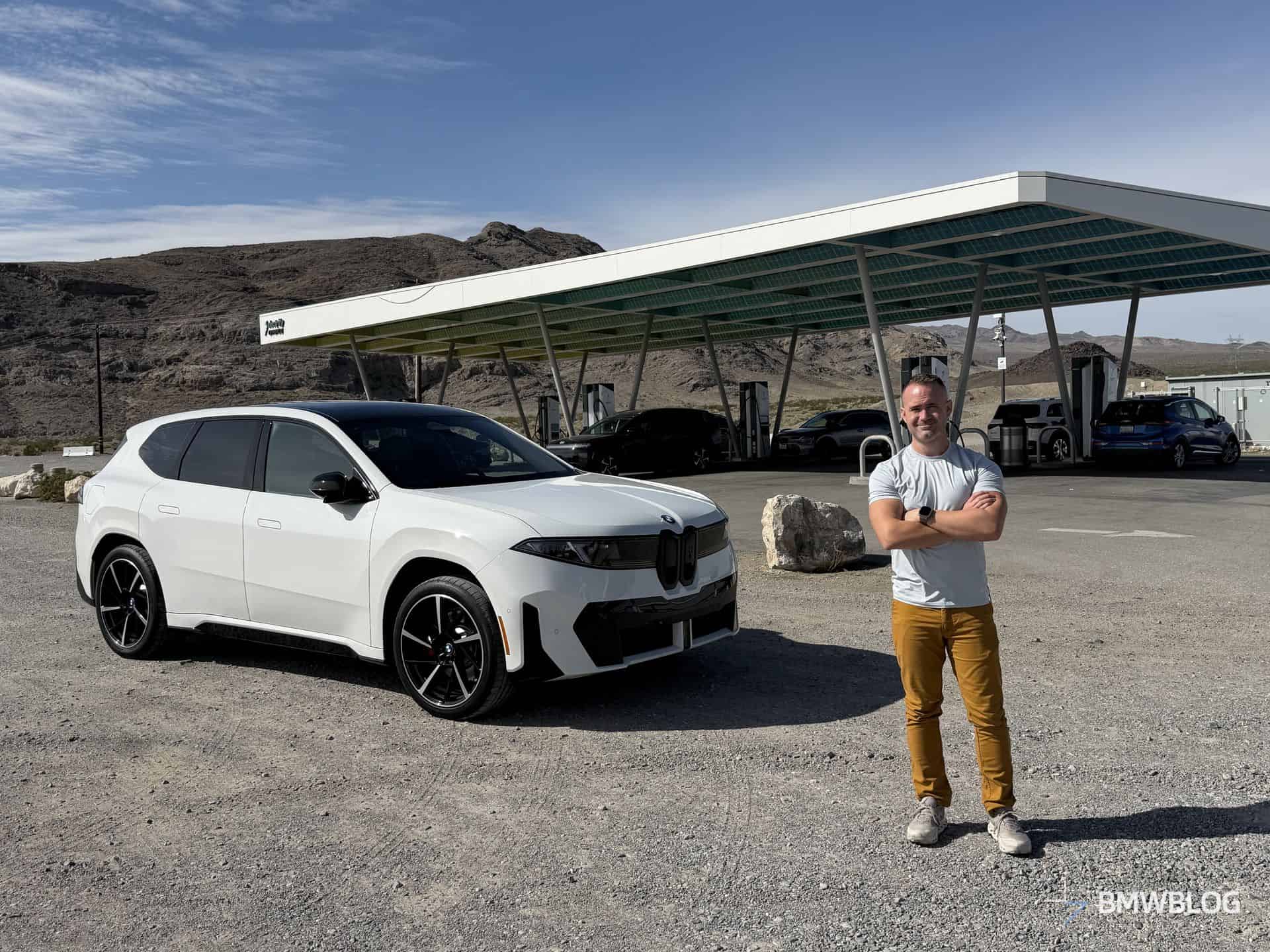
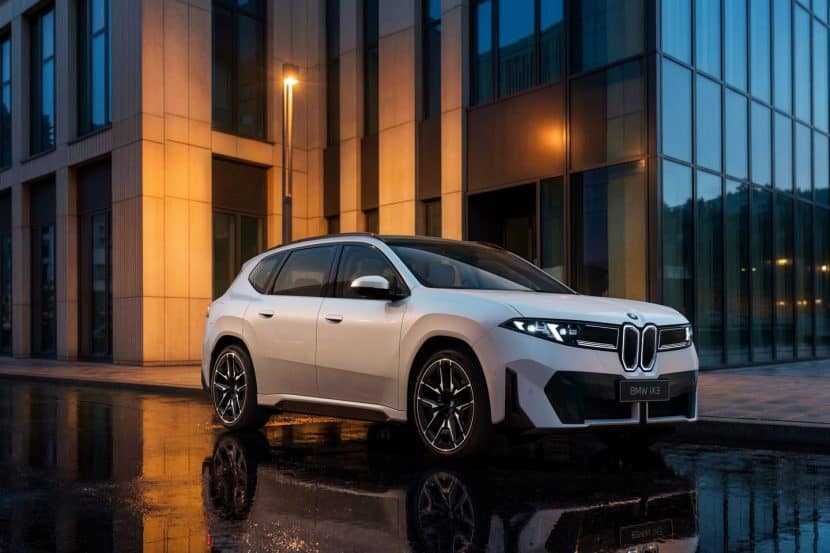
The BMW iX3 is the first of the brand’s Neue Klasse EVs to hit the US market. This is essentially BMW’s sixth-generation EV technology, and a major push not just to make competitive EVs, but to lead the way in creating some of the best electric cars on the market from any brand.
The iX3 comes with new electric motors and a new cell-to-pack battery architecture. Built around the new 4695 cylindrical cells, it yields a very large 112-kWh battery, 108 kWh of which is usable (a small buffer always exists to protect battery life and thermal performance). With the improved efficiency of the electrically excited synchronous motor (EESM) in the rear and the induction motor in the front, the iX3 is estimated to get 383 to 434 miles of range.
That figure depends on the wheel and tire combination, as tire compound, unsprung weight, and contact patch can all impact efficiency. My press car was equipped with 21-inch 1050M wheels and Yokohama tires with a 240 treadwear rating. This wheel and tire combo is estimated to give the iX3 398 miles of driving range.
LA City Driving And Commuting Efficiency
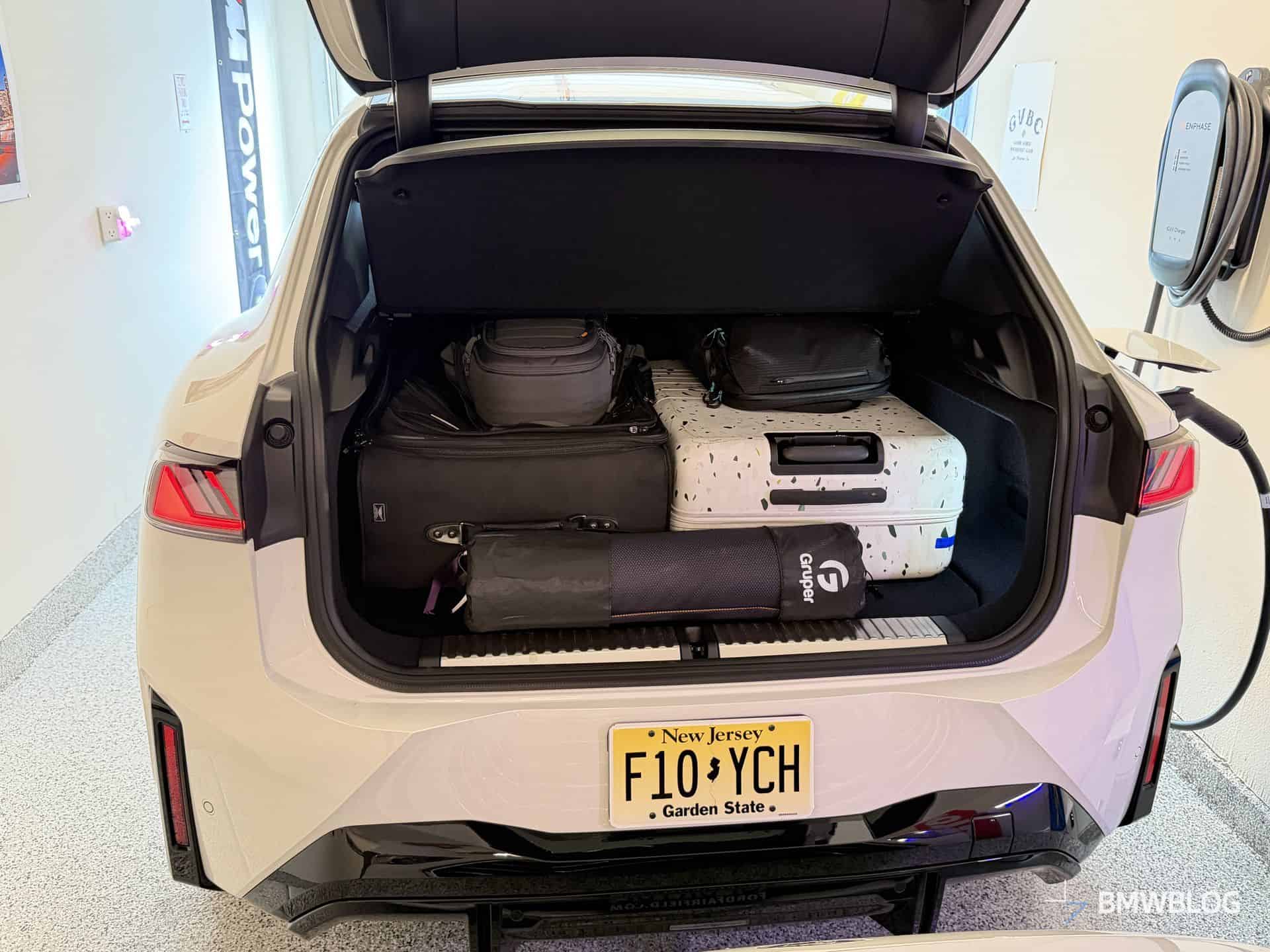
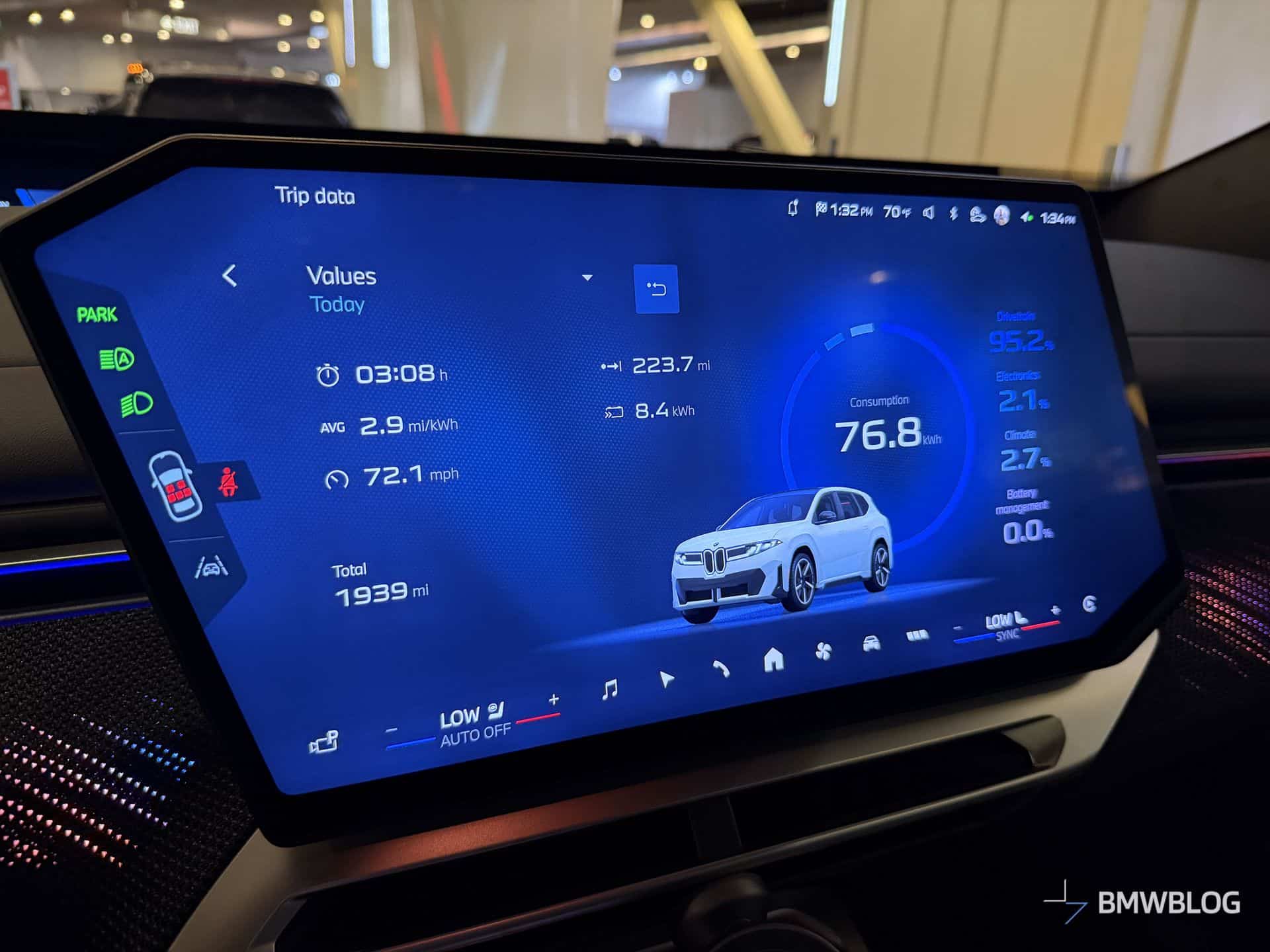
Before my work week began, I plugged the car into my garage’s Level 2 charger and charged it to 100%. Traffic was, as expected in this city, fairly busy, and most often the car was driving on freeways between 40 and 65 mph, with speeds going up to 80 mph in the express lanes. The driving was primarily done in the car’s “B” mode for one-pedal driving and maximum regeneration. The first day netted 4.6 mi/kWh on a 62-mile commute, and that dropped to 4.1 mi/kWh by the second day.
Over the course of 3 days, I drove 328 miles. The car still showed 18% battery remaining, with an estimated 72 miles of range, before we brought it to an Electrify America charging station. Unfortunately, I had a work meeting the next morning and needed to make sure I got there, so I wasn’t able to drive closer to 0%.
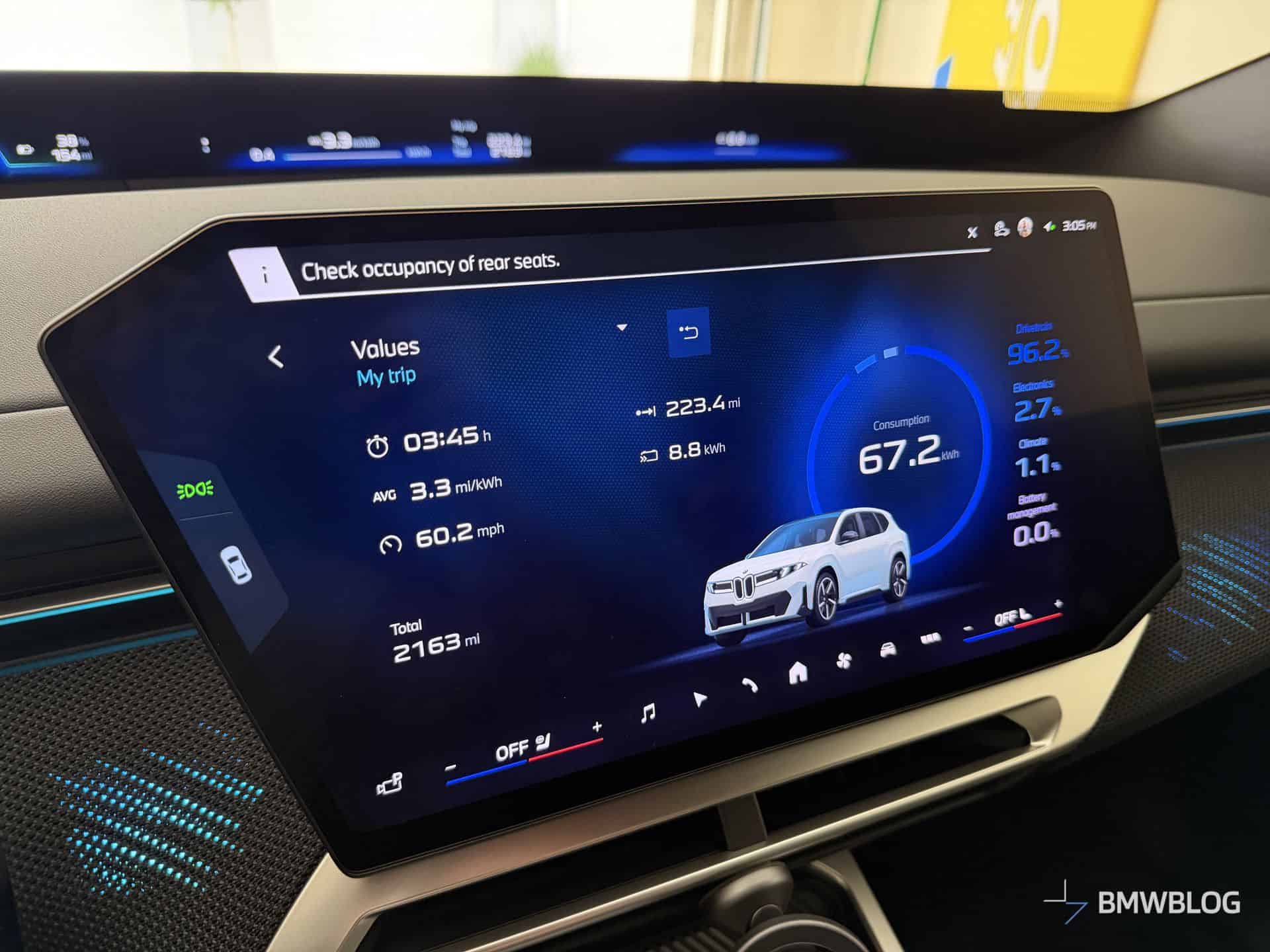
But this showed that the car was estimating it would achieve 400 miles of range, averaging 3.7 mi/kWh during those few days. That’s impressive given the car had extremely grippy summer tires with high rolling resistance, and it matched BMW’s claims nearly exactly.
What was most impressive was that I wasn’t trying to hypermile during those few days. I drove mostly in Personal mode (not Efficient), and when traffic permitted, I drove as many LA drivers do to make it to a dinner date on time. Beating BMW’s own range estimate without even trying, on one of the less range-optimized specs for the iX3, is quite impressive. This car is easily a 400- to 450-mile car per charge in any given week.
One Of The Fastest-Charging EVs In The US
What impressed me even more than the range was the charging performance. Realistically, most EV owners will rarely need to use a DC fast charger. They usually charge in their garage overnight, and that’s about it. But the concerns over the hassle and inconvenience of sitting at a charger, if home charging isn’t available or you’re on an extended road trip, are valid. This, along with range anxiety, is what deters many people from making the switch to EVs, but the iX3 seems to have melted both away.
My first charging test came at a 350-kW Electrify America station in a Walmart parking lot. We had just driven back from Beverly Hills, and I wanted a quick charge so that I could be as close to 0% as possible for a full 10-80% charge test at a 400-kW IONNA charger the next day.
Luckily, I had already updated my payment information in the My BMW app to enable Plug & Charge. You unlock the feature by syncing the My BMW app with your Shell Recharge app, and the car will then connect and begin charging automatically, with no additional steps, at Electrify America, Shell Recharge, and IONNA stations.
Plugging in at 17% state of charge (SoC), I wanted to see how much range could be added in 5 minutes, to simulate roughly the time it takes to fill a tank of gas. The iX3 is capable of 400-kW peak charging speeds, but what’s more important is the charging curve. You want the charge rate to stay high as deep into the battery pack as possible before it begins dropping due to thermal and battery chemistry limitations.
What was the result of the test? 30 kWh added in 5 minutes. The iX3 maintained over 300 kW the entire time, all the way to 42% SoC. That added nearly 120 miles of range in just 5 minutes, which is extremely impressive when you consider that Teslas max out at 250 kW and fall below 200 kW by 25% SoC.
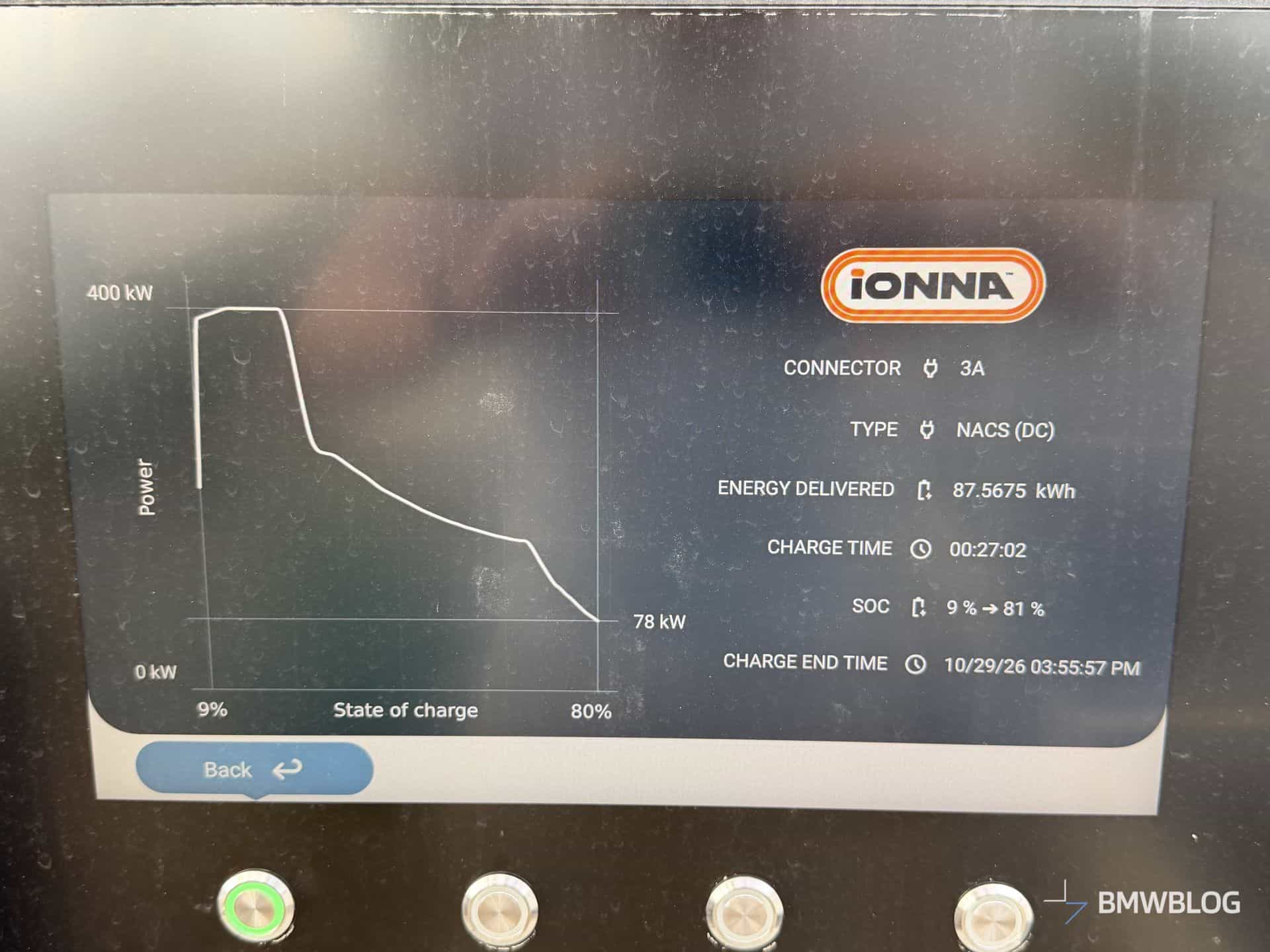
Next was the IONNA 400-kW charging test from 10 to 80% SoC. The 400-kW Alpitronic chargers at the IONNA Rechargery offered both NACS and CCS connectors, which was nice, as no adapter was needed for this test. After I plugged in, the car began charging within a minute thanks to Plug & Charge.
Beginning at 9% SoC, the charge rate immediately jumped to 400 kW and stayed there for 3 minutes, until 25% SoC. Only 3 minutes to get to 25% is incredible.
But because of the time it took me to film the intro for the video, the battery temperature may not have been optimal for the test, and unfortunately, this likely caused the charge rate to drop faster than in the Electrify America test the day before. After 30% SoC, the charge rate dropped to 260 kW, and it slowly and progressively dropped until 75% SoC, where it finally fell below 100 kW.
Overall, I charged from 10 to 80% in 24 minutes. That’s an estimated 302 miles added, only 3 minutes longer than BMW’s stated 21-minute time for a 10-80% charge. If I had done a better job of charging right after I pulled up, with the battery at a more optimal temperature, I’m sure it could have held its peak charging speed longer. Regardless, adding that much range in such a short period of time is still incredibly fast.
For reference, when I drove the Cannonball Run solo in 2019 (NYC to LA in 39 hours, 7 minutes), I limited myself to 15-minute fuel stops every 250 miles. Essentially, I could keep that same pace in an electric iX3.
The My BMW app offers a lot of detailed information about each charging session, including charge rate, SoC, kWh added, and range. It even includes the price and the charger for any Plug & Charge session. It’s really cool how much BMW put into the app, letting you deep-dive into how your car’s charging sessions go.
Can The iX3 Charge At Tesla Superchargers? Yes, Kind Of

One great thing about BMW’s latest Neue Klasse EVs is the switch to the North American Charging Standard (NACS) port, also known as the Tesla charge port or J3400. Along with software updates, this now allows any BMW to charge at any Tesla charging station, as long as it’s a V2 (with Magic Dock), V3, or V4 stall. First-generation stalls will not work.
But beyond the dispensers themselves, there’s the issue of the low-voltage cabinets, or utility transformers. These cabinets are what take the ultra-high-voltage power coming in from the power lines (anywhere from 25 kV to 60 kV, or 25,000 to 60,000 volts) to the charging site. They will most likely bring the voltage down to 1,000 volts for some high-speed 400-kW or 350-kW chargers, but most Tesla sites, because of Tesla’s 400V architecture, can only accept up to 480V three-phase AC input.
Neue Klasse BMWs, however, are built on an 800V architecture. That means a site would need a transformer cabinet that can deliver 1,000V for the car to reach its full 400-kW, or even 350-kW, peak charging speed.
The TL;DR version is that BMWs can charge much faster than Tesla vehicles can, and faster than the Tesla Supercharger network can deliver. What does this mean? It means that very few Tesla V4 Supercharger locations actually have the cabinets needed to deliver full charging speed.
The good news? BMW’s battery has such a great charging curve that a Tesla Supercharger, even one with 480V cabinets, still charges the car fairly quickly. Why? Even though it doesn’t hit the higher 400-kW peak, it stays at a steady 200 kW all the way to roughly 67% SoC.
So your overall charge time still isn’t significantly longer, and it will still take approximately 20 to 30 minutes to get to an 80% charge. The difference is that the first 5 to 10 minutes will add significantly less range, but the car makes up for it with more stable and consistent charging speeds above 50% SoC. Better still, Tesla Superchargers remain the most common and most reliable charging network in the US, so it’s easy to find a charger and plug in without much hassle.
An Easy Road Trip From LA To Las Vegas
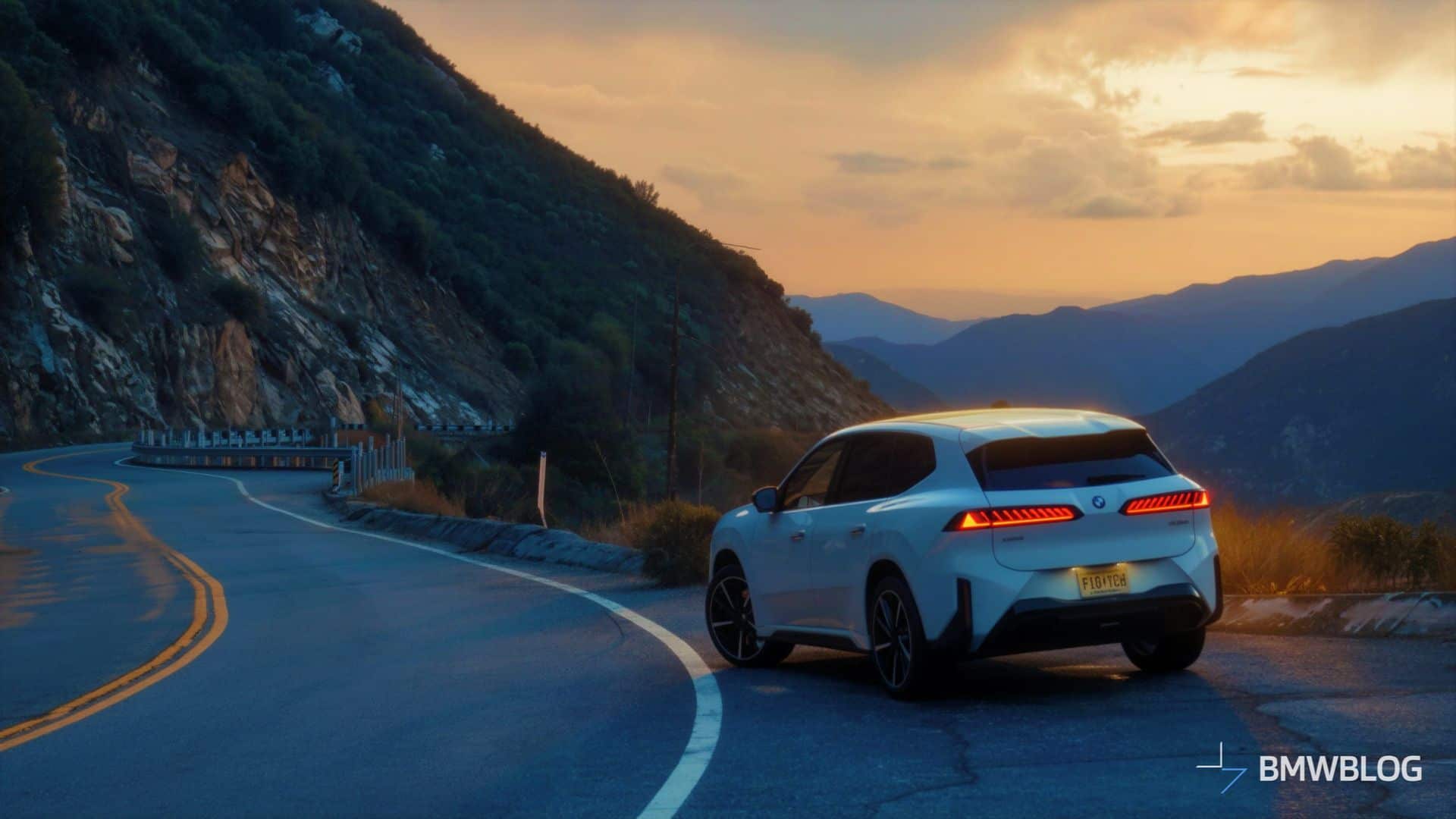
“Take the white Cadillac and go till you find the American Dream. It’s somewhere in the Las Vegas.” Dr. Hunter S. Thompson made the LA-to-Vegas road trip famous, and I’ve been a fan of this drive for years, but this was my first time doing it in an EV. We received a last-minute invite to the Las Vegas concours, and I wouldn’t give up the chance to see ten BMW-powered McLaren F1s along with hundreds of other extremely rare supercars.
This 225-mile drive (each way) usually requires most EV drivers to stop at a number of the charging stations that have been built along the way in Victorville, Barstow, Baker, and Primm. Outside of these four small towns, there are long stretches of dozens of miles (some over 60 miles) with no chargers available, so for some drivers, the trip in an EV is stressful. For me, though, there was no range anxiety or stress at all. In fact, this was the easiest road trip I have ever done to Vegas, gas car or not.
With the car charged overnight to 100%, we left with an estimated 402 miles of range. Living less than a mile from I-15, we quickly got onto the interstate, turned on Highway Assist, set the adaptive cruise control to 78 mph, and sat back with the massage seats on.
This was not a highway range test. We knew the car could get us there without charging; the only question was when we would need to charge on the way back. If we’d had the 20-inch wheels, we might even have been able to do the entire trip without charging at all.
The iX3 is an exceptional road trip vehicle. As an EV, it has no engine noise, so it’s fairly quiet. There is more road noise than I would prefer (especially compared to the ultra-quiet iX), but beyond that, the overall ergonomics of the cabin make for a very relaxing place to spend three and a half hours.
Highway Assist works perfectly with no issues. Hands-free driving worked flawlessly, with only one disengagement on the entire trip, due to construction. It does a great job of maintaining speed and distance with the car in front of you, and when a car changes lanes or speeds up, it is fairly quick to make up the distance before letting cars cut in. This is extremely welcome, as other systems that are too slow to respond often become more of an annoyance than a convenience for this very reason.
The massaging seats work well, but I can’t wait until BMW offers cooled seats, a feature that’s coming as an option sometime next year. The overall ride comfort is good, too. These are non-adjustable dampers, with no air ride suspension, just well-tuned fixed dampers that find a nice balance between keeping the car from feeling boaty and being comfortable, while still offering great composure and confident handling. I never felt the need for adjustable dampers, but if the option becomes available on the iX3 50 xDrive (it’s coming to the M60 model), that can only be a plus.
We made a quick stop at the Electrify America charging station in Baker, California, after 138 miles of driving. Why? We had to use the bathroom and wanted to grab a Blizzard from Dairy Queen on the way. We still had 59% SoC, so there was no need for a charging session. After another 88 miles, we finally arrived at the Cosmopolitan of Las Vegas with 30% SoC remaining, having averaged 3.2 mi/kWh.
Luckily, the Cosmopolitan (like many other hotels around the country) offers EV charging with valet parking, so we asked them to charge it overnight to have it ready for the drive back the next day. The nice thing about EV road-tripping is that with so many hotels offering overnight charging, sometimes, as in our case, you don’t even need to worry about using a DC fast charger. This is more convenient than any trip I’ve taken in a gas car.
The next day, the weather took a turn for the worse, and we made our way back to Rancho Cucamonga in pouring rain and 20-mph headwinds. The weather couldn’t have been much worse for efficiency. Due to heavier traffic, we took it easy and kept speeds closer to 65-70 mph. The weather hurt our efficiency quite a bit, but thanks to the slower speeds, we still managed just over 3.4 mi/kWh and arrived home with 40% SoC.
Based on our charge testing data, if we had needed to use a DC fast charger and hadn’t had the chance to charge overnight, we would only have needed to charge for less than 10 minutes at a 350-kW charging station, or under 5 minutes at a 400-kW station, to make it home.
Essentially, you can road-trip an EV to Vegas as comfortably and conveniently as a gas car without so much as breaking a sweat. No range anxiety, no charging woes, just a nice, luxurious highway cruiser that leaves you feeling rested once you get to the casino. This car rules for road trips. Overall, we saw 3.3 mi/kWh without any attempt to be efficient, which indicates around 360 miles of highway cruising range in a worst-case scenario.
The Controversial Steering Wheel Is Actually Something I Loved
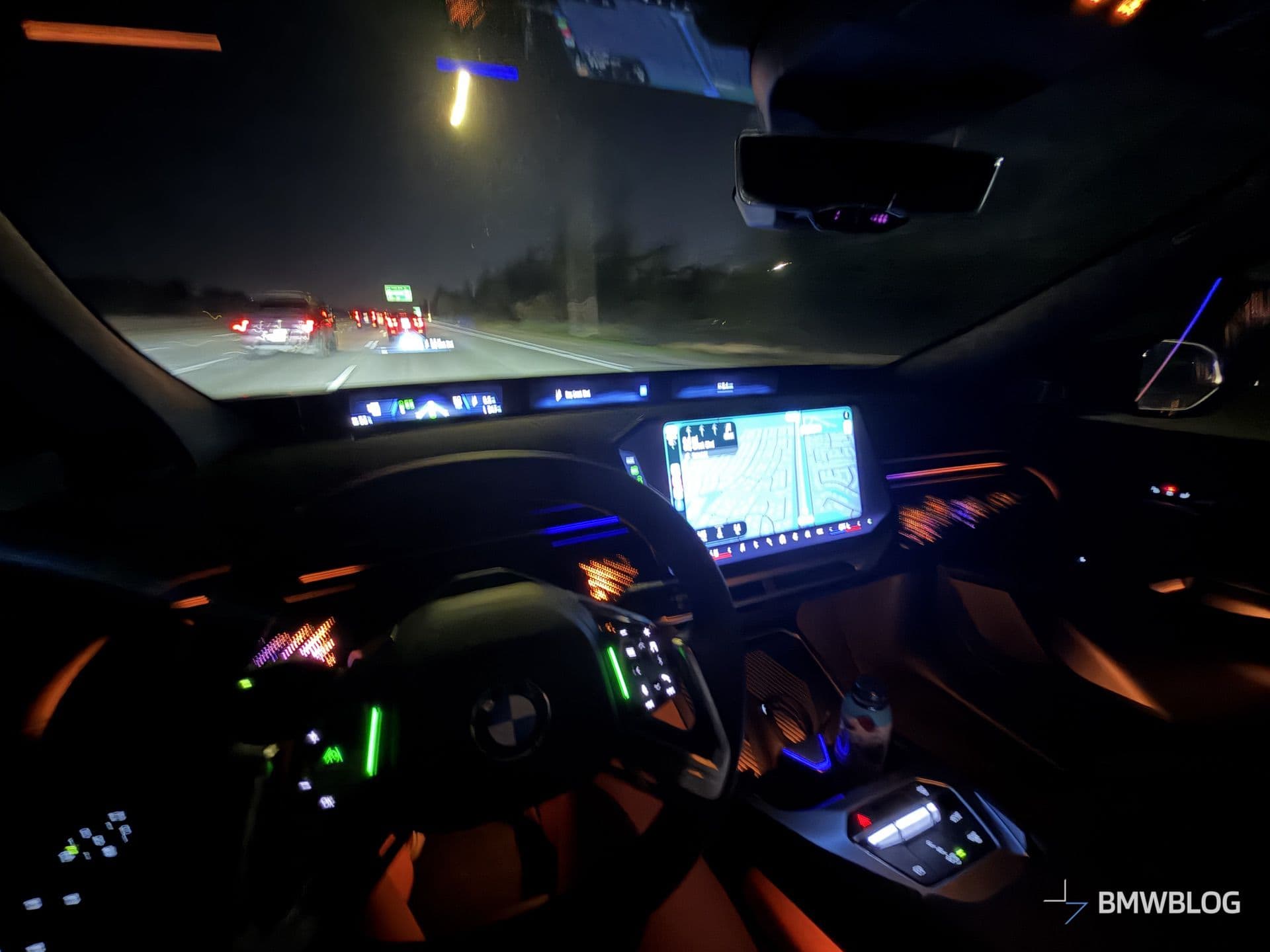
I wanted to take a moment to talk about my love for the new BMW Neue Klasse M Pro steering wheel. At first glance in photos, I was taken aback. It’s a radical departure from what we know and certainly not traditional in any sense. I had my concerns about the haptic buttons, which I typically hate, and wondered whether the whole thing would disgust me, given that I’d be seeing it front and center every time I got in the driver’s seat.
Luckily, I actually began to like it. In person, it doesn’t look anywhere near as awkward, and in fact, it looks downright futuristic. The capacitive buttons are lit with a gray background, which negated any issues I had with noticing fingerprints and kept them looking clean.
The buttons are fairly close together but laid out more intuitively than expected once you’ve used them for 5 minutes. With my medium-glove-size hands, I had no issue telling which buttons were which. Ergonomically, this is the most comfortable steering wheel I have ever held. It’s an ergonomic masterpiece, even if it looks a little weird.
What I Loved About The iX3
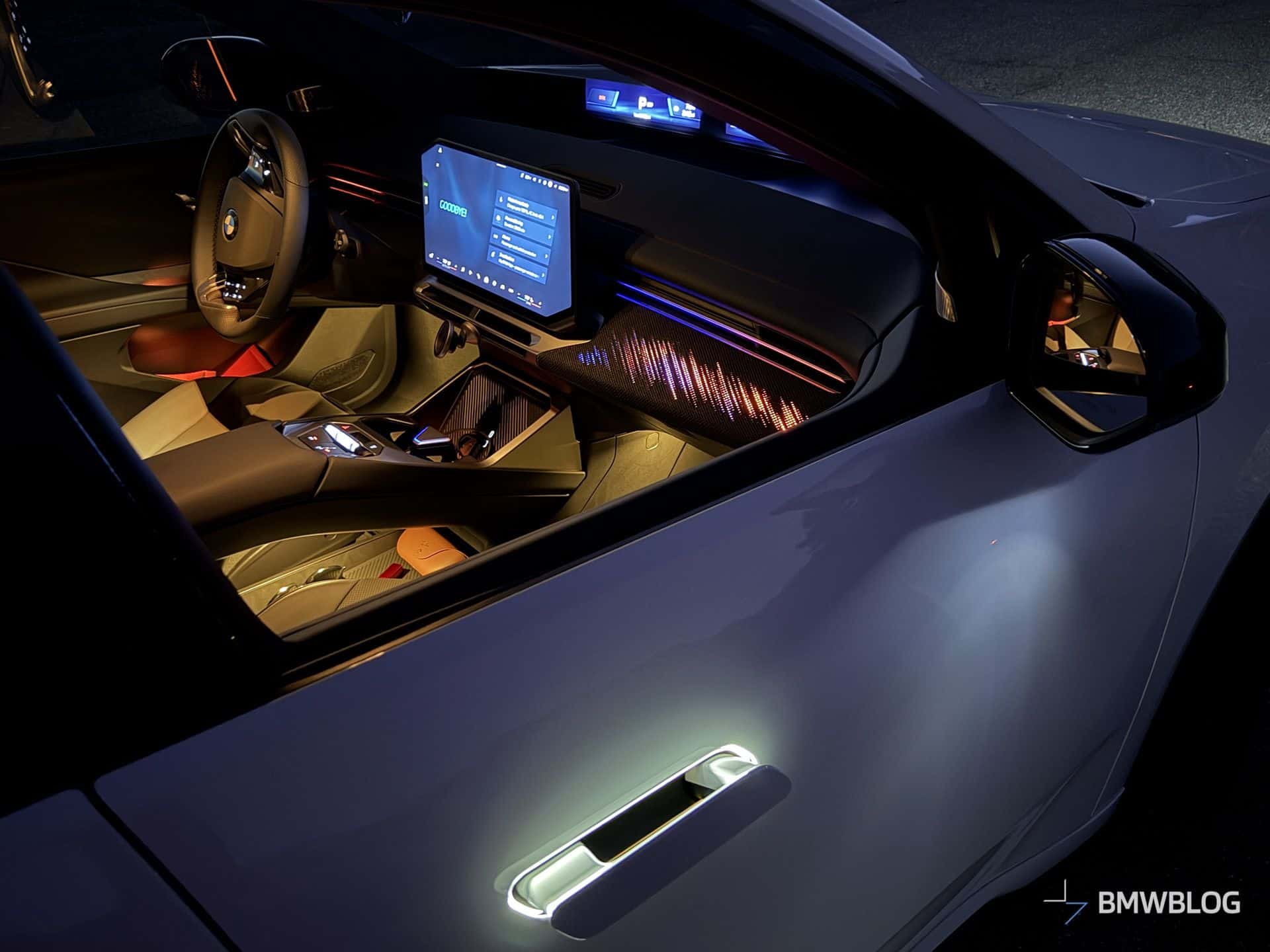
The iX3 was good enough that I am genuinely considering it for my next car. The overall ergonomics inside are fantastic. Seat comfort is wonderful. Highway Assist worked incredibly well and made for some of the most relaxing commutes I’ve had since the iX.
The one-pedal driving calibration is the best I have felt in an EV, and in conjunction with the soft stop function, it makes daily driving truly enjoyable and comfortable. The My BMW app for Neue Klasse EVs offers so much customization and flexibility for changing settings and checking charging information. The new iDrive 10 and BMW Panoramic Vision display are brilliantly executed and easy to use. Overall, it’s just a very pleasant and easy car to live with on a day-to-day basis.
What I Didn’t Like About The iX3

While the iX3 is, again, quite likely going to be my next car, it does have some things that frustrate me. The electronic door handles don’t always come out when the proximity key gets close enough. They’re an overcomplication that doesn’t solve any problem. They’re added cost and complexity for a gimmick, and I wish BMW would go back to traditional door handles, because no one asked for this. It does not feel premium to be inconvenienced.
The glass roof comes standard with the Comfort package, which means you’re stuck with a heavy, non-opening glass roof that, despite whatever coating is on it, transmits more heat into the cabin than a traditional aluminum roof while weighing much more. If you want the multifunction seats or heated steering wheel without it, too bad.
I genuinely think a fixed glass roof is the worst of all roof options, and “more light in the cabin” quickly gets outweighed by all the downsides. There is a sunshade available, but you have to add it manually by clipping it into place, which is both inconvenient and feels extremely cheap on a $70,000 car.
I wish BMW either offered an opening sunroof for ventilation or gave the option of an aluminum roof with the Comfort package, or maybe a carbon fiber roof to reduce weight and add efficiency, or even solar panels for greater range and efficiency. I will continue my crusade against glass roofs, because I know I am not alone.
While the cabin is a wonderful place to be, it does feel like it could use more usable storage space. The door pockets are surprisingly small for the size of the car and can’t quite fit some of the larger bottles people like to bring with them. The lower center console is open and offers some good storage space, but its location by the seats makes it difficult to physically access.
The floor between the driver and passenger footwells was wide open on the iX, and I’m not sure why it’s now closed off on the iX3. If it were more open, that would create a lot more storage space and resolve the issue mentioned before. The trade-off with that lower center console bin is that the actual center console storage is really small for an SUV of this size.
Lastly, the AI voice assistant is overly sensitive. Merely saying “BMW” will activate it, and I had to turn it off because it was going off far too frequently. Overall, these are minor gripes about what was otherwise a fantastic driving experience in a technically incredible vehicle.
The iX3 Is A Transformative Moment For EVs And A Brilliant Car

I came away from the iX3 realizing something that I hadn’t with any other EV I’ve experienced. I’ve driven the X3 30 xDrive, and between the two, I would rather have the iX3.
For the first time, BMW has created an EV that offers all of the amazing benefits of an EV with almost none of the downsides. I can road-trip this practically as easily as a gas X3. I don’t have range anxiety. Charging isn’t a huge inconvenience, because it happens so fast.
This really is the better powertrain to buy now. I was so impressed with what this means for future EVs. Despite being a car geek who loves manual transmissions and loud engines, I would rather drive this than any gas car for what I’m doing 90% of the time on a day-to-day basis.
The iX3 is a home run. BMW nailed this car. The technical achievements, and just how wonderful it is to live with, really show that BMW’s big investment in Neue Klasse EV tech is about to pay off. I hope they sell a million of these, because the more they sell, the more money BMW M gets to keep the fun gasoline cars alive. The iX3 proved that my next car will be a Neue Klasse EV.
2027 BMW iX3 50 xDrive
Exterior Appeal
Interior Quality
Steering Feedback
Performance
Handling
BMWness/Ultimate Driving Machine
Price Point
Over 11 days and 1,500 miles, the 2027 BMW iX3 50 xDrive was on pace for about 400 miles of range in LA commuting, slightly beating BMW’s 398-mile estimate for its 21-inch wheels. It added 30 kWh in 5 minutes at a 350-kW Electrify America charger and charged from 10 to 80% in 24 minutes at a 400-kW IONNA station, close to BMW’s 21-minute claim. It also made the 225-mile drive from LA to Las Vegas without charging, and averaged 3.3 mi/kWh on the highway, good for about 360 miles in a worst-case scenario. The downsides are electronic door handles that don’t always pop out, a heavy fixed glass roof, limited cabin storage, and an overly sensitive voice assistant. Overall, the iX3 is a home run, and for everyday driving, it’s the better choice over the gas-powered X3 30 xDrive.
2027 BMW iX3 50 xDrive
-
 Motor: Dual Electric Motor
-
 Power: 463 hp / 476 lb-ft (645 Nm)
-
 Transmission: Single Speed
-
 Drivetrain: All-Wheel Drive
-
 Speed 0-60 MPH: 4.7 seconds
-
 Top Speed: 130 mph
-
 Weight: 5,154 lbs
-
 Electric Range: 383 to 434 miles EPA
-
 Charge Time: 21 min
-
 Charge Type: DC 400 kW
-
 Cargo Volume: 30.4 cubic feet
-
 Seating Capacity: 5
-
 Base Price: $61,500