Article Summary
- BMW will expand its use of lithium iron phosphate (LFP) batteries beyond China, development chief Joachim Post has confirmed.
- The China-specific BMW iX3 30L already demonstrates how the company plans to use LFP technology.
- LFP batteries are generally cheaper to produce but have lower energy density, making them suitable for more affordable entry-level EVs.
Good news: BMW is preparing to expand its use of lithium iron phosphate (LFP) batteries outside of China. This could lead to cheaper electric cars in Europe and potentially other markets. The German automaker has already confirmed plans to introduce this battery chemistry selectively, but a new statement from a senior executive suggests the rollout won’t be limited to Chinese customers.
Speaking to our sister site BimmerToday during the presentation of the new i3 in Aix-en-Provence, France, BMW development chief Joachim Post confirmed that the company intends to expand its LFP battery offering. Asked about the China-specific iX3 30L, he said: “We will continue rolling out LFP batteries and offer them not only in China.”
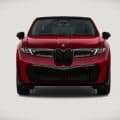
BMW hasn’t specified which markets will receive the more affordable battery technology or when the first models will arrive. Nevertheless, the announcement opens the door to less expensive entry-level versions of the standard-wheelbase EVs like the i3 and iX3.

LFP Vs NMC: Advantages And Disadvantages
The Neue Klasse initially relies on sixth-generation (Gen6) cylindrical nickel-manganese-cobalt (NMC) battery cells. BMW has repeatedly highlighted their higher energy density and impressive range, with the new iX3 and i3 setting ambitious benchmarks for electric vehicles.
However, not everyone needs a battery capable of delivering more than 500 miles on a charge. That’s where LFP comes in. Lithium iron phosphate chemistry offers a lower-cost alternative to NMC, although it generally comes with lower energy density and, consequently, less driving range for a battery of comparable size.
There are other important differences, too. LFP batteries are generally more durable, tolerating more charge and discharge cycles before their capacity starts to deteriorate significantly. They also offer better thermal stability, making them less susceptible to overheating and thermal runaway. Their chemistry doesn’t rely on nickel or cobalt either, reducing exposure to price fluctuations and supply-chain concerns surrounding those materials.
Another advantage is that LFP batteries can generally be charged to 100% regularly without the same long-term degradation concerns associated with keeping an NMC battery fully charged. However, they aren’t without drawbacks. LFP packs typically perform less efficiently in cold weather, particularly when charging, while NMC batteries retain an advantage in energy density and low-temperature performance. Ultimately, neither chemistry is universally better: LFP prioritizes affordability, longevity, and durability, whereas NMC favors range, performance, and packaging efficiency.


The Long-Wheelbase iX3 Gets Its First
BMW CEO Milan Nedeljković already addressed the subject during the company’s third-quarter earnings call earlier this month. He confirmed that LFP batteries would join the Neue Klasse lineup but stressed that BMW would carefully select the models and applications. In other words, the company isn’t planning to replace NMC across the board.
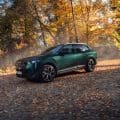
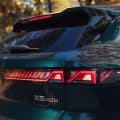
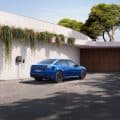
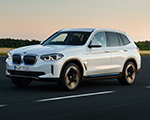
Pictured here, the China-exclusive iX3 30L offers a good indication of what BMW could bring to other markets. It packs a 77-kWh LFP battery and delivers a claimed 391 miles (630 kilometers) of range on the more lenient CLTC cycle. However, an equivalent WLTP figure would likely be at least 15% lower. There’s a good chance China’s stretched i3 sedan will also get an entry-level trim with an LFP battery pack when it goes on sale next year.
Will The BMW i1 Have An LFP Battery?
Looking further ahead, LFP technology could also help BMW bring down the price of its already-confirmed entry-level compact EV due in Europe in 2028. A less expensive battery would make sense for a smaller electric car, where buyers are unlikely to prioritize maximum range above all else. There has been speculation that the newcomer could get the i1 name and take the shape of a 1 Series-esque hatchback, but BMW hasn’t confirmed either detail.
The battery chemistry is equally unclear, so an LFP pack remains a possibility rather than a certainty. Still, if BMW wants to make electric mobility more accessible, a smaller EV with a more affordable battery could be a sensible way forward. For MINI, too.
Source: BimmerToday