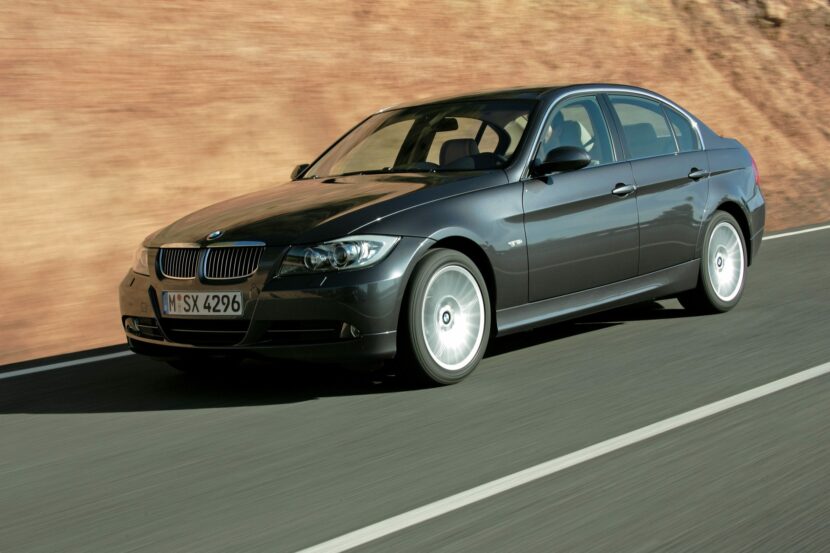
BMW doesn’t talk much about numbers unless they matter. 18 million matters. Since production began in 1975, the BMW 3 Series has been built more than 18 million times. No other BMW model comes close. Those cars didn’t come from one factory or even one continent. They were assembled at 18 plants in 13 countries, spread across Europe, Africa, Asia, and North America. For five decades, the 3 Series has been the constant in BMW’s production system — the car that made expansion possible and kept new factories running.
Munich Was the Anchor

Every generation of the 3 Series traces back to Munich. Production of the original E21 started there in 1975, and the plant quickly became BMW’s reference point for flexible manufacturing. Even early on, Munich wasn’t set up for a single body style or drivetrain. The factory used overhead conveyor systems and programmable welding equipment that allowed BMW to adjust output and specification without stopping the line.

That mattered as the car evolved. By the early 1980s, the second-generation 3 Series pushed Munich further. In 1982, BMW introduced a fully automated body shop with industrial robots handling more than 90 percent of the welding work. At the time, that level of automation was unusual. It allowed BMW to raise output while keeping tolerances tight, which became essential as the 3 Series grew into multiple body styles and trims.
Munich has been updated constantly since then. Engine production, paint processes, quality control, and logistics have all changed. The one constant is that the 3 Series stayed at the center of it.
Expansion Followed Demand

By 1980, Munich alone wasn’t enough. BMW added 3 Series production at Dingolfing, then Regensburg in 1986. These weren’t overflow plants — they were full production sites capable of building multiple variants. That laid the groundwork for something BMW would rely on later: producing the same car, to the same standard, in more than one place at the same time.
International production came next. Rosslyn, South Africa began building the 3 Series in 1984, followed by Spartanburg in the U.S. in 1994. Those moves weren’t symbolic. They allowed BMW to supply local markets directly and reduced reliance on exports from Europe. More importantly, they forced BMW to standardize processes globally. The same car had to come off the line the same way, whether it was built in Germany or South Africa.

That approach became the template for everything that followed. With one exception, every new BMW plant over the past several decades started with the 3 Series. Spartanburg, Leipzig, San Luis Potosí, and BMW’s joint-venture plants in China all ramped up production with some version of the 3 Series.
Where the 3 Series Was Built, Generation-by-Generation
1st Generation BMW 3 Series (E21)
- Sedan – Plants Munich, Dingolfing – 1975–1983
2nd Generation BMW 3 Series (E30)
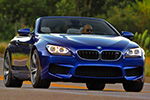
- Sedan, Convertible, Touring, M3 (Coupé and Convertible) – Plants Munich, Dingolfing, Regensburg – 1982–1994
3rd Generation BMW 3 Series (E36)
- Sedan, Coupé, Convertible, Touring, Compact, M3 (Sedan, Coupé, Convertible) – Plants Munich, Dingolfing, Regensburg, Spartanburg (USA), Rosslyn (South Africa) – 1990–2000
4th Generation BMW 3 Series (E46)
- Sedan, Coupé, Convertible, Touring, Compact, M3 (Coupé and Convertible) – Plants Munich, Dingolfing, Regensburg, Rosslyn (South Africa) – 1997–2006
5th Generation BMW 3 Series (E90/E91/E92/E93)
- Sedan, Coupé, Convertible, Touring, M3 (Sedan, Coupé, Convertible) – Plants Munich, Regensburg, Rosslyn (South Africa), Dadong (China), Leipzig – 2004–2013
6th Generation BMW 3 Series (F30/F31/F34)
- Sedan, Touring, Gran Turismo, M3 (Sedan)
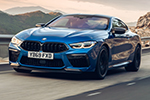
- The Coupé, Convertible, and Gran Coupé split into the new BMW 4 Series range – Plants Munich, Dingolfing, Regensburg, Rosslyn (South Africa), Tiexi (China) – 2011–2021
7th Generation BMW 3 Series (G20/G21)
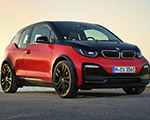
- Sedan, Touring, M3 (Sedan and Touring), i3 (fully electric, China only) – Plants Munich, Regensburg, Rosslyn (South Africa), Tiexi (China), San Luis Potosí (Mexico) – Since 2018
Things Are Once Again Changing

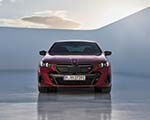
BMW is already preparing the eighth generation. A fully electric 3 Series will enter production in Munich in the second half of 2026 as part of the Neue Klasse rollout, with China and Mexico to follow. BMW has also confirmed that 3 Series production will return to Dingolfing, bringing the model back to one of its earliest expansion sites.