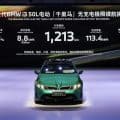
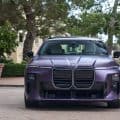
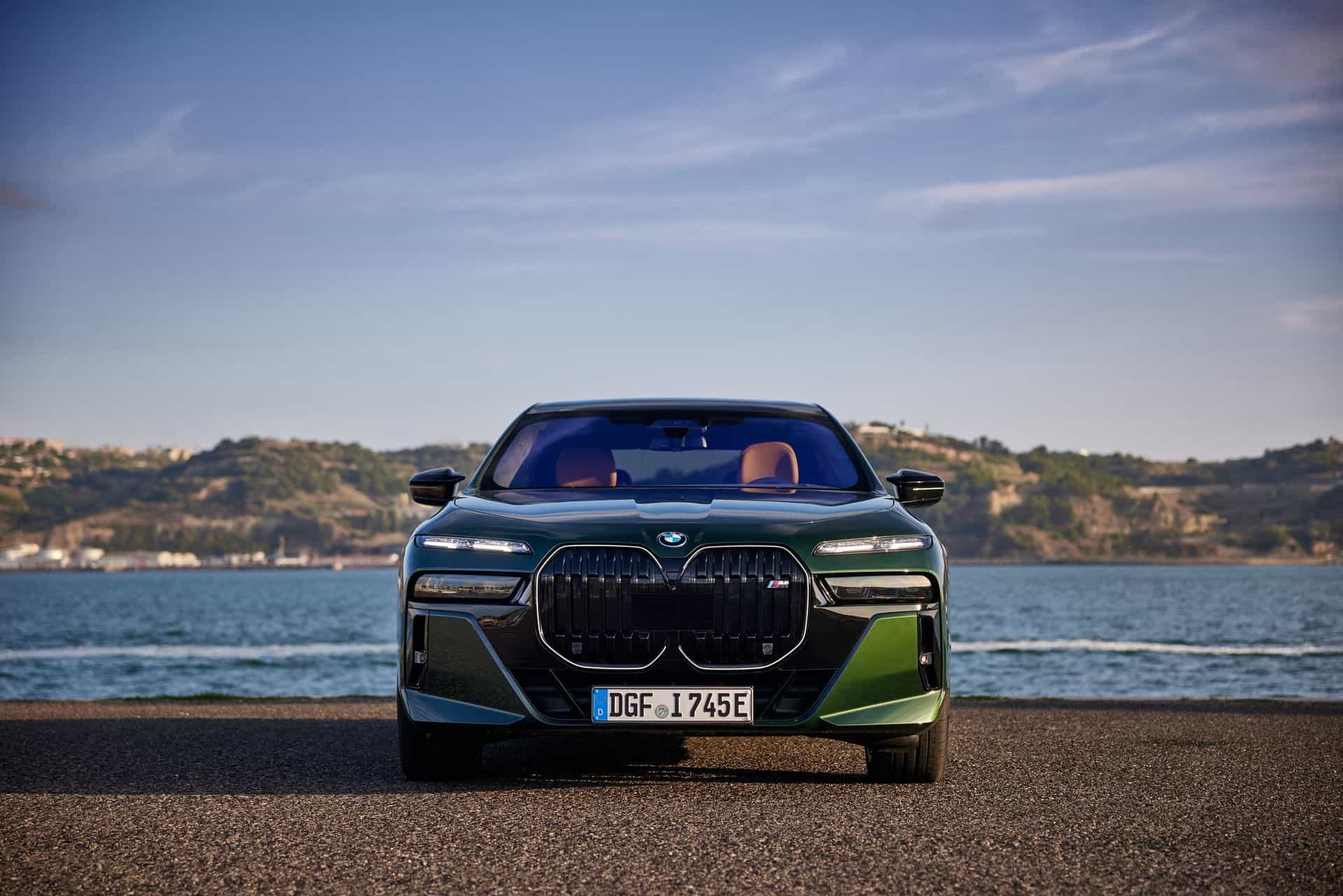
Notice anything different about this BMW iX3 prototype? Its rear doors are slightly longer, a result of a stretched wheelbase designed to deliver extra rear-seat legroom. The camouflaged test car isn’t the standard “NA5” model but the elongated “NA6” variant developed specifically for China. It’s set to debut soon in the company’s largest market, kicking off a major product offensive in 2026.
Chinese business magazine 36Kr reports that BMW plans to launch more than 20 new vehicles locally this year. Paired with price cuts across 31 models, the strategy is clearly aimed at arresting declining sales. In 2025, the BMW Group (including MINI) delivered 625,527 vehicles in China, a worrying 12.5% year-over-year drop.
Looking further back, demand is down by over 200,000 units compared to 2021, when sales peaked at nearly 848,000 vehicles. Whether the upcoming wave of new products can reverse the slide remains to be seen. BMW hasn’t disclosed which models beyond the long-wheelbase iX3 will launch this year in the world’s largest car market.

Logic suggests localized versions of the next-generation 3 Series and X5 are likely next. Both global models are due this year: the G50 and the G65, respectively. In China, the outgoing sedan and SUV already feature longer wheelbases than their international counterparts. BMW has also confirmed that a 7 Series facelift will arrive in 2026 alongside an updated i7, with both sharing the same wheelbase as the Chinese-market versions.
Whether the recently spied iX4 will receive the long-wheelbase treatment in China is still unclear. A stretched i3, codenamed NA8, appears to be a more plausible candidate, given that sedans remain relevant in China, unlike the rest of the world’s seemingly insatiable appetite for SUVs.

According to 36Kr, electric vehicles accounted for fewer than 10% of BMW’s total sales in China last year, with just 53,000 EVs delivered. Globally, however, zero-emission vehicles reached a record 18% share in 2025, while in Europe, 25% of all BMW Group sales came from models without a combustion engine.
BMW isn’t the only legacy automaker struggling in China’s hyper-competitive market. Its two main rivals are facing similar headwinds: Mercedes-Benz saw sales fall 19% to 551,900 cars, while Audi slipped 5% to 617,514 units, excluding vehicles sold under its new perplexing AUDI sub-brand created in partnership with SAIC.
Source: 36kr