Article Summary
- The new i3 represents a dramatic design departure from the traditionally evolutionary 3 Series.
- BMW is using the Neue Klasse design language to give its core sedan a visual reset.
- Whether the bold new look proves successful will ultimately come down to customer response and sales.
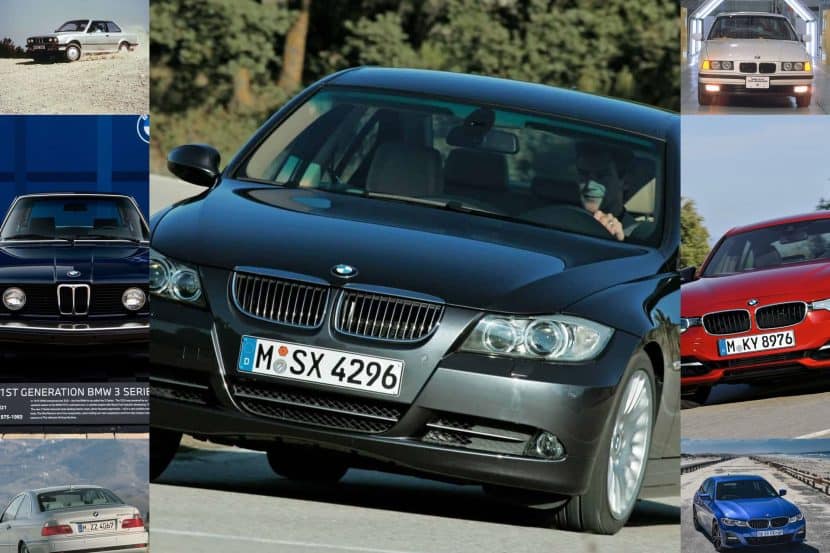
BMW has never been afraid to evolve the 3 Series, but there has usually been a certain continuity from one generation to the next. For half a century, the 3 Series has followed a relatively conservative design philosophy. The E21 evolved into the E30, which made way for the E36, and so on. Sure, some generations represented bigger changes than others, but you could generally park two consecutive generations next to each other and immediately recognize the family resemblance.
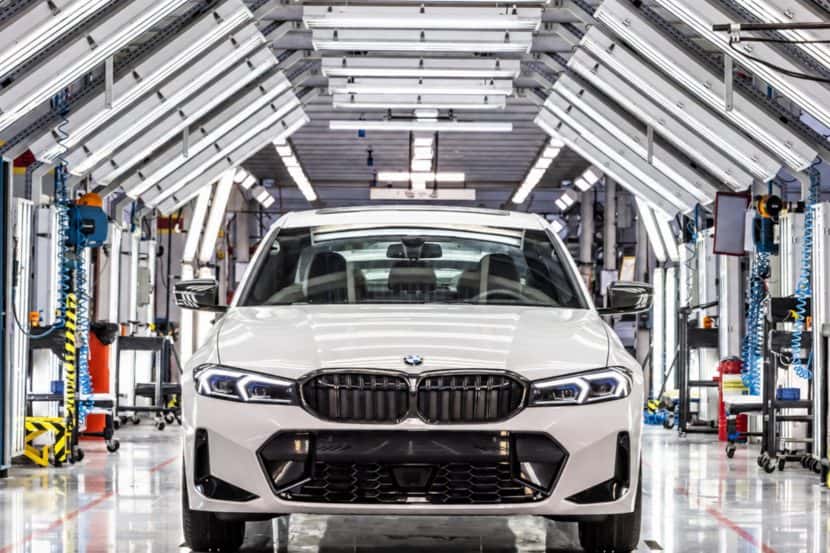
Well, the new i3 breaks that pattern. We can all agree that the electric sedan represents a dramatic departure from the G20 it replaces. And while that’s hardly surprising given BMW’s decision to essentially reset its design language for the modern Neue Klasse era, it does raise an interesting question: has Munich taken too much of a gamble with one of its most recognizable nameplates? Looking back, BMW rarely threw everything out the window.
Although the marketing lingo for the electric i3 references past 3er generations, even diehard fans will struggle to find any resemblance to its predecessors. Okay, the kidney grille and Hofmeister kink are still there, while the double headlights and the “L” motif of the taillights have seemingly survived as well. Continuity is important because the 3 Series isn’t just another model in the lineup. It’s arguably THE BMW. To this day, it’s the company’s single best-selling car, with cumulative sales of more than 20 million since 1975.

The i3 Comes Back From The 3 Series’ Future
For better or worse, the new i3 looks as if BMW skipped a generation. The new i3 isn’t simply a cleaner, more aerodynamic interpretation of the outgoing 3 Series. While we obviously don’t have a crystal ball, it looks as if BMW jumped straight into the late 2030s, if not the early 2040s. There are fewer creases and less visual clutter. The surfaces are smoother. The lighting elements are more prominent, while chrome, once a symbol of luxury, is gone.
The whole car has a minimalist appearance that would have been difficult to imagine wearing a 3 Series badge just a few years ago. Yes, we’re using 3 Series and i3 interchangeably because the electric sedan’s appearance will closely mirror that of the combustion-engine models. The NA0 and upcoming G50 will look very much alike, and that’s not just speculation on our part. Spy photos of prototypes have revealed that the gas-fed sports sedan hides the same “less is more” design approach. BMW itself has said the i3 is a 3 Series, so everything should be clear.
However, we need to make one distinction. The i3 rides on a dedicated electric vehicle platform, whereas the upcoming 3er will stick with CLAR. Despite looking strikingly similar on the outside, the two cars will have substantially different underpinnings. With BMW already confirming another gas-powered M3 (G84), there’s still room under the hood for six-cylinder engines. Even the M Performance 3 Series will retain its inline-six. The proportions will change for the combustion-engine versions, which will inevitably have a longer front section to accommodate an ICE where the i3 has a frunk.

The 3 Series Is Likely To Inherit The i3’s Revamped Interior
The interior also represents a major departure from what we’re used to, with the i3 introducing radical changes compared with the outgoing G20. This dashboard layout will carry over to the G50, presumably with minimal tweaks. With iDrive X and Panoramic Vision, BMW is relying on screens more than ever, while physical switchgear has been reduced to a new low. Heck, even the iDrive rotary knob is gone, though the company says people don’t miss it.
From a different angle, I don’t think BMW could have continued endlessly with incremental design changes. The company spent much of the 2010s and early 2020s pushing its styling in increasingly controversial directions, culminating in some genuinely polarizing grilles and increasingly complicated bodywork.
The Neue Klasse represents a reset. The problem is that resetting BMW design on the 3 Series is inherently risky. This isn’t a niche model where BMW can afford to alienate some customers. Some would argue that the XM already does that. The 3 Series has decades of brand equity behind it. Owners don’t necessarily want their new car to look like something from an entirely different BMW universe.


The Wind Of Change
At the same time, making the i3 look too similar to the soon-to-be-retired G20 would defeat the purpose of the Neue Klasse. BMW wants people to see this car and understand that something has changed. And, well, mission accomplished.
You don’t need to be an enthusiast to recognize that the i3 represents a major stylistic departure. BMW has probably taken a bigger design risk with the new i3 than it ever has with a 3 Series before. But that’s not necessarily a bad thing. It’s premature to call the new design a smash hit, but customers appear to be responding strongly to the i3. Due to popular demand, the company moved up the pre-sales launch in Europe, introducing a First Edition months earlier than planned.
For a nameplate that has traditionally evolved incrementally, the i3 is anything but. And that might be exactly why it could end up being one of the most important 3 Series generations ever. As with any product, only the sales figures will ultimately show whether it’s a success, a failure, or somewhere in between.