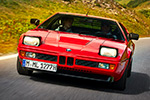
BMW enthusiasts would argue that the best way to crown the M lineup would be with a supercar. The XM may have been advertised as a spiritual successor to the M1, but the electrified luxobarge is certainly no “E26” reboot. A dedicated performance vehicle positioned at the top of the M hierarchy has always sparked interest within the M community, yet it has never happened again.
However, executives in Munich might feel encouraged to give their stamp of approval. The 3.0 CSL was a resounding success, despite an unconfirmed €750,000 price tag. Built to celebrate 50 years of M, the special car was essentially an M4 CSL with a coach-built body inspired by the “E9” Batmobile. It had slightly more power and a manual gearbox, all for more than four times the price of the donor car. As a refresher, the M4 CSL cost €165,200 in Germany.
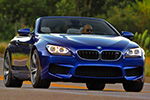
Then came the Skytop, an M8 transformed into a two-seater convertible with a removable targa roof. BMW never released official pricing details for that car either, but we’ve reported an eye-watering €500,000 sticker. Before it was retired, the M8 Convertible cost €193,400 in Germany, making the mechanically related Skytop roughly two and a half times more expensive.

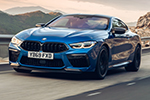
BMW revisited the M8 earlier this year with the Speedtop, a gorgeous shooting brake believed to cost around half a million euros as well. Once again, the two-door wagon was far more expensive than the donor car, the €185,400 M8 Coupe. What do all these cars have in common? All were snapped up by deep-pocketed customers.
Rolls-Royce Money For BMWs

BMW found 50 buyers for the 3.0 CSL, another 50 for the Skytop, and 70 for the Speedtop. These cars sold out relatively soon after their official premieres, revealing a strong appetite for low-volume, high-price models. In hindsight, BMW probably wishes it had also green-lighted the Z4 M40i-based Concept Touring Coupe.
Having succeeded in charging Rolls-Royce money for BMWs, a supercar doesn’t seem so outlandish anymore, does it? Well, yes and no. Such a project would be far more expensive to develop due to the need for numerous bespoke parts. The underpinnings for the sold-out cars mentioned above were already available from regular models. Having a solid foundation enabled economies of scale, as only the body and assembly process changed.
Neue Klasse Takes Precedence
We also need to look at the bigger picture. In the first half of the decade, BMW made the largest single investment in the company’s history. Everything related to Neue Klasse cost the Bavarians over €10 billion, according to outgoing CEO Oliver Zipse. With 40 models arriving by late 2027, now is not the right time to invest additional time and resources in a supercar.

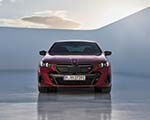
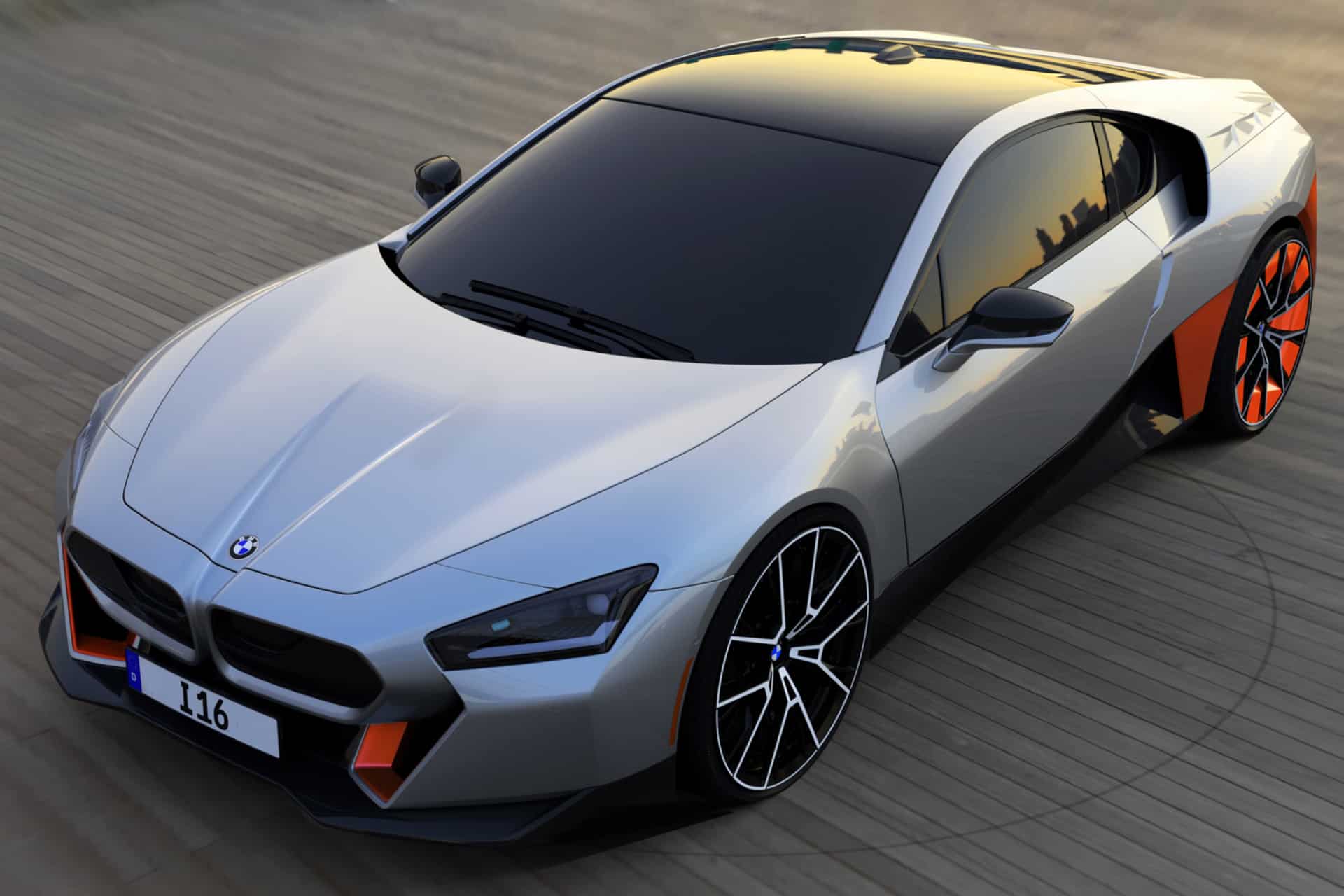
These spy shots of a mysterious coupe with Neue Klasse styling fueled rumors of a supercar. However, we have it on good authority that it’s not happening. The closest BMW has come recently to a follow-up to the M1 was around 2020. The M Vision Next concept was intended to become the “I16,” but the coronavirus pandemic forced the project’s cancellation. BMW chose to prioritize SUVs instead, hence the controversial XM.
But not all hope is lost. Earlier this year, BMW M’s CEO left the door open for a supercar in an exclusive interview with BMWBLOG. However, Frank van Meel made it crystal clear that we shouldn’t realistically expect one anytime soon:
“We don’t want to lose focus on our high-performance cars because we do a super sports car. I must be honest; we are always dreaming about it. And maybe some day we find the right window of opportunity where we have the capacity to work on a car like that. And also, the company, BMW Group, says: ‘Ok, go for it.’ We never give up, I can promise you that, but actually, it’s not here yet.”
Hopefully, there’s still time within that “window of opportunity,” as mentioned by the mayor of M Town, for a combustion engine. BMW M is caught between a rock and a hard place. Interest in electric supercars, or even more affordable sporty EVs, remains weak, yet increasingly strict emissions regulations are pushing automakers toward EVs.
The M division plans to make its inline-six and V8 engines comply with Euro 7, so there’s still time to hear the roar of a combustion engine. Ideally, it would be mounted behind the driver. Should BMW ever green-light a supercar in the ICE era, the aborted M Vision Next/I16 suggests a hybrid setup. We’ll take what we can get before everything goes electric, should that day eventually arrive later this century.
The Product Offensive Won’t Include A Supercar

In the meantime, BMW has bigger fish to fry. Neue Klasse is bringing sweeping changes across the lineup. Aside from renewing its existing portfolio, the German luxury brand is also adding new models. Next year’s i3 and iX5 will be followed by an iX7 in 2027 and an iX6 in 2028. We’ve also heard there will be an i3 Touring, along with entry-level EVs like the i1 and i2. A rugged, large SUV with hybrid and electric power is also allegedly set to arrive before 2030 to compete with the Mercedes G-Class.
Going forward, BMW M will offer gasoline, plug-in hybrid, and electric models. While a dedicated supercar will be notably absent, we’re not giving up hope. Once the Neue Klasse lineup is fully fleshed out, perhaps then we can expect a spiritual successor to the M1. Logic suggests it won’t happen this decade, but we’d gladly welcome being proven wrong.
Supercar or not, a limited-run M car seems to be a matter of when, not if. Sylvia Neubauer, Vice President of Customer, Brand, and Sales at M, hinted as much in a chat with BMWBLOG back in June:
“We are discussing things, but we need to find the right time to do it. Be assured, we share the same dream and passion. We have been talking with Adrian van Hooydonk [Head of BMW Group Design] and the team who does the small series planning, and there is a slot reserved for BMW M.”
For now, we just have to be patient and wait for BMW M greatness. Meanwhile, the M division is about to end its 14th consecutive year of growth, so business is booming even without a halo model.