Article Summary
- Milan Nedeljković told FAZ that some Chinese cars are priced in Europe at levels that make no business sense, and he called the resulting distortion of competition dangerous.
- He prefers voluntary pricing agreements between Brussels and Beijing over higher tariffs, warning that China could restrict the supply of battery cells to Europe.
- His stance differs from the "Made in Europe" push by VW, Renault, and Stellantis, which Bruegel estimates could add more than €2,000 to an EV's price.
BMW’s new CEO thinks some Chinese cars are sold in Europe at prices that “make no business sense,” but he’s warning the EU against answering with higher tariffs. His reasoning, laid out in an interview with Frankfurter Allgemeine Zeitung, is that China holds leverage Europe can’t ignore: the battery cells its EV factories depend on. FAZ asked Milan Nedeljković outright whether Chinese brands are dumping cars in Europe. He didn’t use the word, but he didn’t exactly defend them either:
“Some Chinese cars are being offered here at prices that make no business sense. This is leading to protectionist tendencies in Europe and efforts to protect domestic markets. BMW operates globally; we support free trade, and we embrace competition. But a distortion of competition caused by incomprehensible pricing is dangerous.”
Talks Instead Of Tariffs

China-built EVs already face extra EU duties of 17 to 35.3 percent, set brand by brand after an anti-subsidy investigation. Nedeljković sees raising them as a bigger risk than the pricing itself: “Additional tariffs would be an even greater intervention, which is why I favor voluntary agreements based on fair framework conditions. These are negotiations that must now take place at the political level. As a retaliatory measure, the Chinese could restrict the supply of battery cells, on which Europe depends.”
He added: “No one wants an escalation. But the goal is to ensure sound market conditions in the long term, because jobs and the ability to attract investment depend on them. That is why one thing is certain: policymakers in Brussels and Berlin must strengthen the competitive conditions for our economy. Competitiveness cannot be achieved through isolationism.”
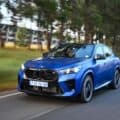
BMW also has its own exposure to consider. The electric MINI Cooper and the MINI Aceman are built in China and exported to Europe. Any tariff hike on Chinese-made EVs would land on MINI too.
The China Slide In Numbers
The pressure isn’t theoretical for Munich. The BMW Group delivered a record 847,900 cars in China in 2021. By 2025, that figure was down to 626,000, according to the company’s Annual Report 2025. That’s a 26 percent drop in four years, driven largely by local brands that moved faster on EVs and software. Some of those same brands are now expanding in Europe. BYD, SAIC, and Geely are growing their European lineups, often pricing below German rivals without skimping on tech. BMW is now getting it from both directions.
Not every European automaker shares Nedeljković’s approach. Volkswagen Group, Renault Group, and Stellantis have jointly backed “Made in Europe”. This proposed EU framework would require 70 percent of a car’s content to come from the region. Buyers would pay for it: the Bruegel think tank estimates the rules could add more than €2,000 to an EV’s price, Euronews reports, mainly because European-made battery cells cost more.
Nedeljković, who became CEO this year, is offering the least confrontational option on the table. In the end, a deal like that requires China to agree to raise prices on cars that are already selling well, and it’s hard to see what Beijing gets out of it.
[Source: FAZ via Motor1]