Article Summary
- Exclusive to China for now, the iX3 30 uses LFP batteries to help reduce manufacturing costs.
- LFP batteries generally offer longer lifespans and greater durability than other battery chemistries.
- Studies show that LFP has become the world’s most widely deployed EV battery chemistry.
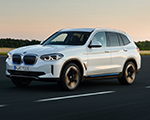
The differences between the iX3 sold in China and everywhere else go well beyond the longer wheelbase. Not only is it better equipped and has a nicer interior, but the “NA6” also gets features you can’t find on the “NA5” and is significantly cheaper than the global model. As we’ve learned this week, the stretched model is gaining a new base version you can’t buy in markets where BMW sells the standard-wheelbase “NA5.”
The iX3 30L brings a fundamental change compared with the 40L and 50L versions BMW sells in international markets. To keep the price down, it switches to a lithium-iron-phosphate battery pack, which tends to be around 20% cheaper to produce. With the battery remaining the most expensive component of an electric vehicle, LFP makes a lot of sense for a base model. The other iX3 versions sold in China stick with nickel-manganese-cobalt (NMC) chemistry.
LFP is a different type of lithium-ion battery and is rapidly becoming the dominant chemistry, with research firm Rho Motion saying demand jumped 48% in 2025. Its rise isn’t solely due to lower manufacturing costs. LFP batteries tend to last longer, with some studies claiming they have a cycle life two to four times longer than NMC batteries. They’re also less prone to thermal runaway and generally experience slower degradation. By avoiding materials such as cobalt and nickel, LFP batteries also have a lower environmental impact.

LFP Batteries: Downsides
But there are disadvantages. LFPs have a lower energy density, resulting in less range than an NMC-powered EV with a battery of the same size. Consequently, they take up more physical space to achieve the same capacity, making the vehicle heavier. Charging in cold temperatures also tends to be slower.
On paper, the LFP-powered iX3 30L sold in China is almost on par with the more expensive versions for DC charging from 10 to 80 percent. It takes 22 minutes, only a minute longer than the 40L xDrive and 50L xDrive. A full 0-100% AC charge takes less than 11 hours, making it quicker to charge than the other two iX3 models. At 13 kWh/100 kilometers, it has the lowest energy consumption of the three.


The LFP-powered iX3 30L shows that BMW has engineered the Neue Klasse platform to support a lithium-iron-phosphate battery pack. There’s a good chance the long-wheelbase i3 sedan coming to China will also use this battery chemistry in its base model. It’ll be interesting to see whether these entry-level trims eventually make their way to global markets.
For now, the iX3 30L is the only version using an LFP battery, and it costs RMB 269,900 ($40,000 / €34,300). For that money, customers get an electric crossover with a 77-kWh battery and a claimed range of 391 miles (630 kilometers) on a single charge. However, that figure comes from the more forgiving CLTC testing cycle. An equivalent WLTP rating would likely be at least 15% lower, while the EPA estimate would be lower still.