Article Summary
- The brake discs measured 70°C (158°F) after a track session, versus about 300°C (572°F) for a combustion M3, because the motors do nearly all the braking.
- M eDrive adds six stages with paddles, shift lights and a hard limiter, but BMW says they don’t slow acceleration.
- With DSC off, a Drive Balance menu unlocks a Sport Plus setting that behaves pretty much like rear-wheel drive.
I went to Miramas expecting a faster i4 M60. I’ve known about the electric BMW M3 for a long time and got an early briefing on its technology, but I still assumed it would drive like BMW’s electric M Performance cars: brutally quick in a straight line, competent in corners, and a little vague about what was going on underneath me. I had also told BMW M CEO Frank van Meel that I didn’t see many owners of a gasoline M3 trading theirs in for one.
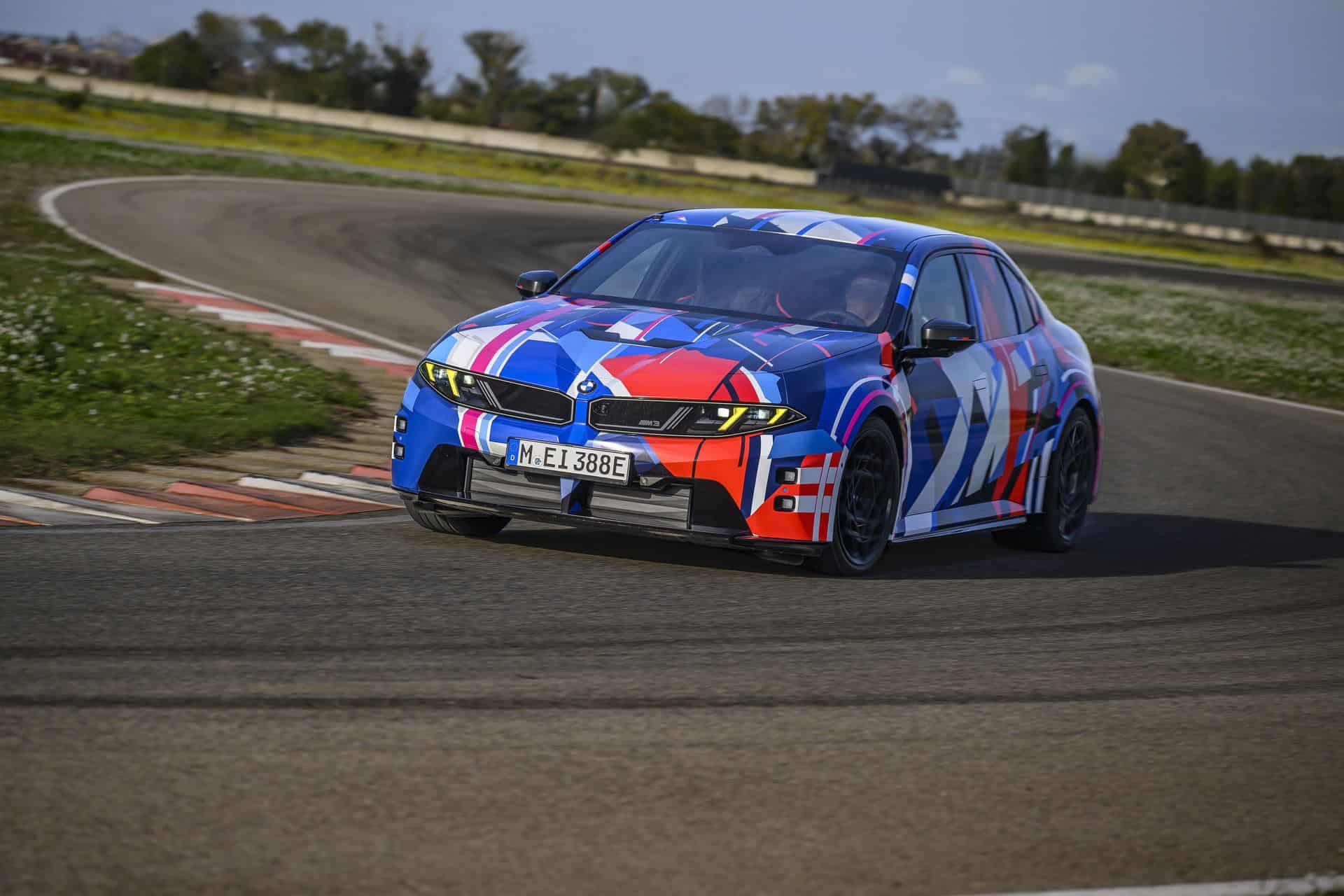
After a day in camouflaged prototypes on the Circuit de Provence, I have to walk part of that back. Every electric BMW performance car so far has been an M Performance model. The electric BMW M3 is the first full M car to go electric, and it drives like one. It has four motors and 838 hp (625 kW), and it still felt familiar within a few laps, which is not what I expected. It won’t replace the emotional pull of a combustion M3 for everyone, and BMW still won’t say what it weighs, but on a racetrack it does the things an M3 is supposed to do.
This was a prototype drive, with the limits that come with one. The cars were pre-production, wrapped in camouflage, and driven only on a closed circuit, much of the time behind an M4 GT4 pace car, with BMW M engineers riding along. I can’t tell you how it rides on a broken highway or what range it gets on a road trip, and I’ll be honest about how hard I pushed it. BMW’s preliminary figures are 1,200 Nm (885 lb-ft) of torque, a battery of about 100 kWh and about 300 miles of EPA range. The hardware behind those numbers is in our technical deep dive. This story is about what it’s like to drive.
Four Motors, 838 Horsepower And The One Number BMW Won’t Share
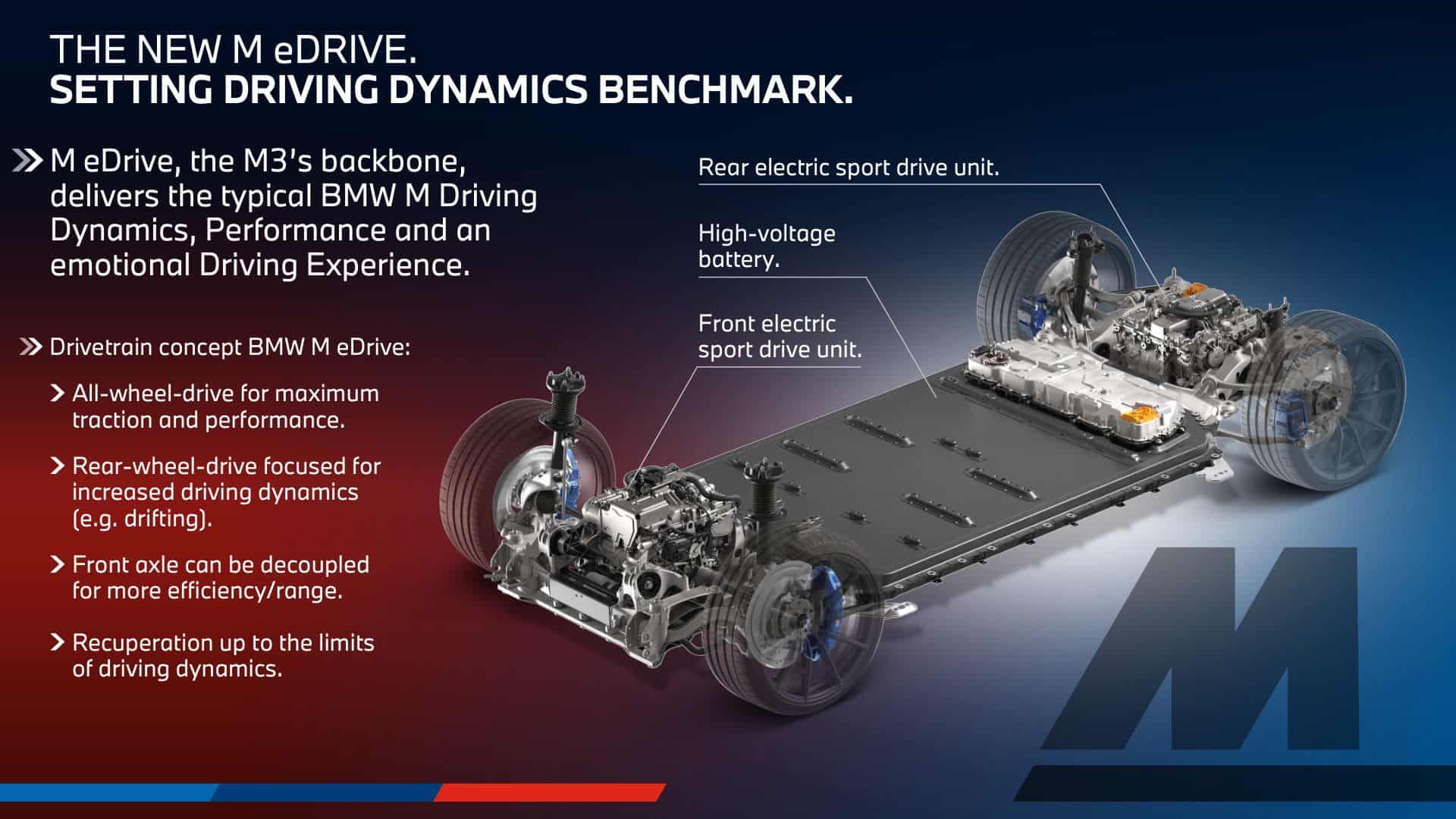
The electric M3 has one motor at every wheel, two per axle, and the axle ratings tell an interesting story. BMW quotes about 480 kW for the front axle and 560 kW for the rear. Add those up and you get more than a megawatt, well over 1,000 hp, yet the car’s system output is 625 kW. When I asked Philipp Schmitt, one of BMW M’s vehicle dynamics engineers, about the gap, he said it comes down to the balance between what the battery can deliver and what each motor can put out. In other words, the motors aren’t the limit.
I’ll say what BMW won’t: that leaves room. BMW M has a long habit of launching a base M3 and following it with something sharper, and a drivetrain that is already rated well above its system output is an obvious place to start. Nobody at BMW M was going to confirm that, of course.
Then there’s the weight. BMW still won’t publish a curb weight, though its own presentation concedes “the higher vehicle weight of a high-performance BEV,” and the car is clearly heavier than a regular i3, with two extra motors and a battery built for track work. People are going to talk about it, because the number on paper will look heavy, the way the M5 Touring’s does. My take after driving it: unless you’re at eight or nine tenths, you won’t feel the weight. If someone told me they had taken 200 kg out of the car I drove, I doubt I could have told the difference. I should be upfront about my own imposed limits, though. I never drove it beyond about four tenths, so I can’t tell you how the mass behaves right at the edge. Schmitt can, and I’ll get to his laps.
Learning To Trust The Grip In The Standard Startup Mode
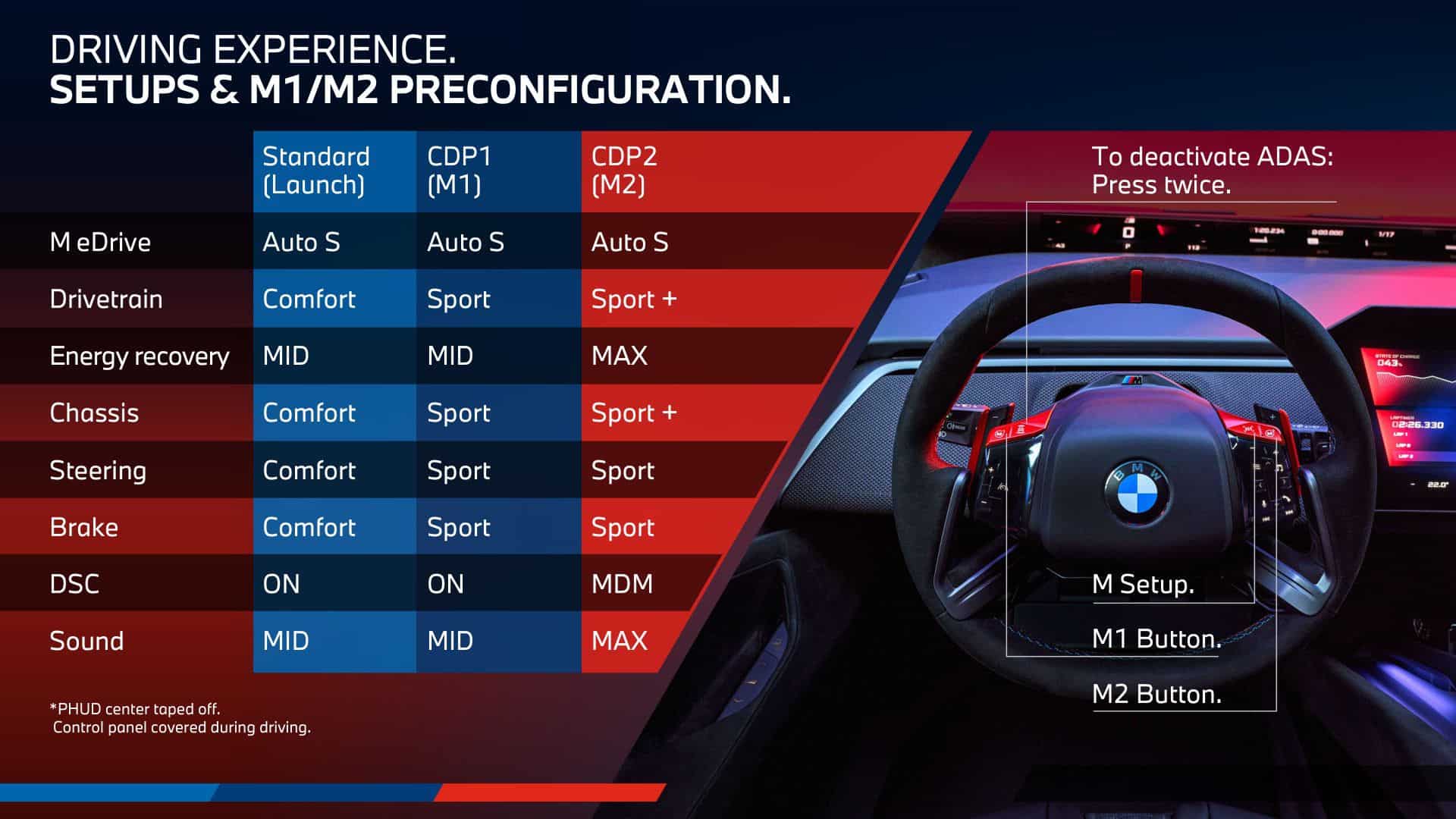
The electric M3 starts every drive in what BMW calls the standard startup mode: M eDrive in Auto S, which shifts the stages automatically, Comfort settings and DSC fully on. BMW clearly spent a lot of time on this mode, and it’s a lot faster than the word “standard” suggests. My passenger was Carsten Wolf, who is responsible for the functional integration of the whole project, and his advice was simple: go into the corner slowly, but get on the power early and come out quick.
The first thing I had to do was stop braking where my combustion-car brain told me to. I was braking too early, over and over, because the car simply carries more speed into a corner than I expected and stops harder than I expected. At times I was using maybe 10-20 percent of the accelerator, and it was still ridiculously fast. This is a car you have to learn to trust, and that took me a few laps. Once I did, the grip at both ends was enormous.
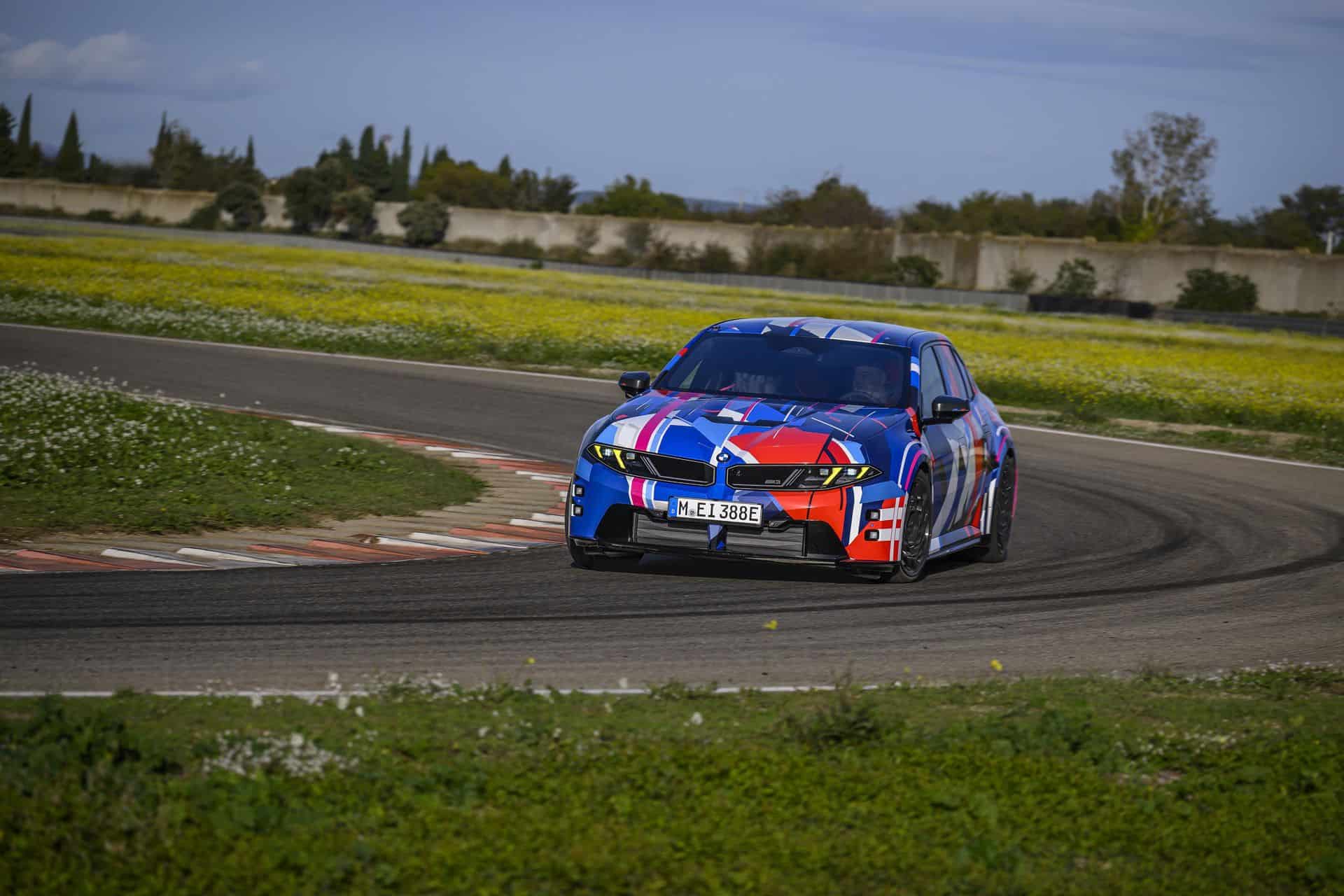
The moment that convinced me came mid-corner. At the point where any combustion car would have had me countersteering to catch the rear, the M3 just held its line. I wasn’t countersteering at all. So I started trying to provoke it. I turned in late, turned in early, and deliberately missed the racing line to see if I could upset the rear with the throttle. I mostly couldn’t. There was one moment where it stepped out a little, and it came straight back. With DSC on, the M3 lets you do something that feels wrong at first: hold the steering at an angle and floor it, without the car scrubbing or sliding.
That is the opposite of what I was taught. In a combustion car, you’re supposed to straighten the wheel before you put the full power down. When I asked Schmitt about that from the driver’s seat, he said that’s not how this car works anymore. “You can go really early on the accelerator pedal,” he said. “The system is still active, but it’s helping you by providing good stability and good drivability.” Riding with me, he kept shouting “floor it” mid-corner, which is not something an engineer usually tells a journalist in a prototype.
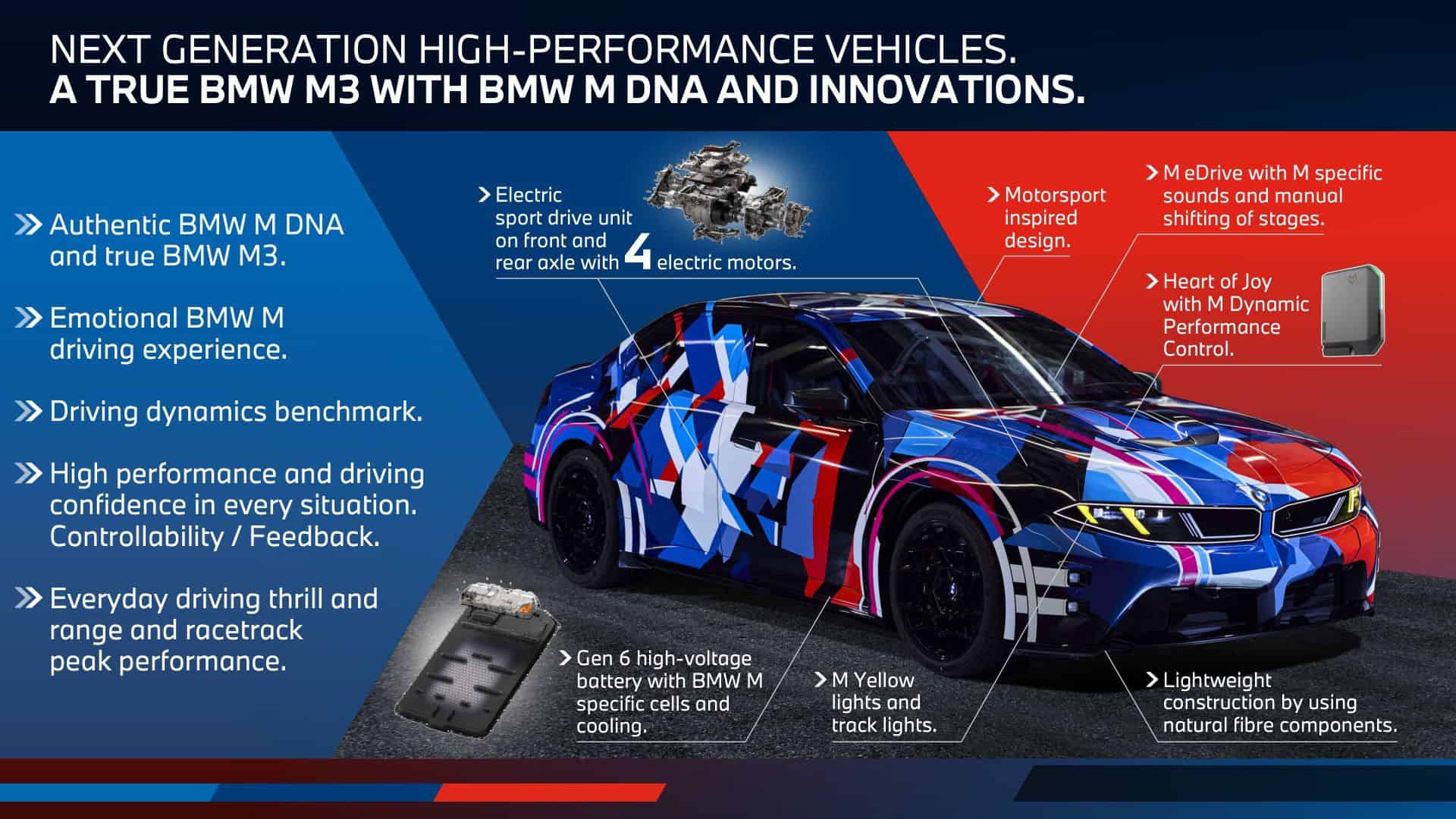
Most of the credit goes to what BMW calls the central brain, or the Heart of Joy with M Dynamics Performance Control. In the workshops, BMW M explained that the M3’s control software runs on a single computer that recalculates every millisecond what each wheel should do, and that it sends more torque to the outside wheels on both axles as the cornering load builds. You don’t feel any of that as an intervention. You feel a car that keeps pulling out of a corner when it should be pushing wide or stepping out.
What I didn’t expect was how much the car talks to you. You get feedback through the accelerator, through the steering and through the sound, and it adds up to knowing what the car is doing at all times. With the sound on, there were moments when I honestly couldn’t tell I was in an EV. The performance gave it away. I’ve driven BMW’s electric M Performance cars, and this feels a few levels above them.
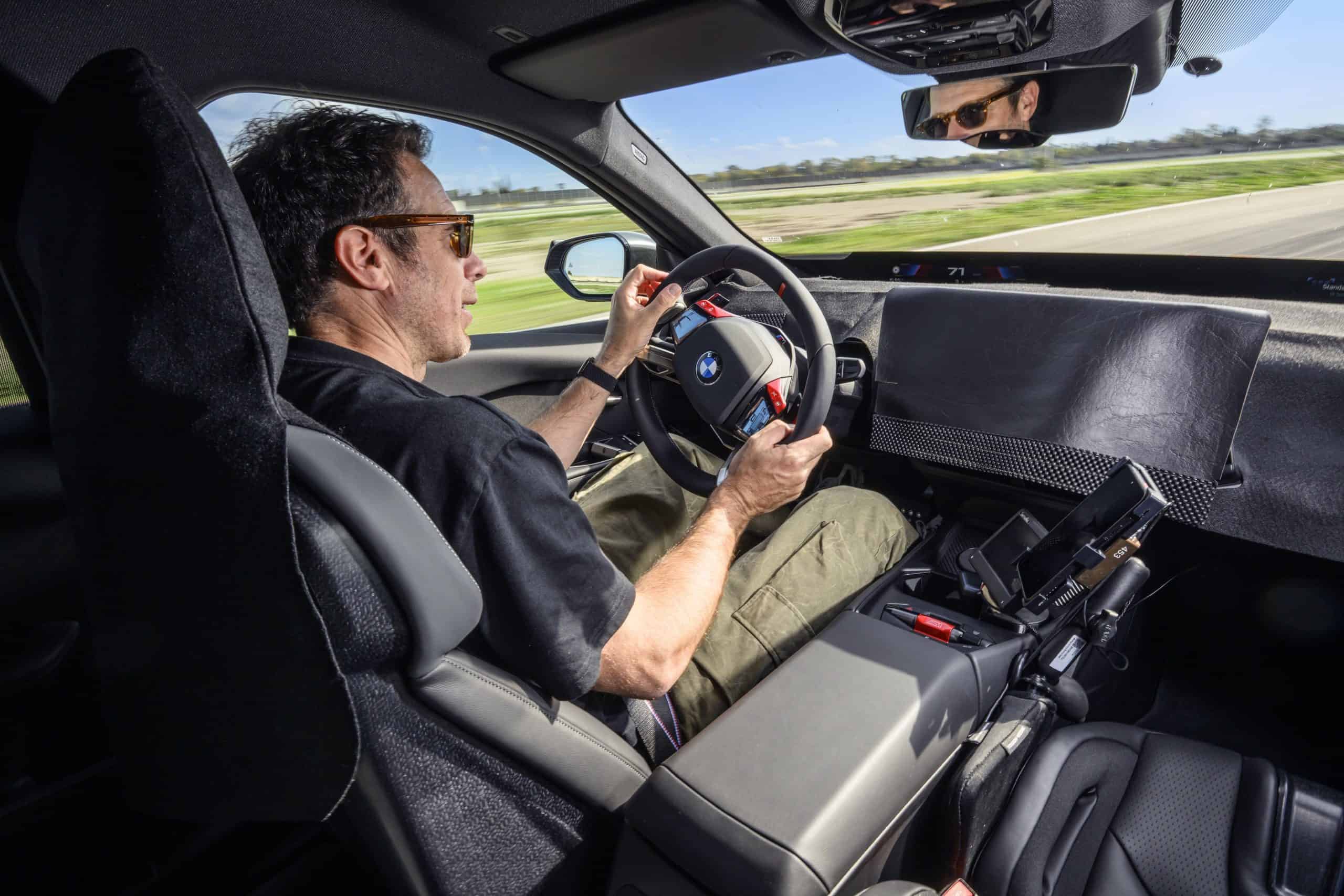
The steering is the clearest example. In the i4 M60 and BMW’s other electric M Performance cars, the steering has always felt a little numb to me. This one is a lot better when it comes to feedback. You can feel the forces building through the rim. Philipp Brunn, who heads the M3 project, told us in the workshop that filtering the front motors’ drive disturbances out of the steering, while keeping the road feel, “took us quite some time to get right,” and it shows. Schmitt put the goal simply: whatever the drivetrain, the driver always needs the information from the front axle. “Are we going sideways? Is there something in the street?”
Do M eDrive’s Six Stages Make It Feel More Like An M3?
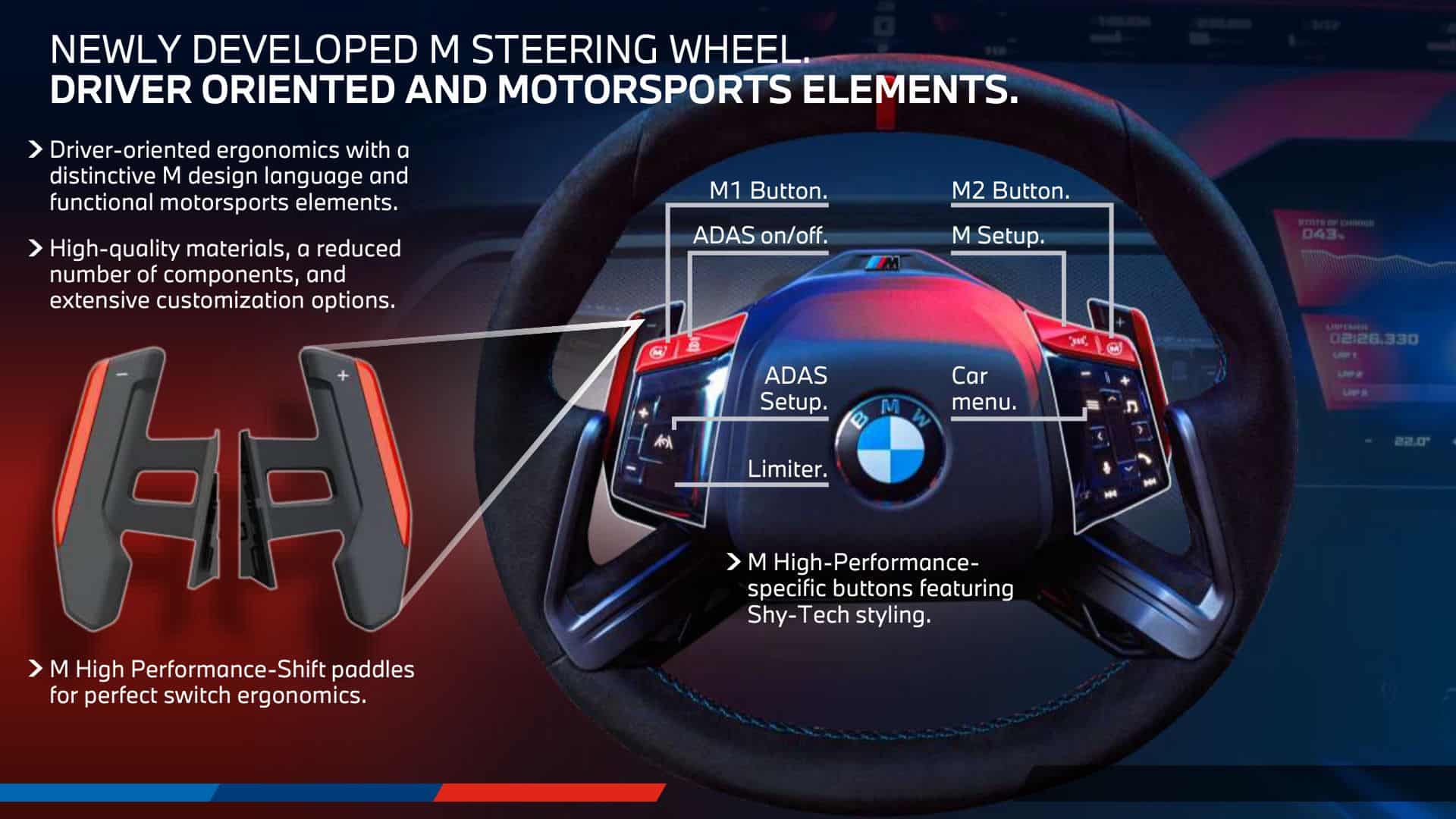
On paper, six “stages” with paddles, shift lights and a limiter sound like a gimmick bolted onto a car that doesn’t need gears. After a few laps in M1 with the paddles in my hands, I came away liking them. Pulling a paddle drops you into Manual S, where the car stays in the stage you pick. Shifting up at full load gives you a real kick in the back and a burble from the M eSound, and a kind of kick between stages that tells you something changed. Hit the top of a stage and the car gives you a jolt and runs into a hard limiter, the way a combustion M3 would.
Why six and not eight “gears”? “Because the speed range of the car and the ability to control the torque in every stage are perfectly matched with the number six,” Schmitt said. He described the system as something to help the driver understand the powertrain, “to give him some orientation, and in the end to have some fun,” and that’s exactly how it worked for me. It’s the difference between the M3 and the i4 M60. In the i4 M60, you go very fast but you don’t really know what’s going on underneath you. Here, the paddles and stages tell you. BMW also says the stages don’t cost any acceleration, and anyone who doesn’t want them can choose a single-stage mode.
The sound deserves a mention too. It’s loud inside the car, and according to BMW it’s designed to be heard with a helmet on. I liked it, especially the double-tap sound on each shift, and it adds real information about speed and load instead of just noise.
The Brakes Barely Get Warm, And That Changes How You Drive
In Sport, the brake pedal travel gets much shorter, and I was barely tapping it before the car slowed hard. The stopping power is so strong that I wasn’t always sure how much pressure I needed, and I could never tell whether I was in ABS or not.
That’s by design. The system always gives priority to regeneration, up to 540 kW, and the friction brakes only add force beyond that. The regen is always there, even during hard cornering or ABS stops, because the electric motors do the ABS regulation themselves, wheel by wheel, at one-millisecond intervals.
We measured the result. Right after one of my sessions, the discs read in the 70s Celsius (roughly 160 to 170 degrees Fahrenheit). BMW said a combustion M3 driven the same way would come back at around 300 degrees Celsius (572 degrees Fahrenheit). BMW told BMWBLOG after the event that because regeneration does so much of the work, the M3’s brake system weighs slightly less than the current M3’s.
The energy goes back into the battery instead. BMW says three laps of the Circuit de Provence earn you roughly a fourth from recovered energy. The trip data for the day’s driving in our car showed 46 kWh used, close to half the battery.
MDM Is Where The Electric M3 Starts To Play
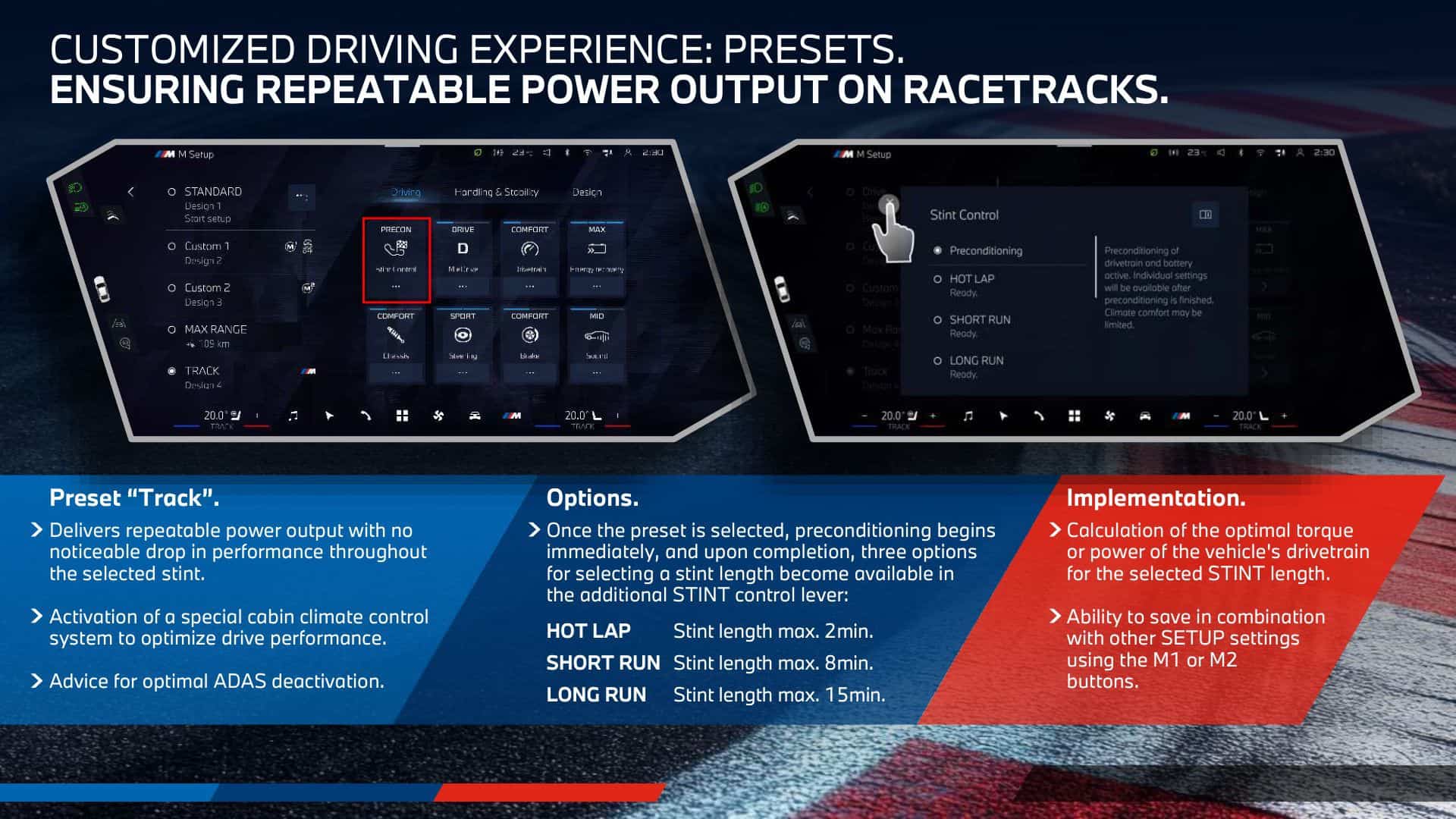
For my last session, Carsten set everything to maximum: Sport Plus drivetrain and chassis, Sport steering and brakes, Max energy recovery, Max sound and M Dynamic Mode (MDM). Setups like this can be named, saved and assigned to the M1 or M2 buttons on the steering wheel, so you don’t have to dig through menus every time.
MDM gives you more slip angle but still catches you before you’re in real trouble, much like MDM in a combustion M car. That’s where the M3’s rotation started to stand out. Once I trusted it, I could go deep into the apex, let the rear rotate the car and come out with full power. That was my favorite part of the day. The car turns in a way I didn’t expect from something this heavy, and it lets you adjust your line with the throttle.
That is exactly what BMW M was aiming for. “It’s really so important for us that the car feels like a proper M3,” Carsten said. “That it talks to you like a proper M3 should. That it’s tail happy.” When I asked him whether MDM works differently here than in today’s M3, he said, “Mechanically, technologically, it’s completely different. But the philosophy is exactly the same.” The car should drift freely, allow the slip angle M3 drivers are used to, and step in when it needs to.
What A BMW M Development Driver Does With DSC Off
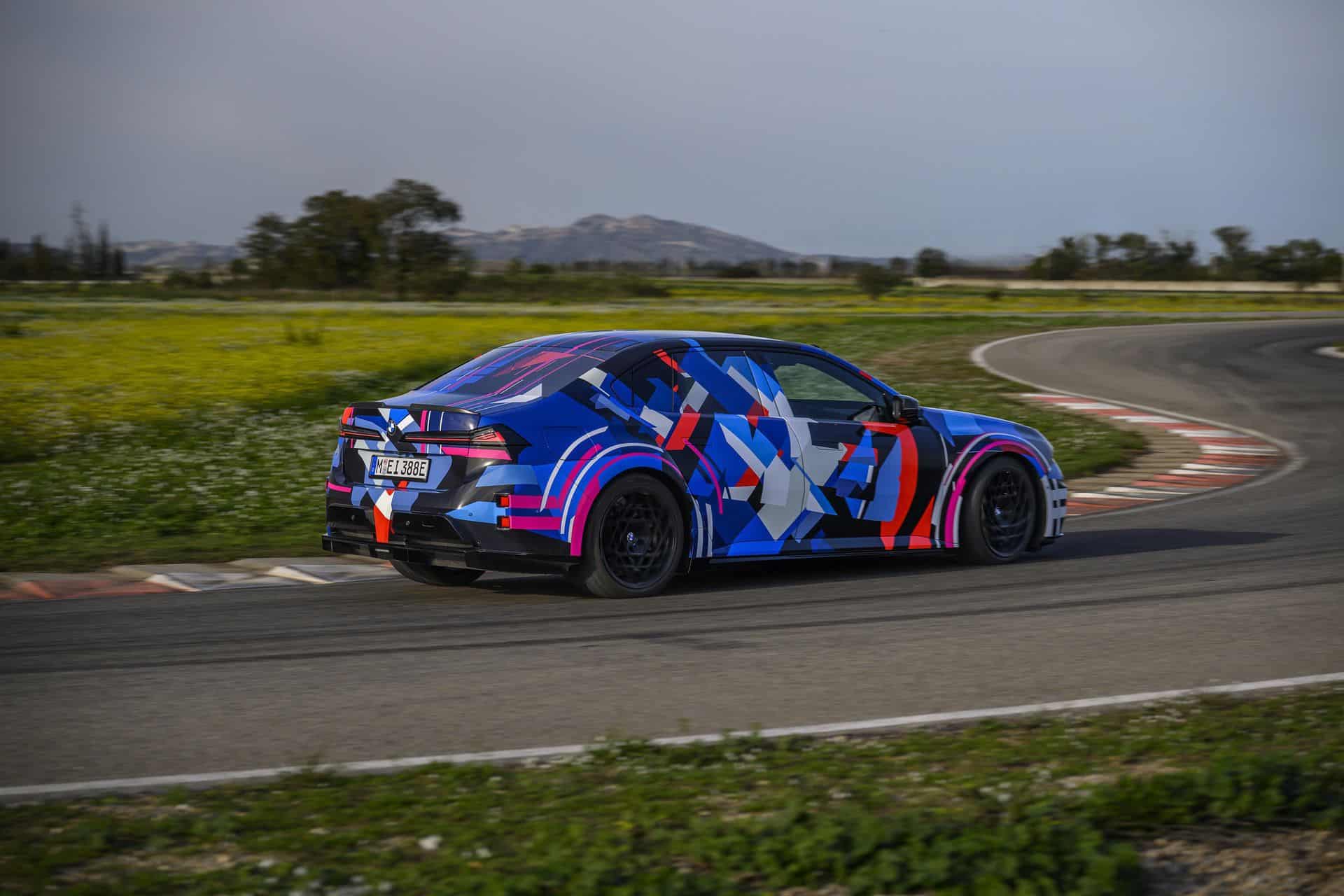
DSC off really is off. Turn it off and a new menu called Drive Balance appears, with three settings: Neutral, Sport, which allows more oversteer, and Sport Plus, which Carsten said behaves pretty much like a rear-wheel-drive car. In MDM, Drive Balance is fixed in Sport. With DSC off, there’s no stabilization at all. If the rear comes around, you have to catch it yourself.
That’s why I left DSC off to the professional. With Schmitt driving and DSC off, the M3 spent most of the lap sideways. He went into the chicane completely sideways, drifted at nearly 150 km/h (93 mph), shifted stages mid-slide and filled the mirrors with tire smoke, all while narrating. The drifts looked almost easy, and when I asked whether they really are easier than in a gasoline car, he said, “It’s easy.”
What struck me most, though, was what he said afterward: “There’s no point where this car is somehow scary. You have the control of the power every time.” Watching from the passenger seat, I believed him.
Why It Feels Stiffer And Lighter Than It Should
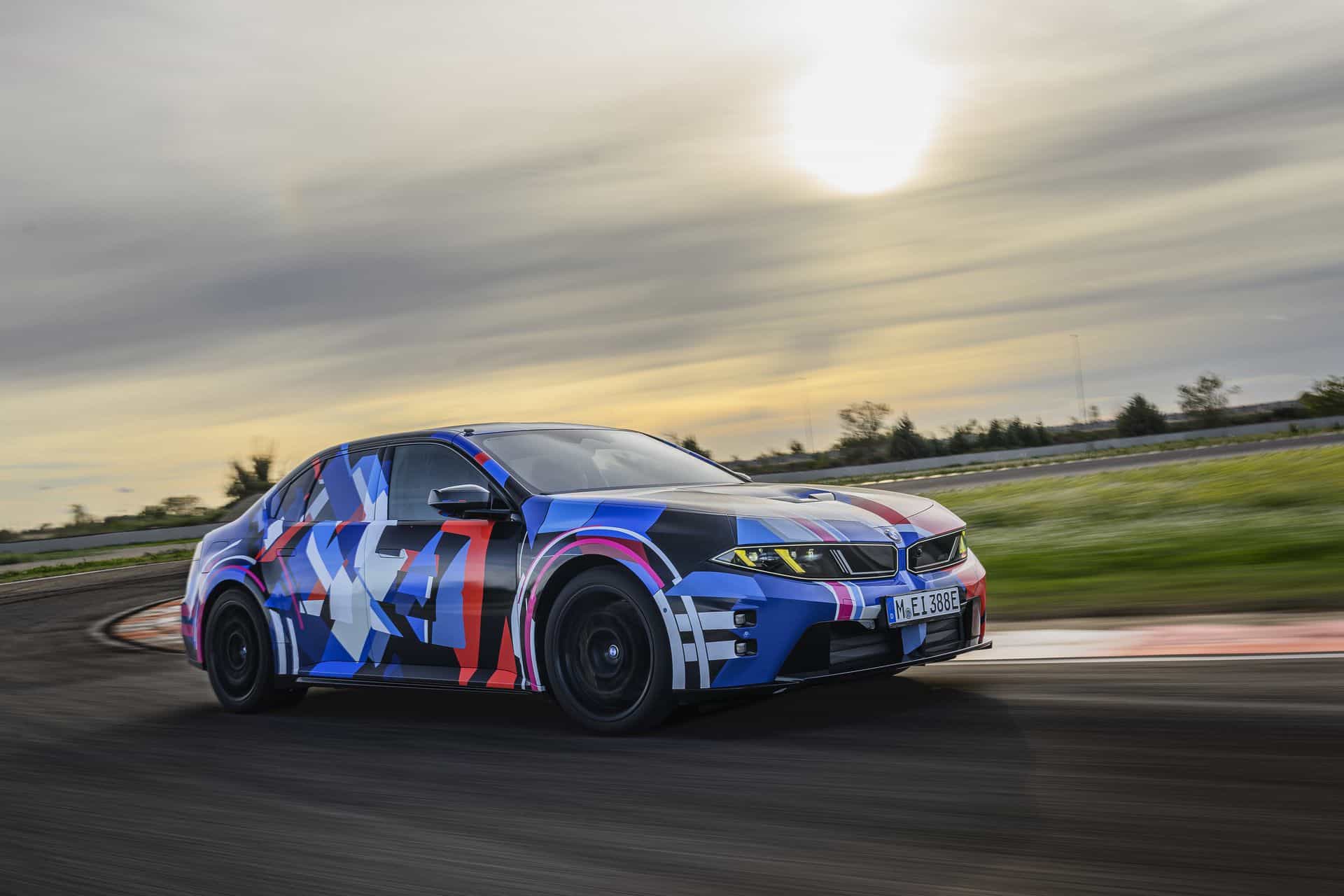
The engineering behind the car explained a lot of what I felt on track. BMW M uses the lower section of the battery housing as a shear plate and bolts it to both axle carriers, then adds stiffening plates, M-specific top mounts and a strut from each front shock tower into the A-pillar. BMW’s argument is simple: if the body flexes, the dampers can’t do their job. The rest is software. The rear-biased torque split, the torque vectoring across both axles and the ABS running through the motors all work so quickly that you never feel them as separate systems. What you feel is a car that rotates when you want it to and puts its power down where I’d have expected a combustion M3 to spin its rear tires.
The Camouflaged Prototype Stays Close To The M Concept
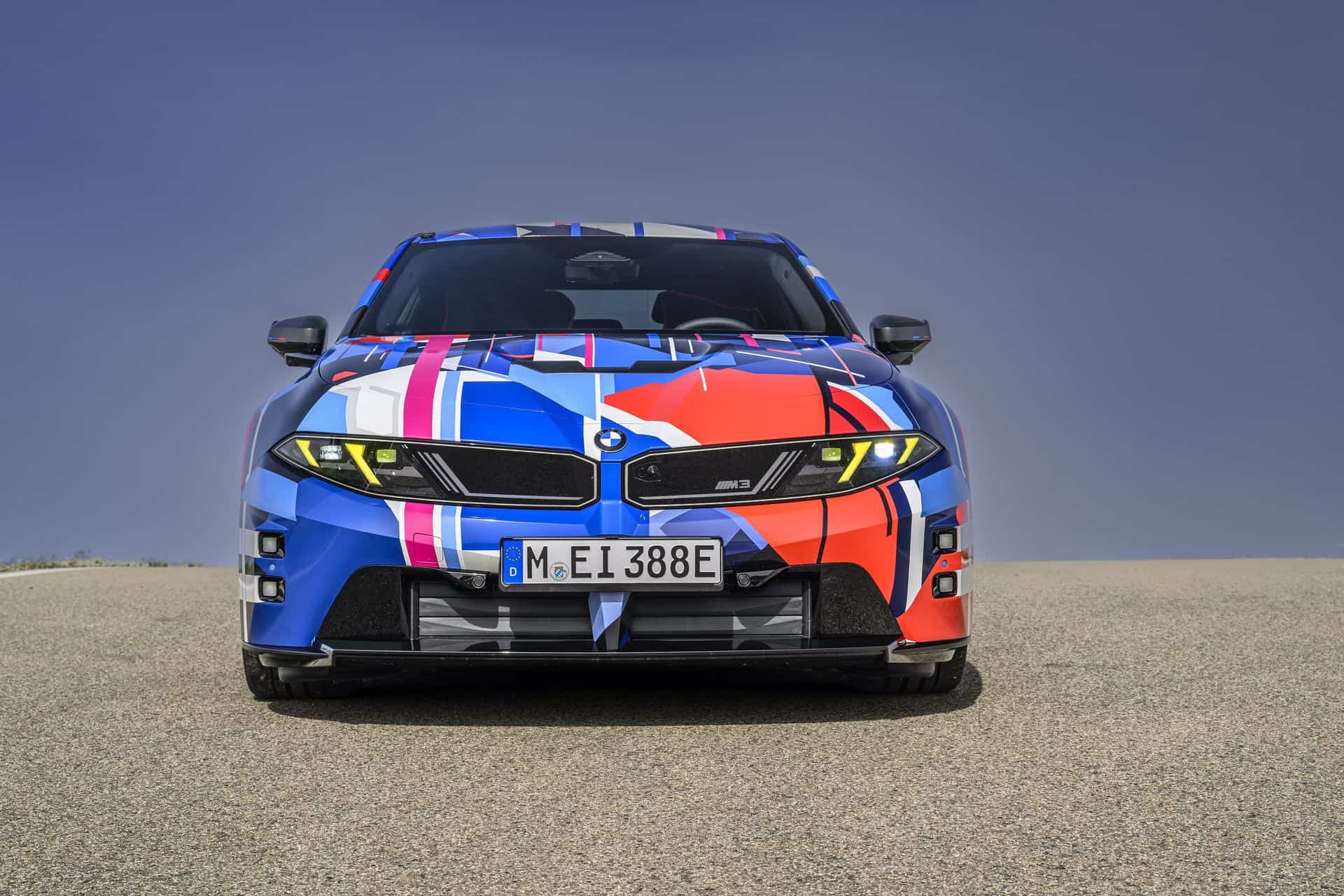
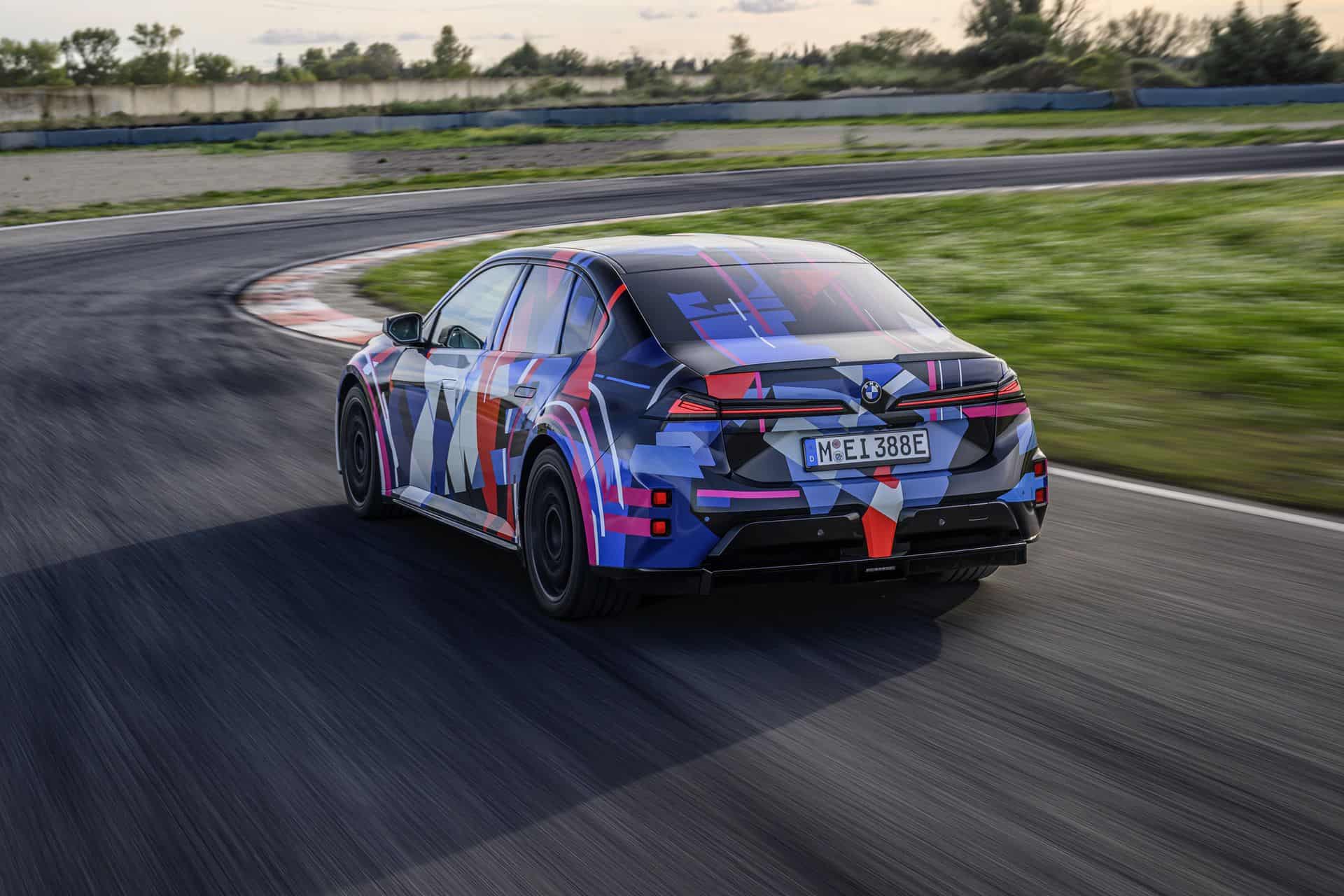
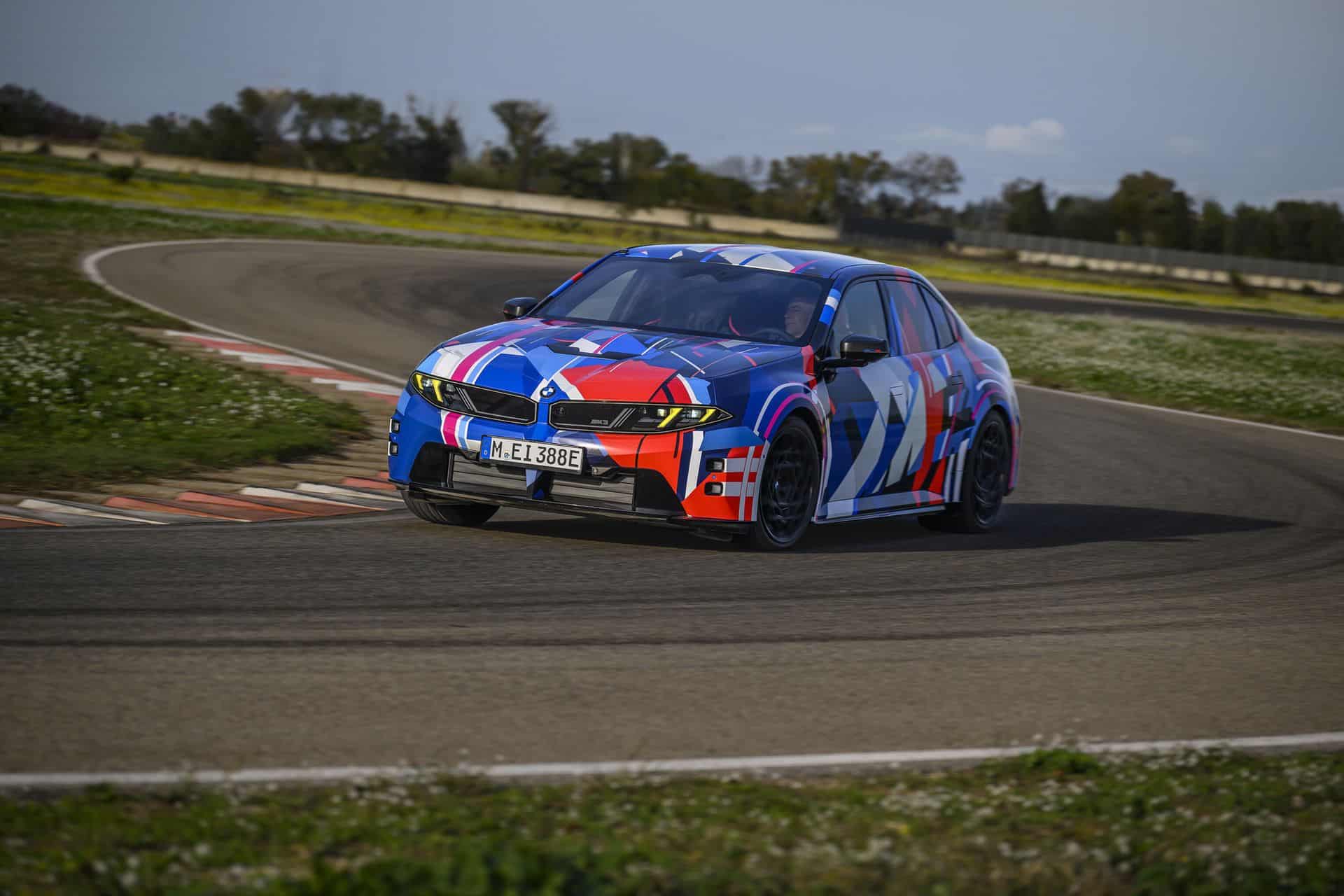
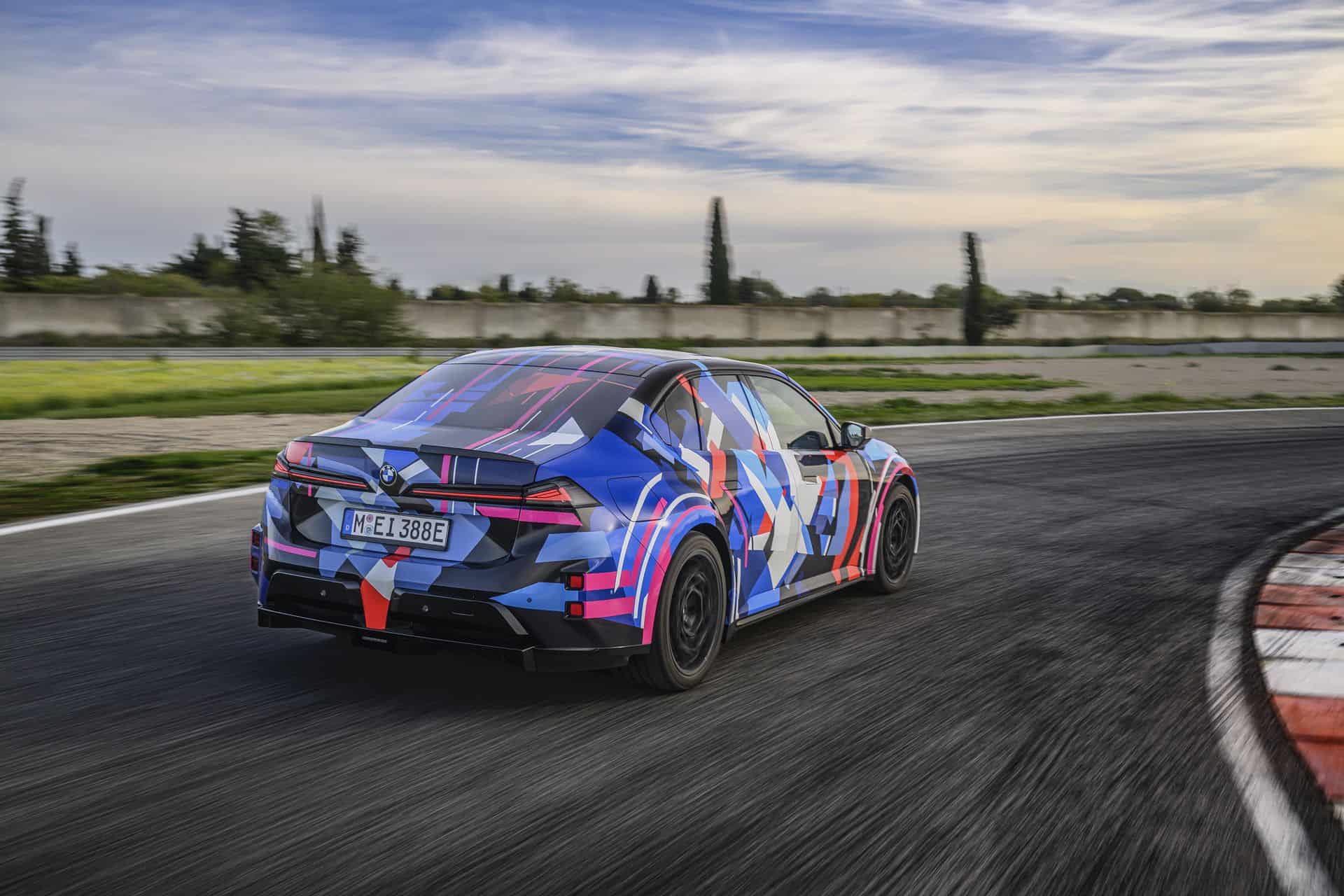
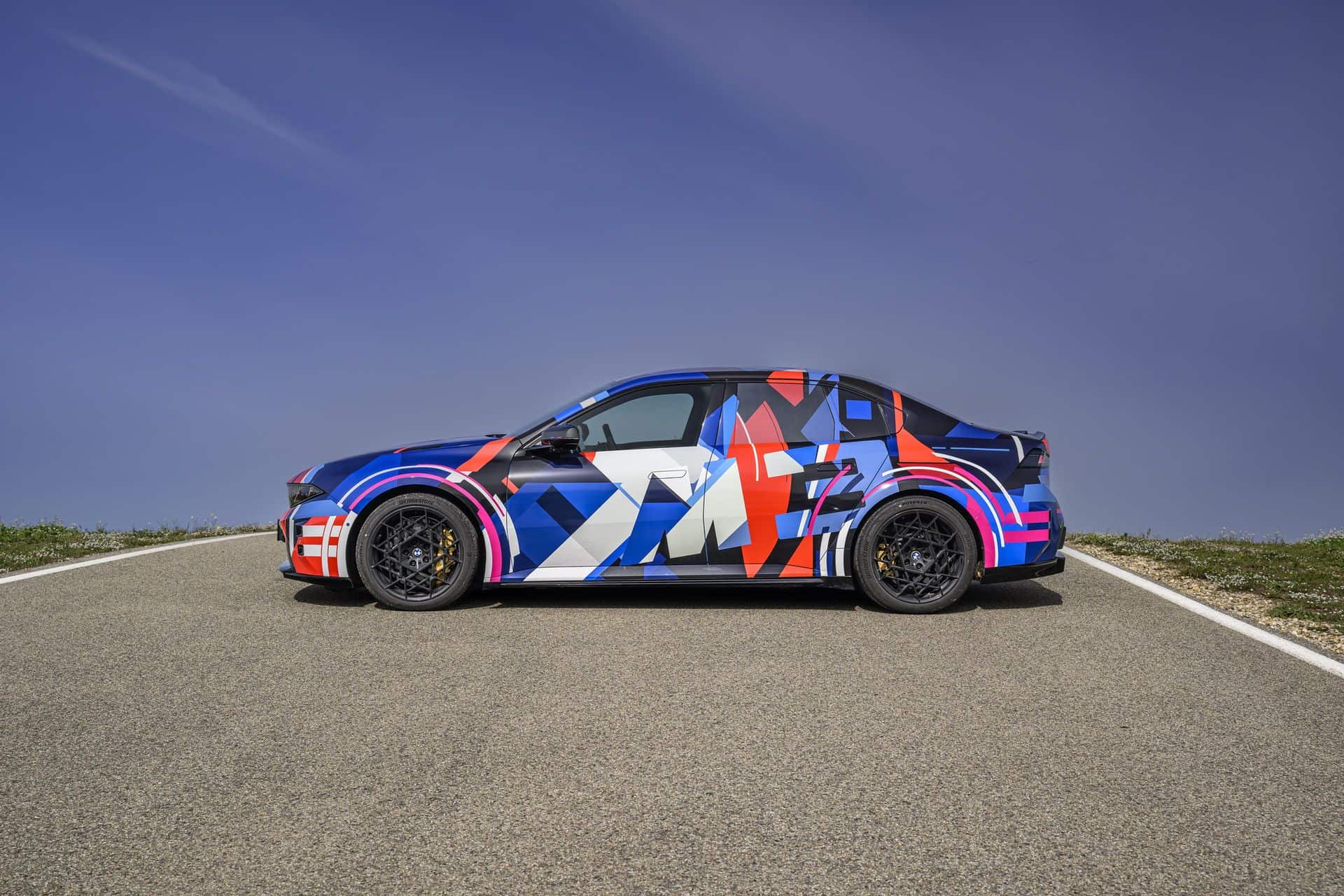
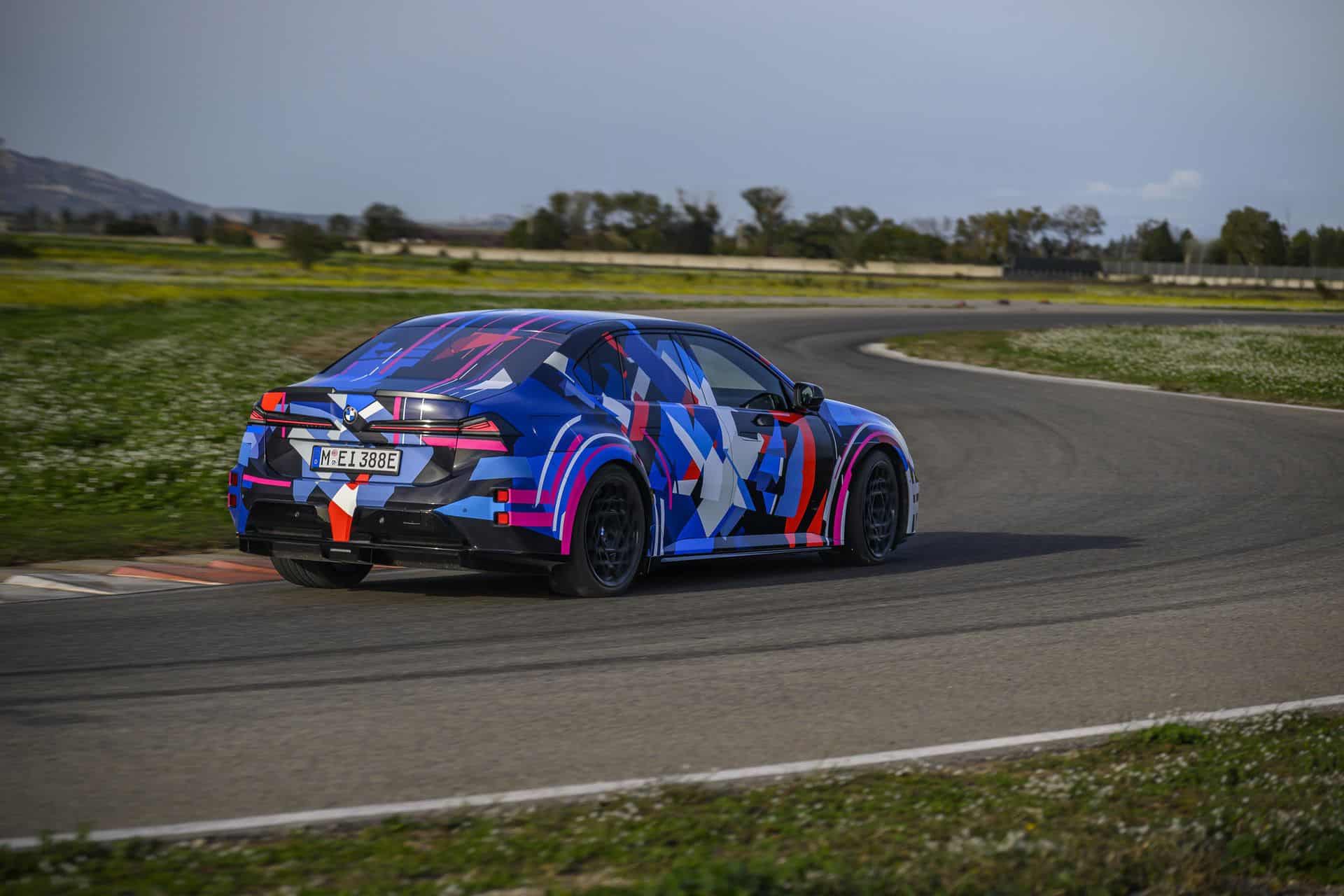
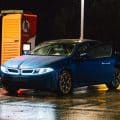
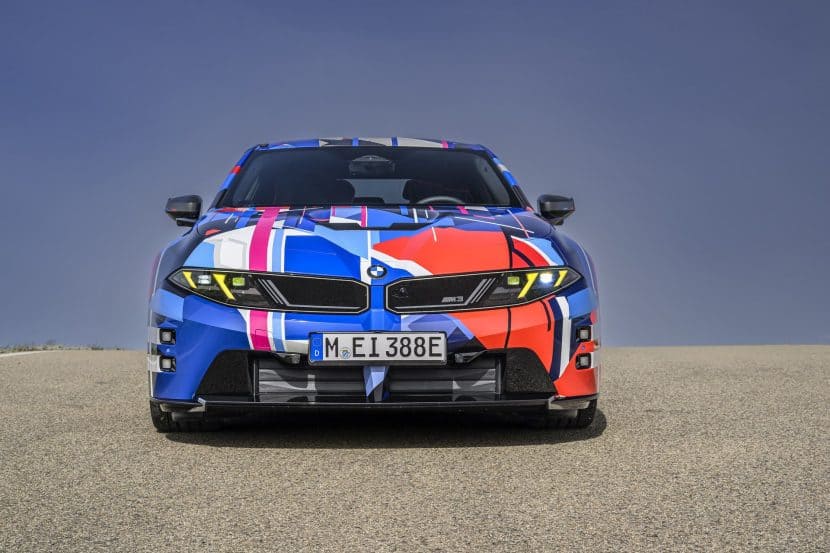
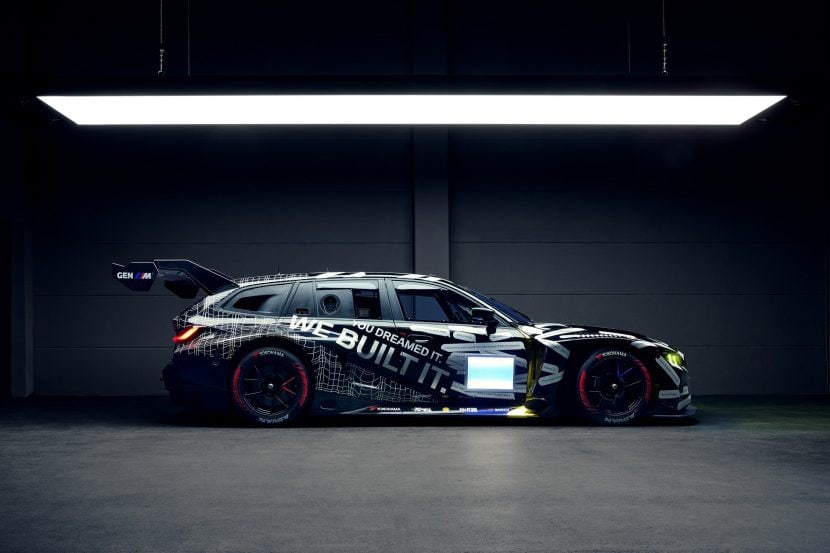
Even under camouflage, the M3 is obviously close to the M Concept Neue Klasse. It’s so close, in fact, that I suspect BMW designed the production car first and the concept afterward. That’s not how BMW usually does it, but the design is about 90 percent the same.
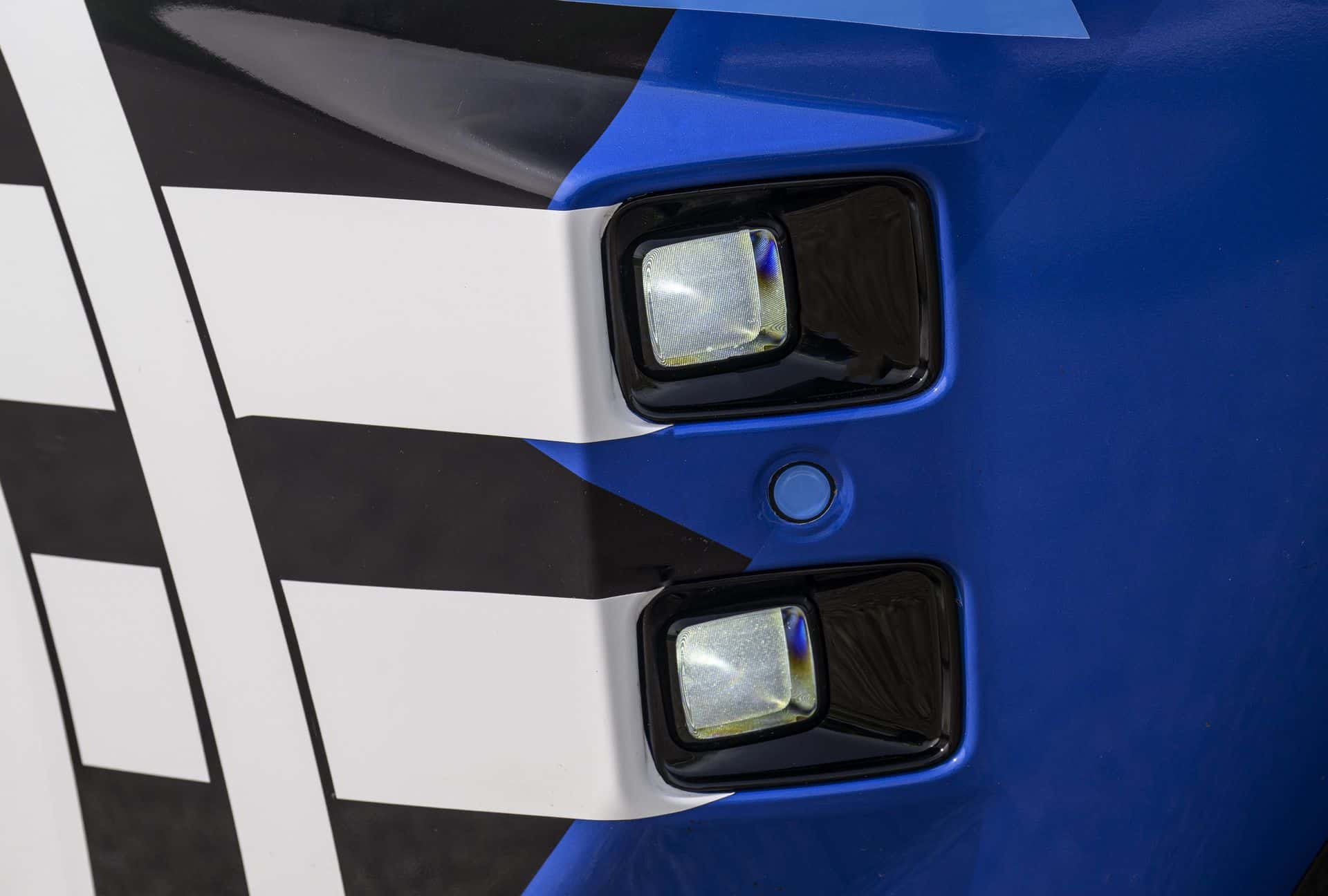
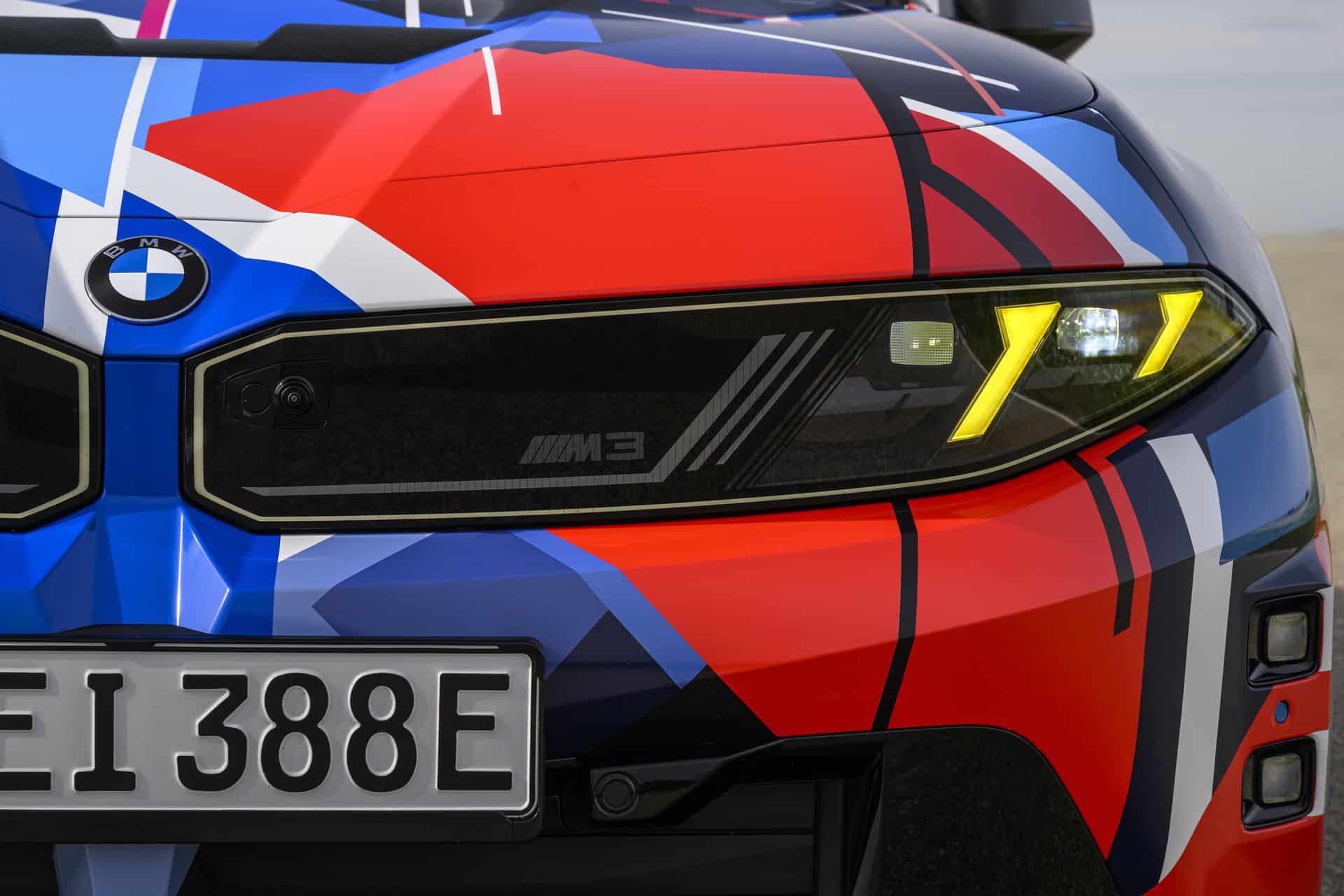
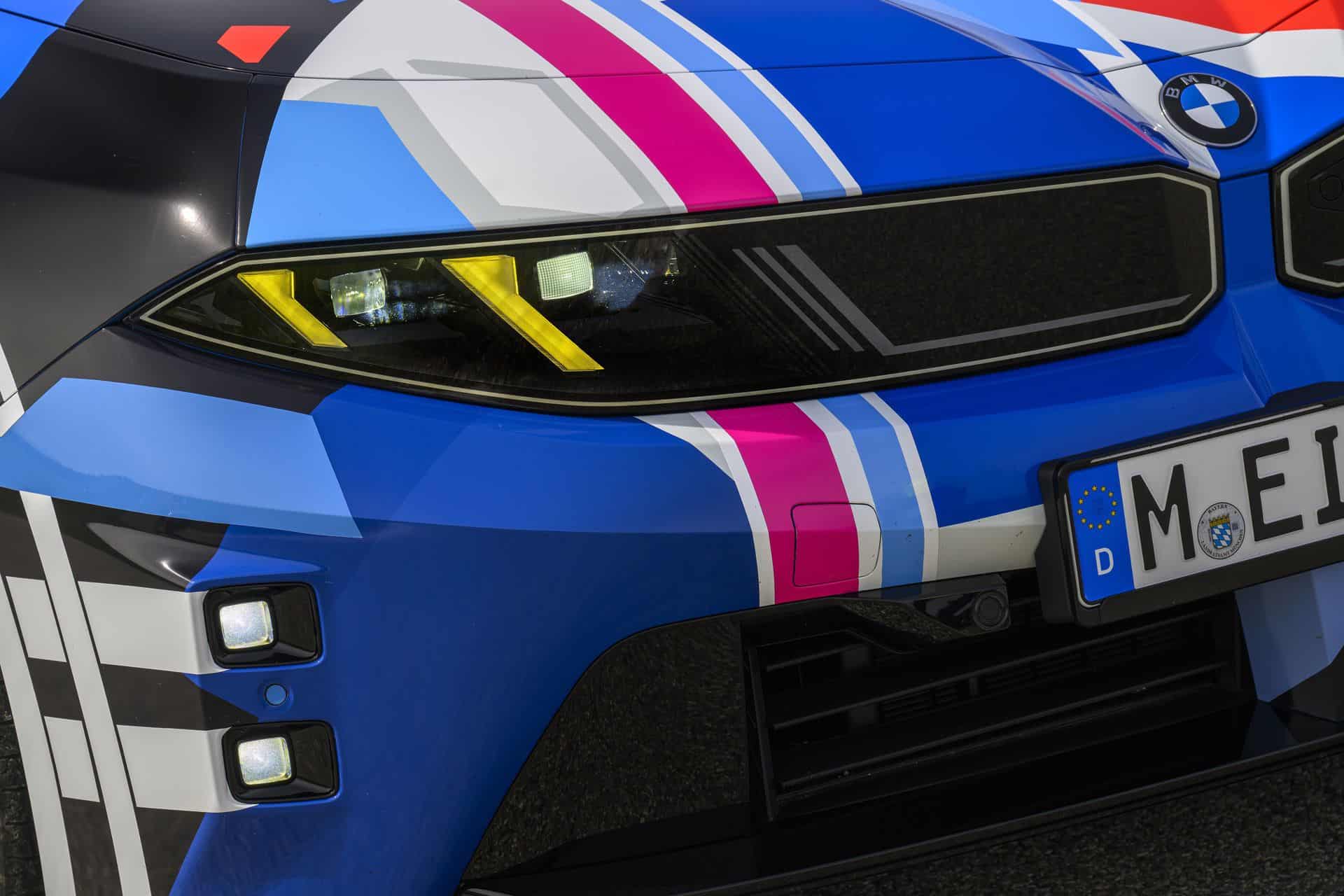
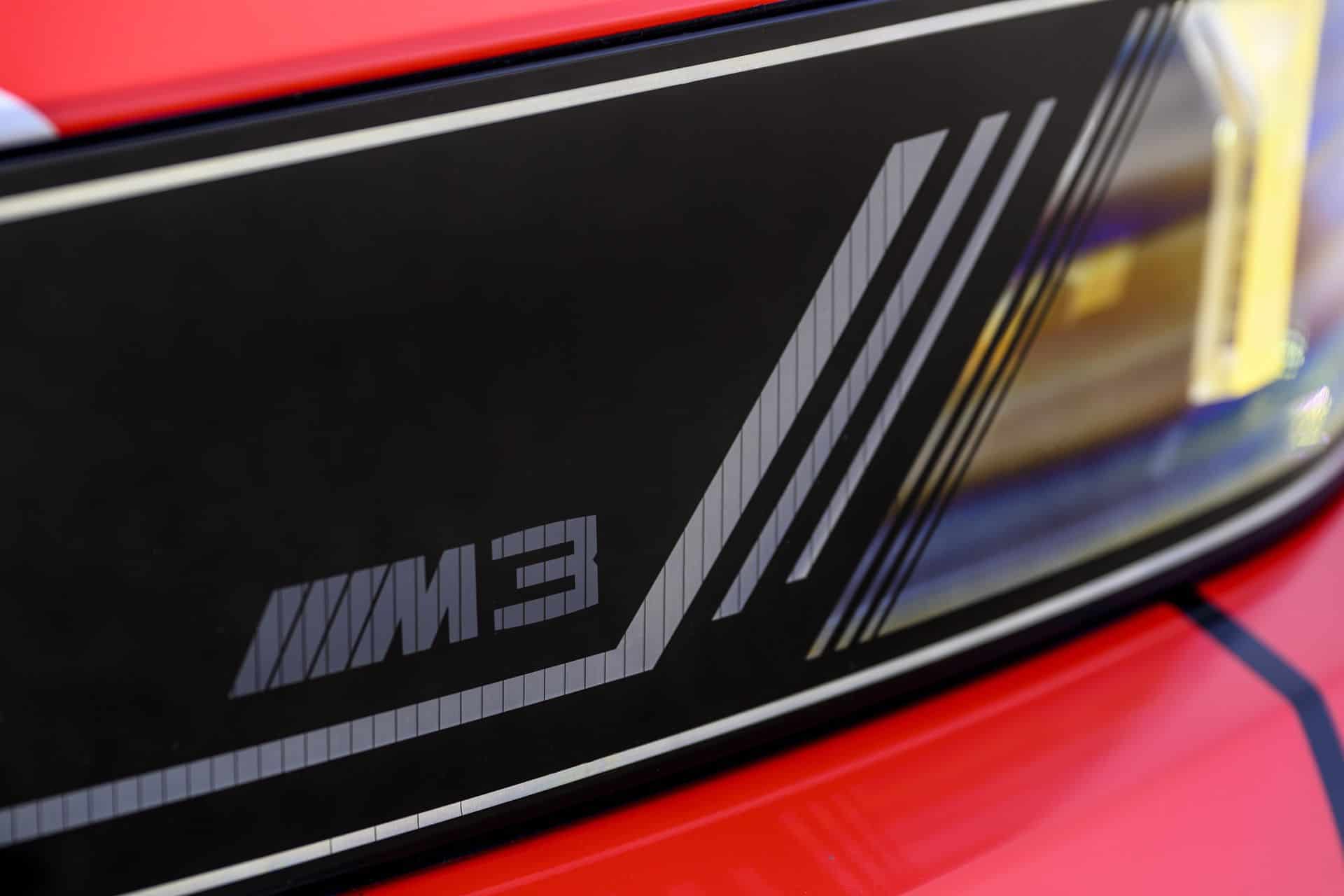
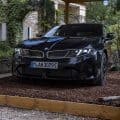
At the front, you get the yellow lights that M cars and M Performance models now use, the M stripes, the M3 badge and graphics that are nearly identical to the concept’s. The lower front end is the one big change. The concept had a dramatic, two-tier splitter, and the production car gets a single one. BMW told me pedestrian-safety rules made the concept’s version impossible, though I wouldn’t be surprised if a more aggressive design returns on a special M3 later.
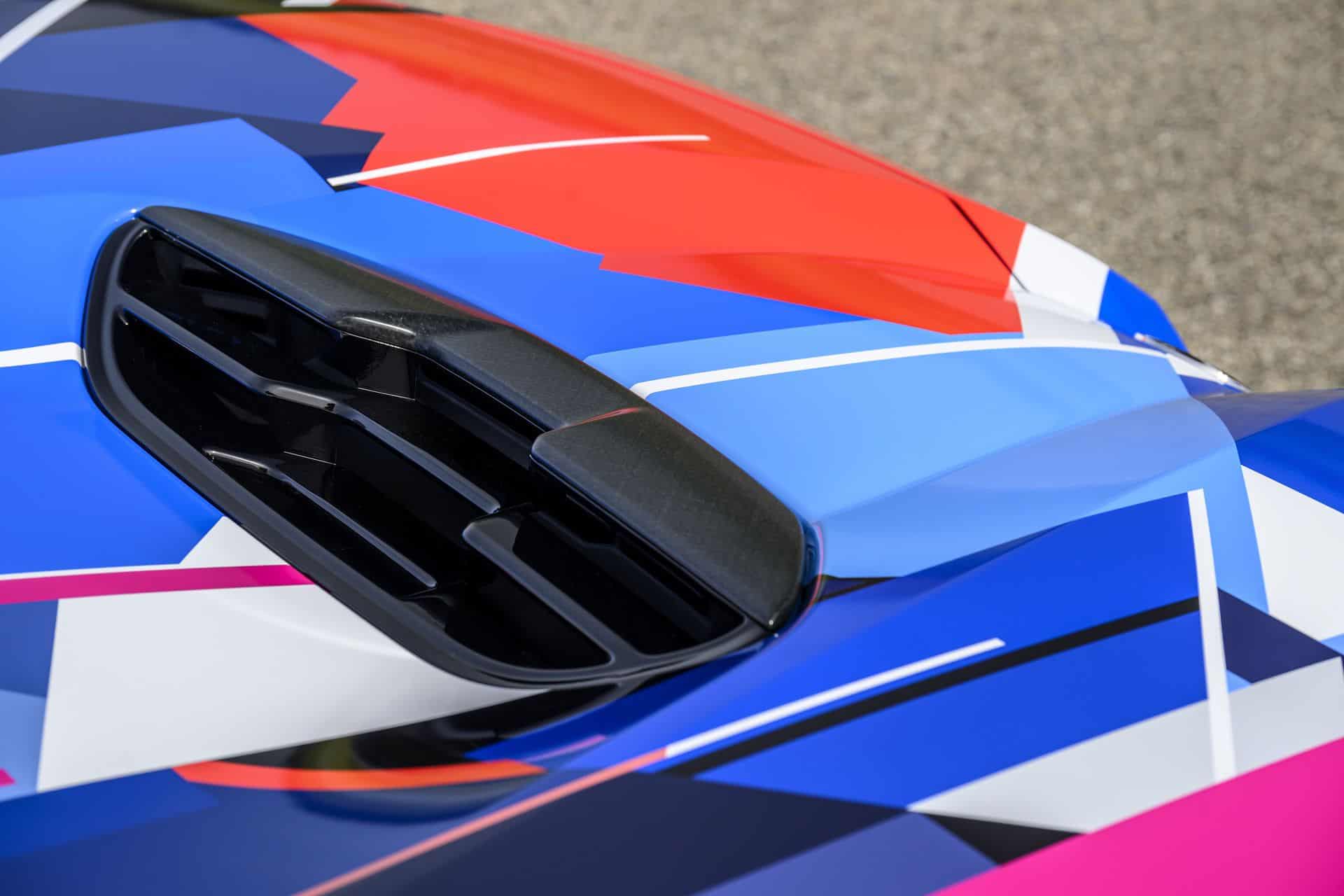
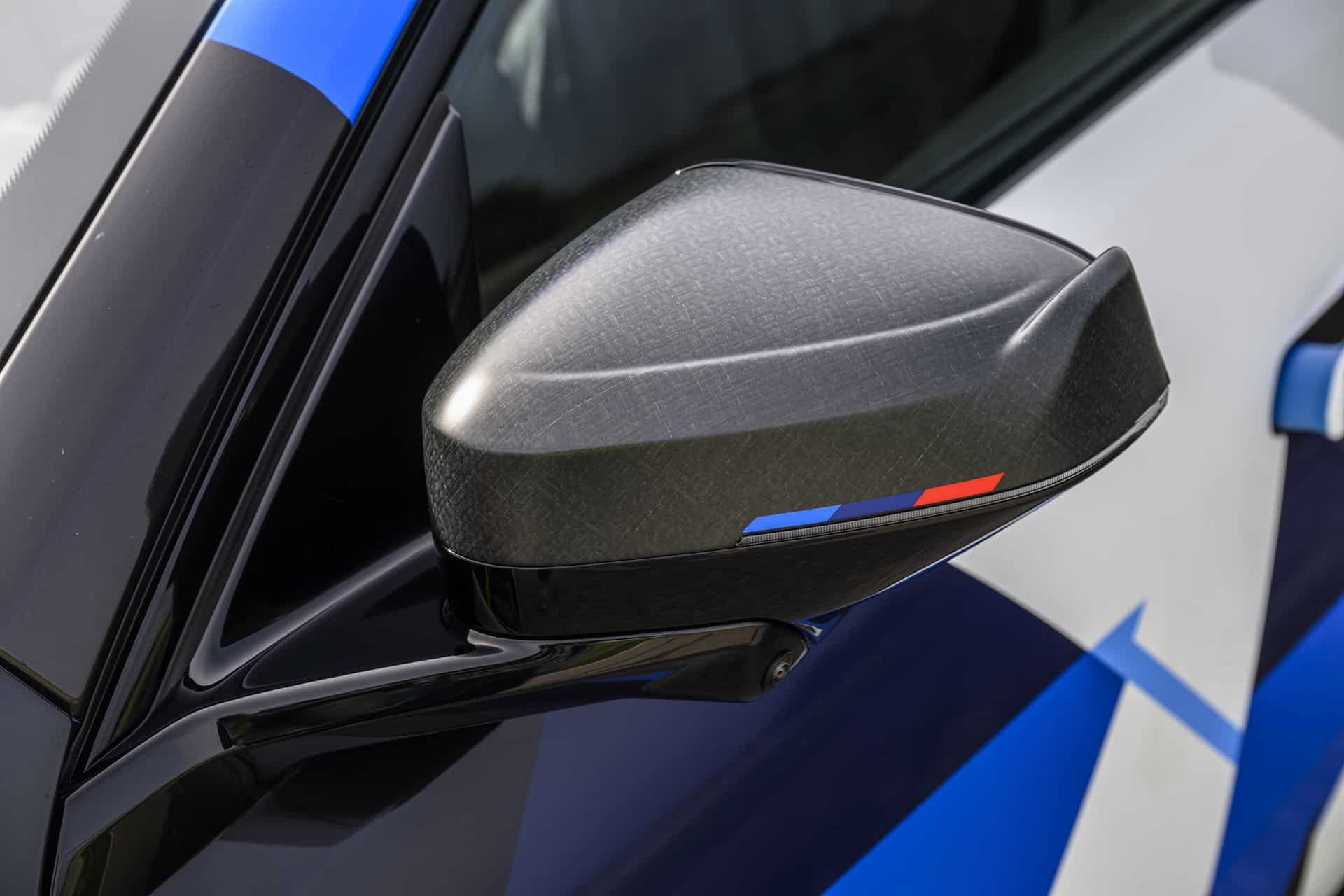
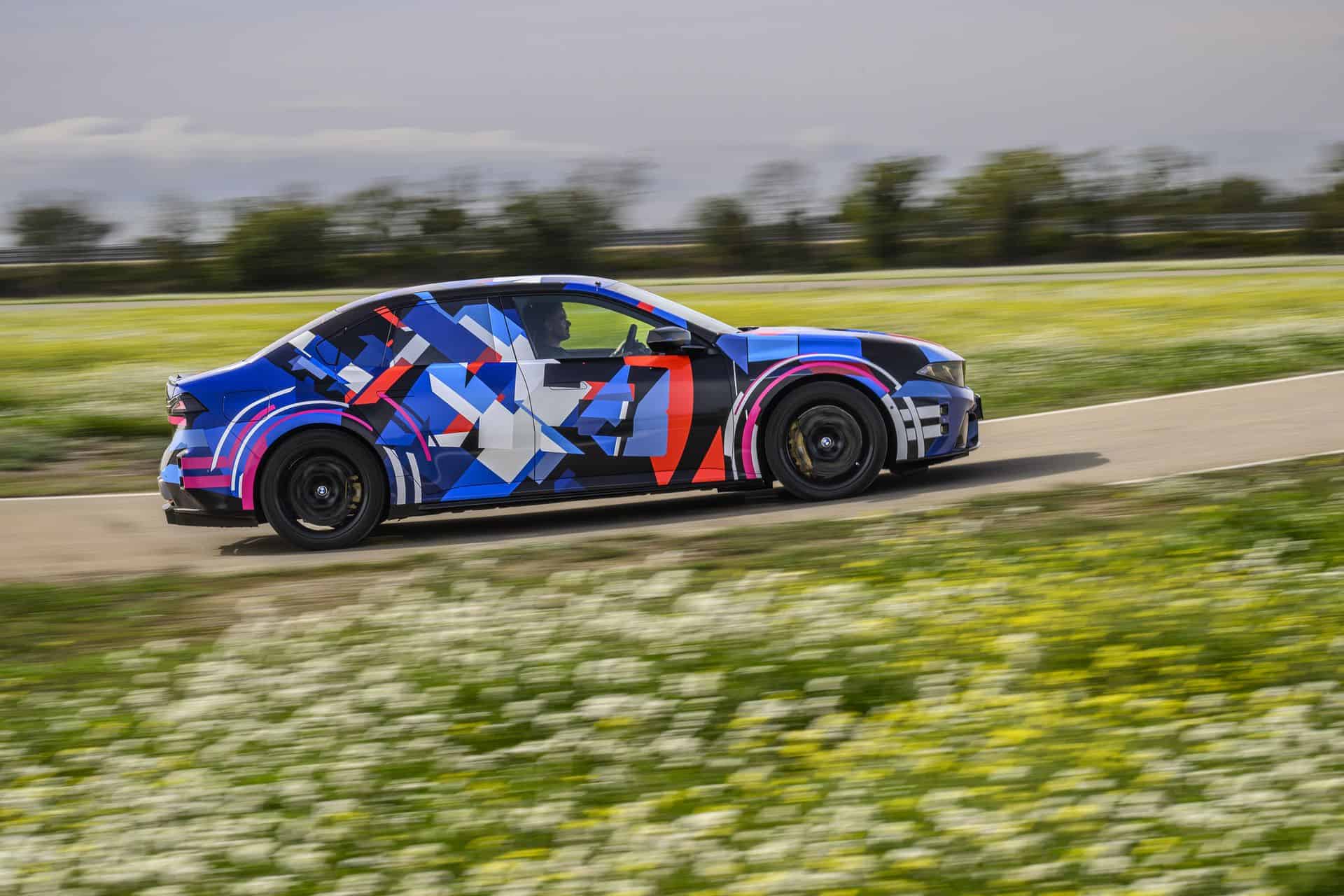
The hood is the same as the concept’s, valley and all, with air outlets whose louvers mix natural fiber and piano black. Along the sides, the rocker panels are aggressive, the fenders are flared, and in person the car is ridiculously wide. Part of that is M3 tradition, but part of it is packaging: with a motor at each corner, the shoulders had to grow to cover them. The mirror caps are natural fiber, though the concept’s more dramatic mirrors didn’t make it. The door handles are the same pop-out type as the i3’s, at least for Europe and the US. China, which has its own rules on door handles, may get something different.
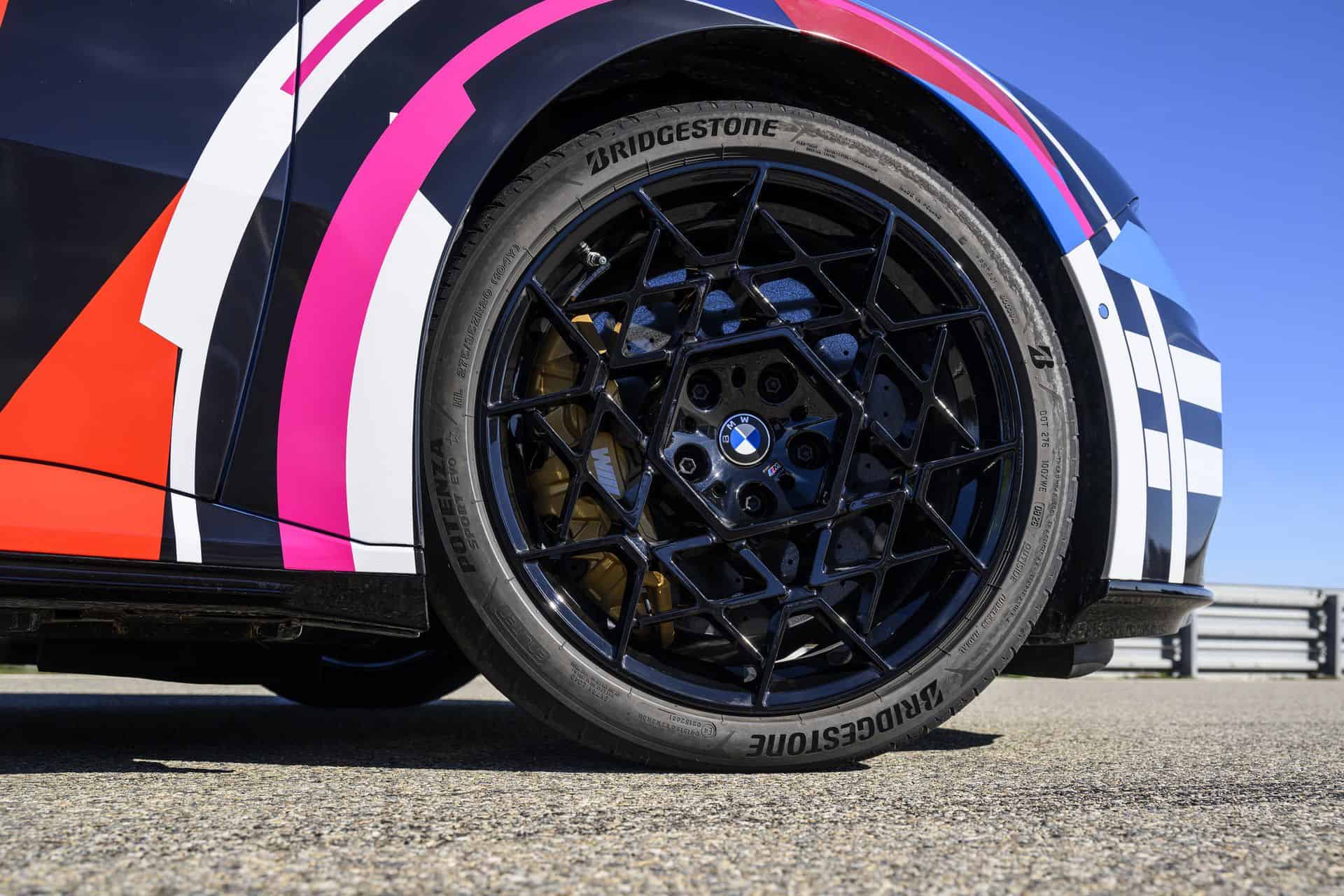
The cars we drove ran staggered 20-inch wheels with 275/35R20 tires at the front and 295/35R20 at the rear, on Michelin Pilot Sport S 6 tires. This is a new generation of tires that will be released with the M3 electric. Behind the blacked-out wheels sat carbon ceramic brakes with gold calipers. There will be several designs to choose from.
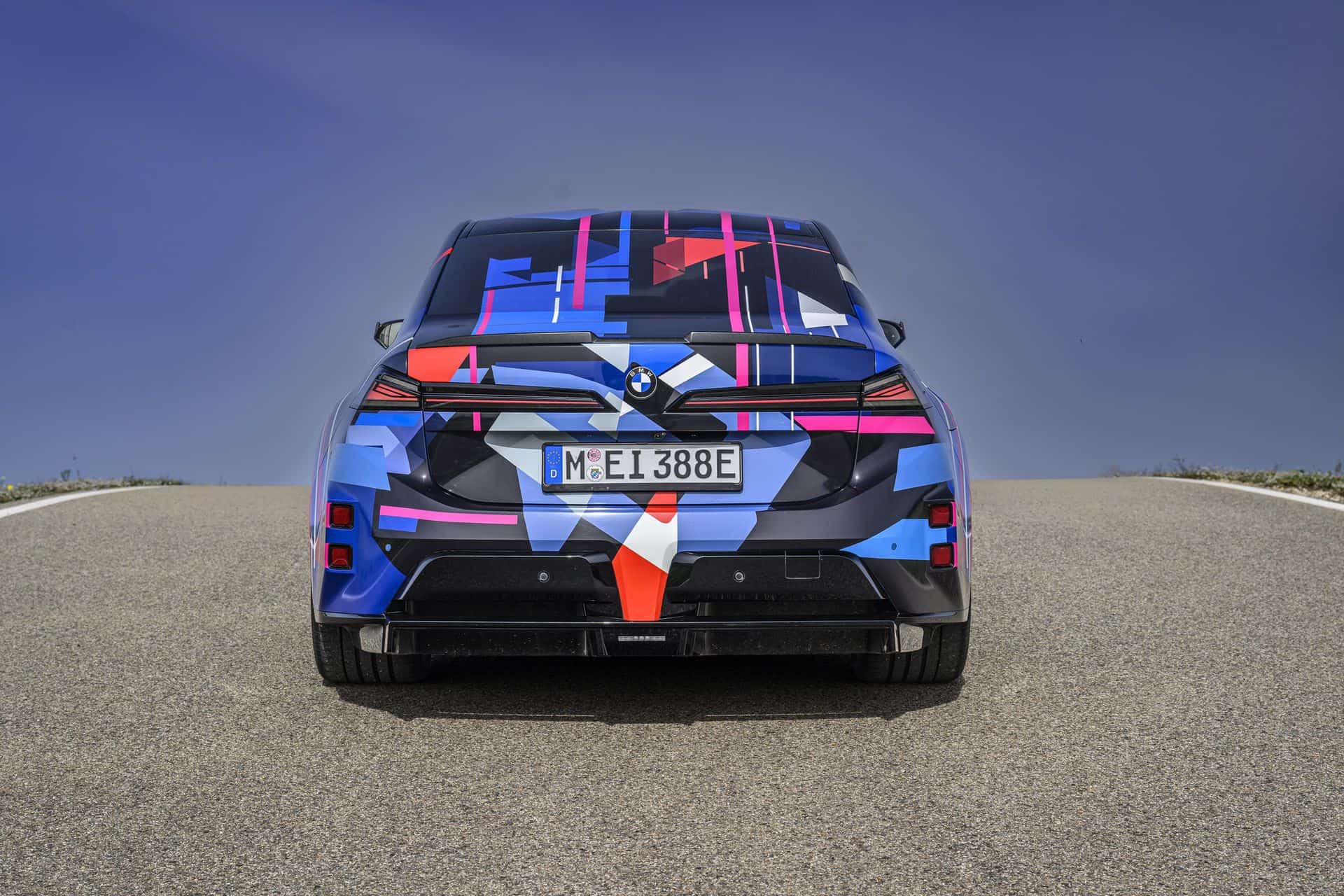
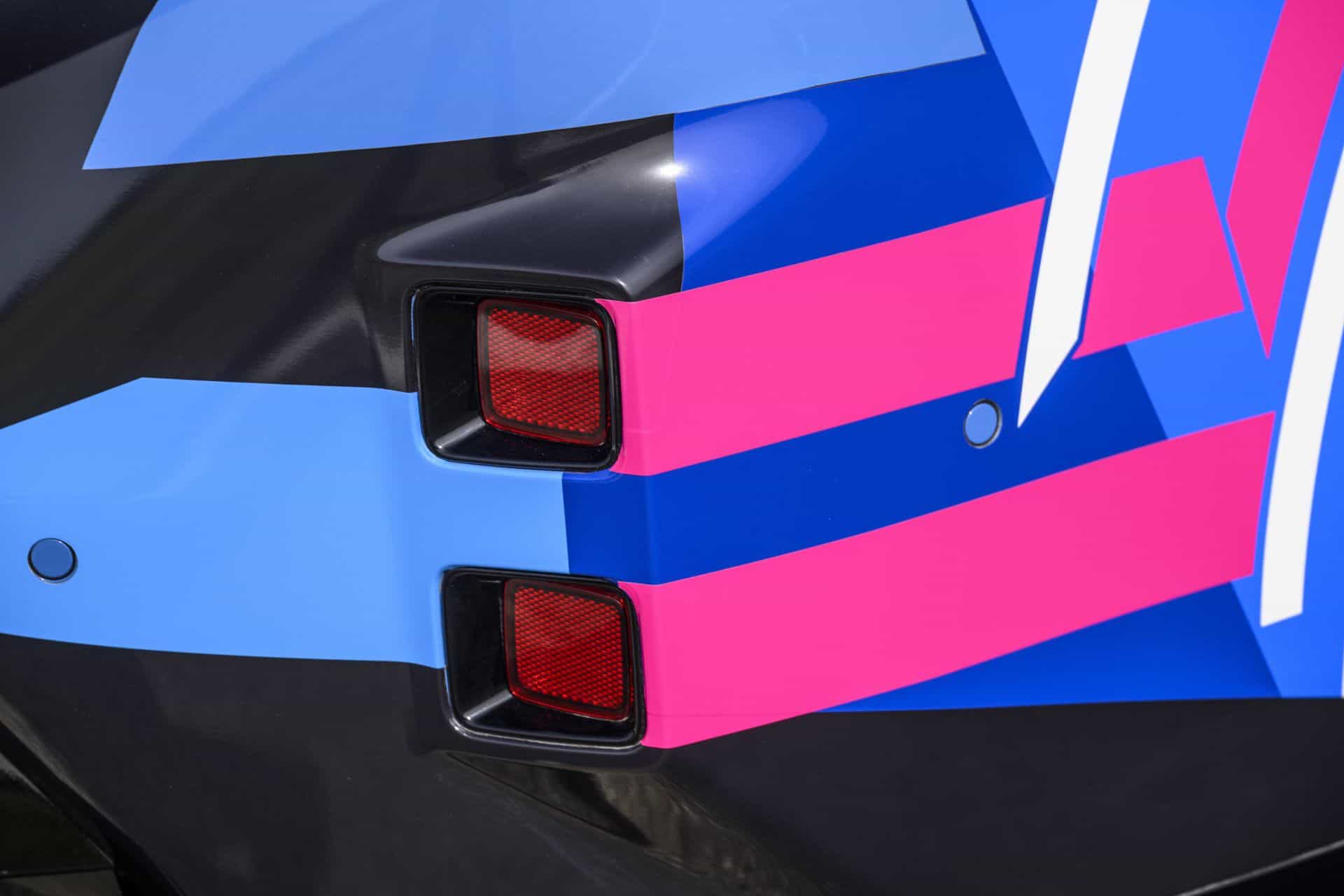
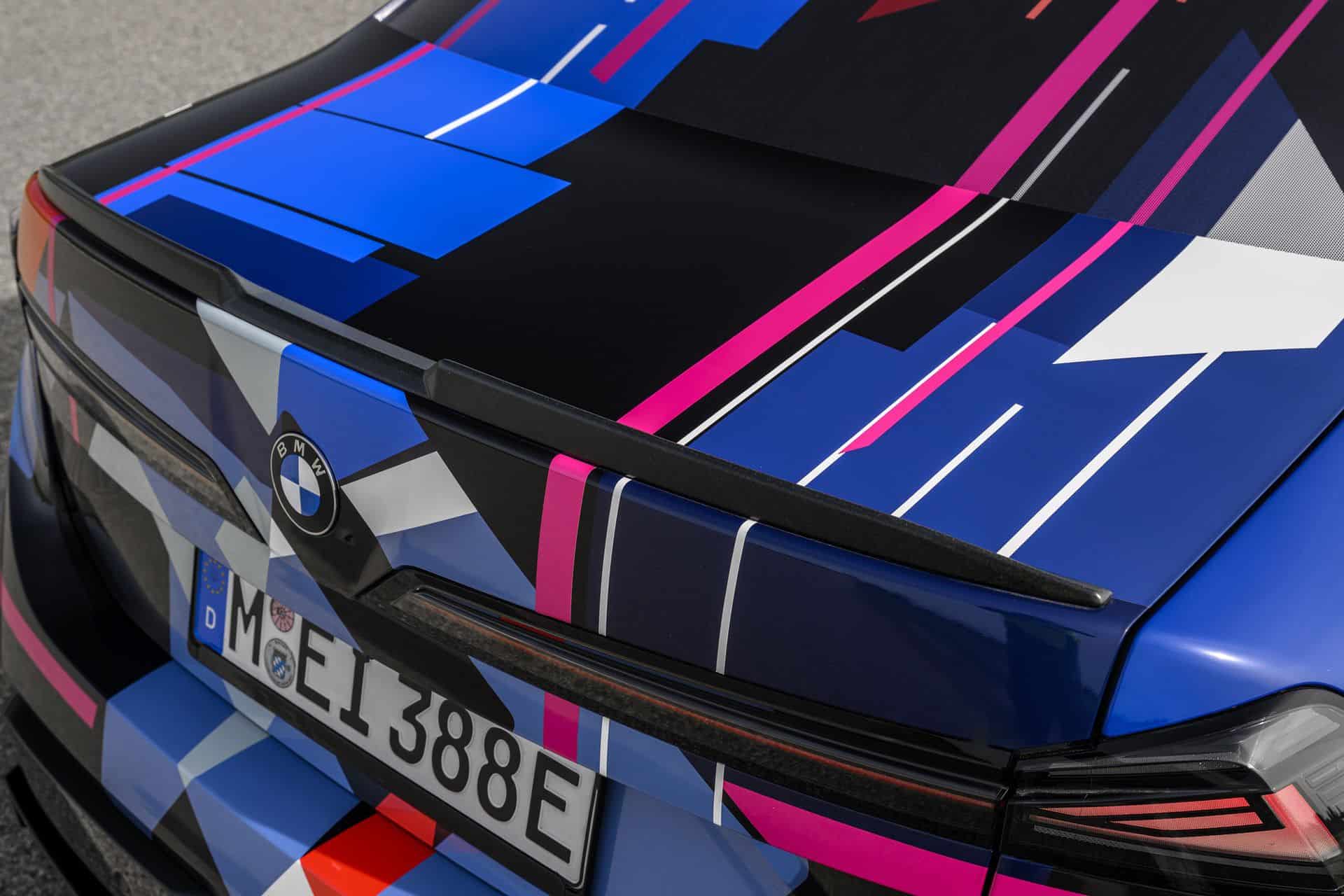
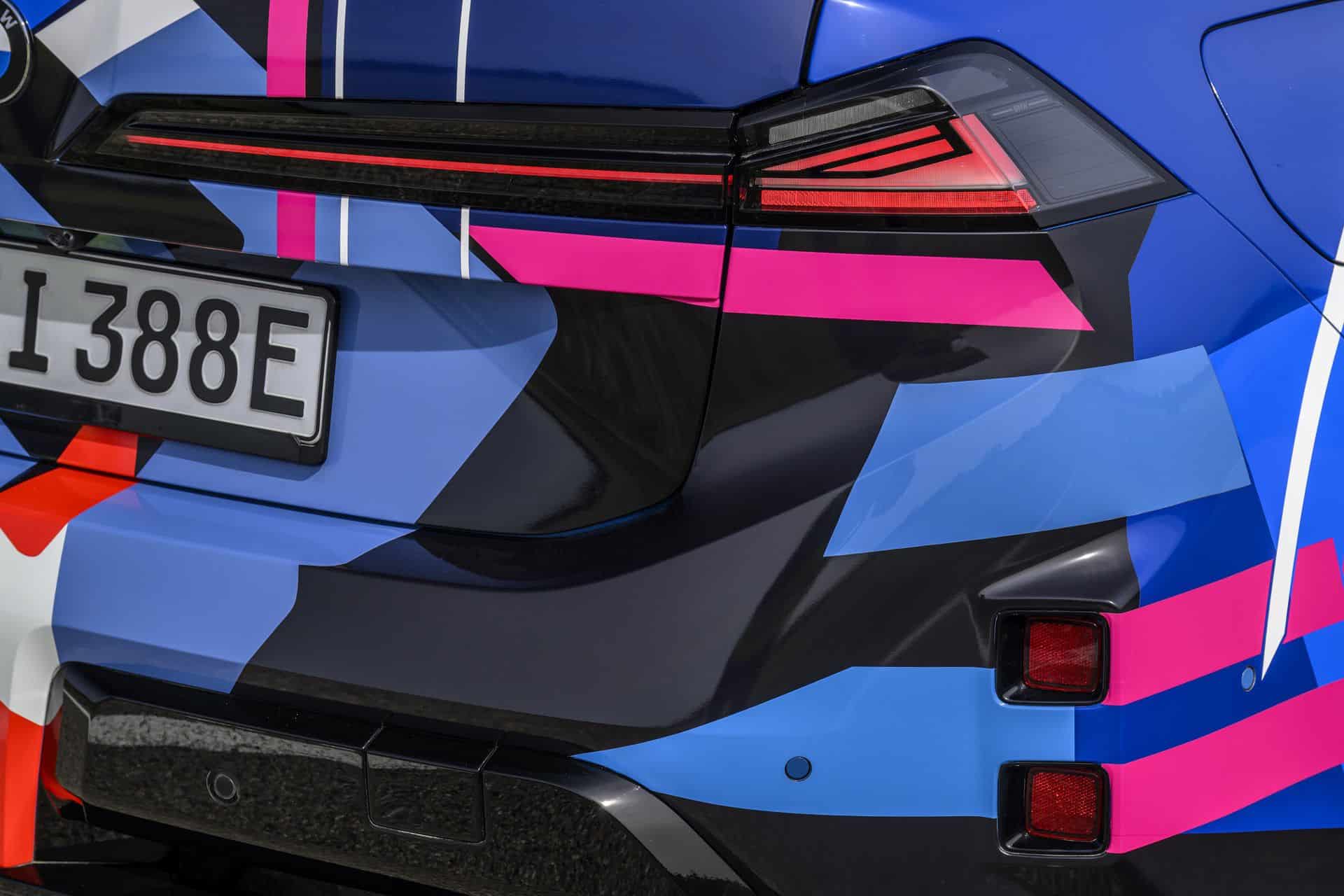
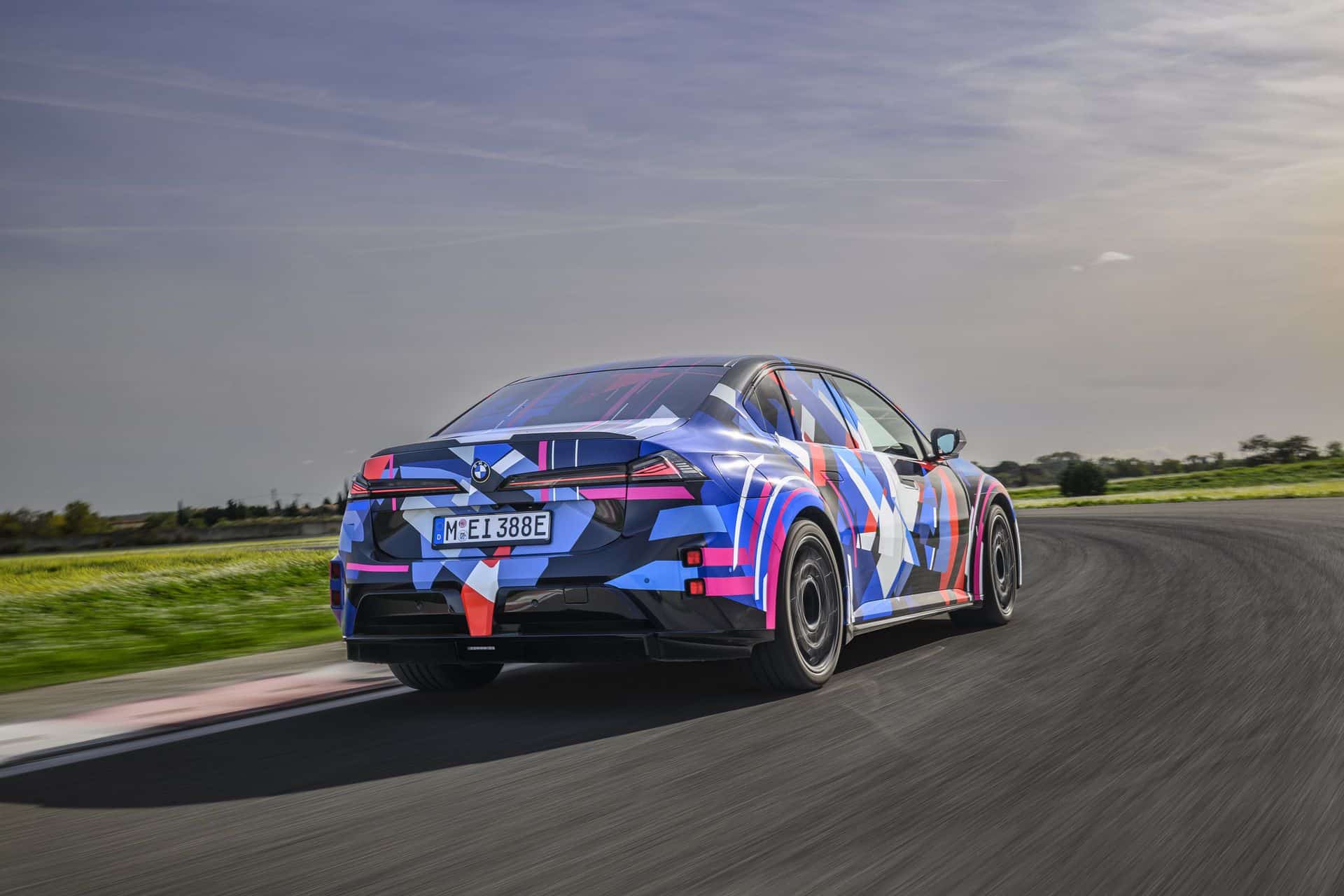
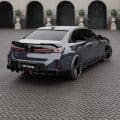
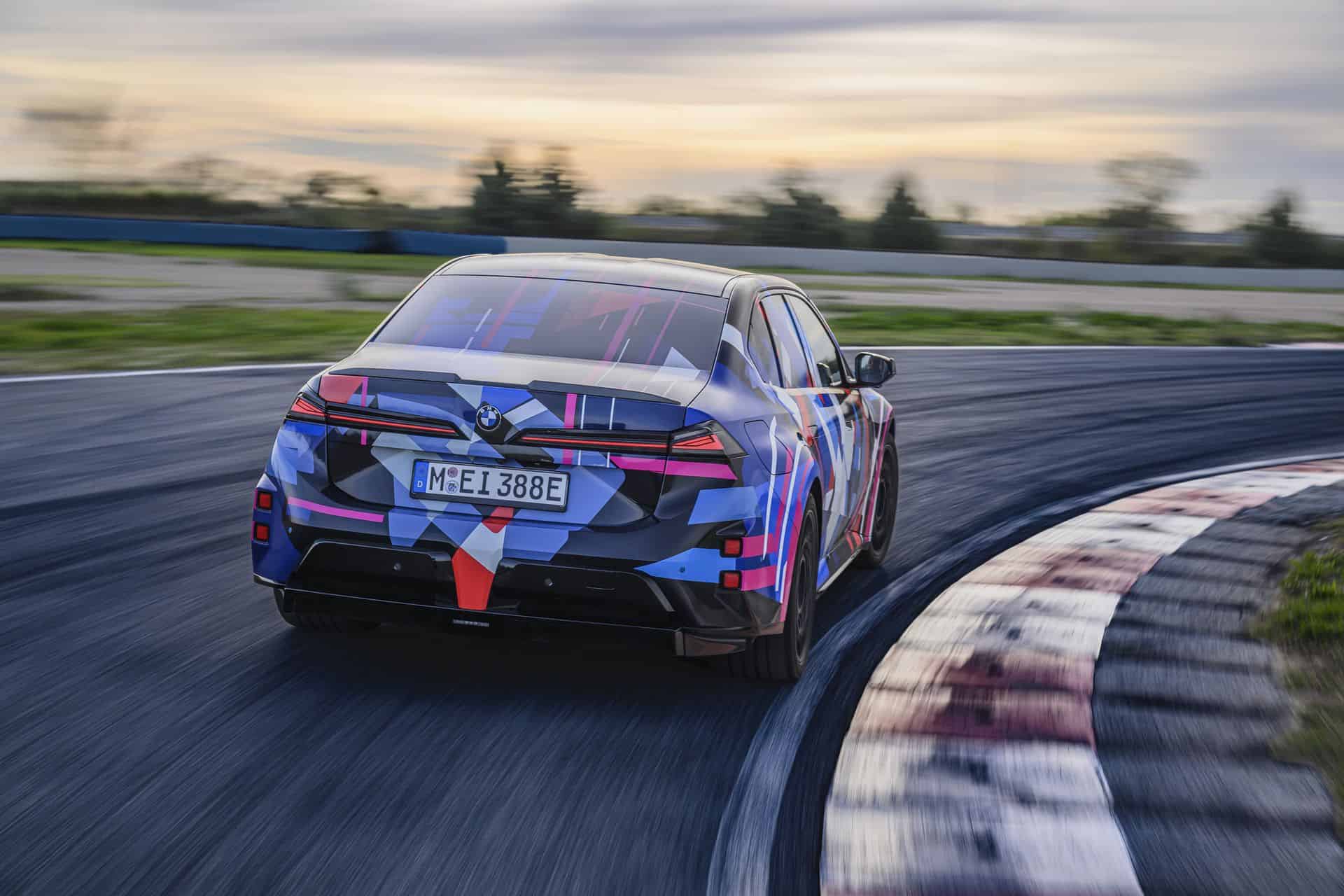
At the back, the concept’s ducktail is gone, replaced by a more traditional natural fiber lip spoiler. Again, I’d bet on the ducktail returning on a special model. The reflectors in the rear bumper are just that, reflectors, not lights, and the taillights are different from the i3’s, with thinner, more precise graphics specific to the M3.
Inside, the pre-production cars kept most of the Neue Klasse design covered, but you could see the M steering wheel, the panoramic display and the new natural fiber bucket seats, with the center notch between your legs and blue upholstery that looked like the concept’s Bathurst Blue.
I like the design. The regular i3 is a good-looking car, and this takes it further. I also think it will take people less time to get used to than the G80 M3 and its huge kidney grille did, even though it will still start arguments online.
Is The Electric BMW M3 A Real M3, Or Just A Very Fast EV?
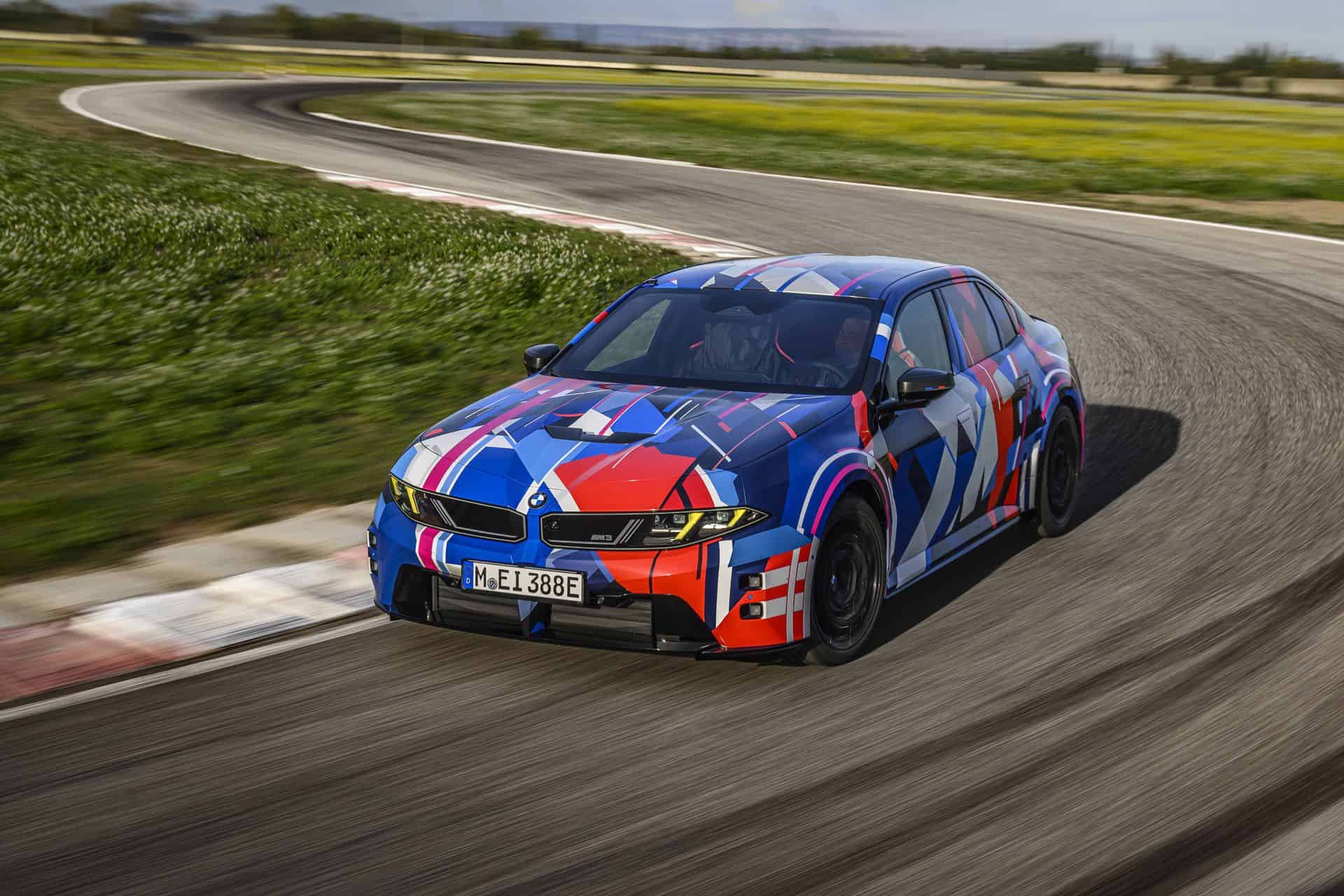
The best compliment I can give the electric M3 is that it felt familiar. I’ve driven a lot of M cars, and I never felt like I had to learn a new kind of car from scratch. You do have to adjust how you brake, how early you get on the power and how much you trust the grip, but the overall feeling is that of an M car. That’s not something I can say about any electric BMW before it.
I also like what BMW M didn’t do. A handful of electric cars can already do 0-60 mph in under two seconds, and that’s not what this car is about. When you drive something like this, stoplight-to-stoplight times are the least interesting thing about it. Even an electric scooter is quick enough for that. The M3 wasn’t always the most powerful car in its class; it built its reputation on being the most engaging one. 838 hp isn’t modest, but BMW never pitched this car on a drag-strip number. The one test I want to do next is 0-200 km/h (0-124 mph). I suspect that’s where this car will raise eyebrows. BMW was quiet about the 0-62 mph time (0-100 km/h), but my stomach says under 3 seconds for sure.
There are still a lot of questions unanswered. BMW still won’t share the weight, I haven’t driven it on public roads, and a big part of what makes a combustion M3 special is emotional: the engine, the sound, the mechanical connection. Some people will never get past that, and that’s fine, because BMW will keep selling a gasoline M3 alongside this one.
I still think most electric M3s will go to people who already drive EVs: the buyer who might otherwise look at a Porsche Taycan or a Hyundai Ioniq 5 N, or the i4 M60 owner ready for the real thing. What changed at Miramas is that I’d now tell a gasoline M3 owner to drive one before dismissing it.
At one point on track, with the camera rolling, I said, “Frank (van Meel), I know that I doubted you, but this is pretty good, actually.” I’d say it again.