Article Summary
- BMW will end Z4 production in early 2026 with no confirmed successor, leaving the roadster segment without a Munich entry.
- Designer Gabriel Hantig — with experience at Mercedes-AMG, Zeekr, and BMW via Volke — rendered a next-gen Z4 concept built around Neue Klasse proportions and an inline-six.
- The concept makes the case for keeping the Z4 ICE-powered, arguing that electrification would strip the car of the driver connection that defined the nameplate.
Gabriel Hantig knows what a BMW roadster should feel like. As a Z4 E89 owner and a designer with stints at Mercedes-AMG, Great Wall Motor Europe, and most recently Zeekr Technology Europe, he’s spent years working on exterior design for some of the industry’s most demanding clients — Mazda, Honda, AVATR, Genesis, and BMW itself through Volke. When BMW quietly let the Z series wind down without a replacement, he decided to do something about it beyond posting a complaint in a forum. The result is a personal concept — a next-generation Z4 rendered in 3D — that explores what the Bavarian roadster could look like if BMW chose to revive it using the new Neue Klasse design language.
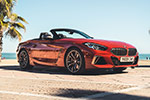
Production of the current G29 Z4 wrapped up in Europe at the end of 2025, and the US market gets a Final Edition M40i running through April 2026 — after that, it’s done. BMW has confirmed no successor is planned. Toyota, by contrast, has already promised to bring the Supra back. There’s no approved next Z car. Not hybrid, not electric, not even at the concept stage.
And if one ever does come, the question hanging over it is whether BMW would commit to a combustion engine or default to the Neue Klasse EV architecture it’s betting the company on. Porsche is already dealing with this exact dilemma with the next Boxster, and even Porsche openly acknowledges the emotional gap between an EV and an ICE car. A Z4 that’s quick and efficient but silent and disconnected would be a Z4 in name only.
Hantig’s concept takes a clear stance on that question: keep the inline-six, skip electrification entirely. BMW already has plenty of electrified options. What it doesn’t have is a focused sports car — something with a clear brief, a single purpose, and enough character to justify its own existence. The M division can’t carry that weight alone forever.
The Design Brief
The constraints Hantig set for himself are the same ones that defined every Z car worth remembering: long hood, short overhangs, and a driving position low enough that you feel like you’re sitting inside the car rather than on top of it. Compromise those proportions and you’re not making a roadster — you’re making a 2 Series Cabrio with a different badge. The concept pushes the Z4 toward a more muscular, mature form while staying anchored to those fundamentals.
What He Explored
The front end takes the Neue Klasse direction — slimmer, horizontal kidney grilles positioned high on the nose, with DRL function integrated directly into them. The lower air intake reads as a continuation of the same graphic, so the whole face resolves as one idea rather than separate elements stacked together. The hood is cleanly surfaced but sculpted enough to signal what’s underneath.
The side profile is where the proportions do most of the talking. Long hood, low roofline, muscular rear haunches — and the Z graphic in the body-side surfacing, which has always been the clearest visual signature of the series. Here it comes from the tension in the volumes rather than sitting on top of them as decoration.
The rear is where Hantig spent the most time. The taillights are integrated into an extruded 3D volume rather than sitting flush — a geometric mass that rhymes with the front end and gives the car a strong visual anchor from behind. The diffuser continues that same geometric logic, tying the whole rear face together.
BMW’s Long History With Roadsters
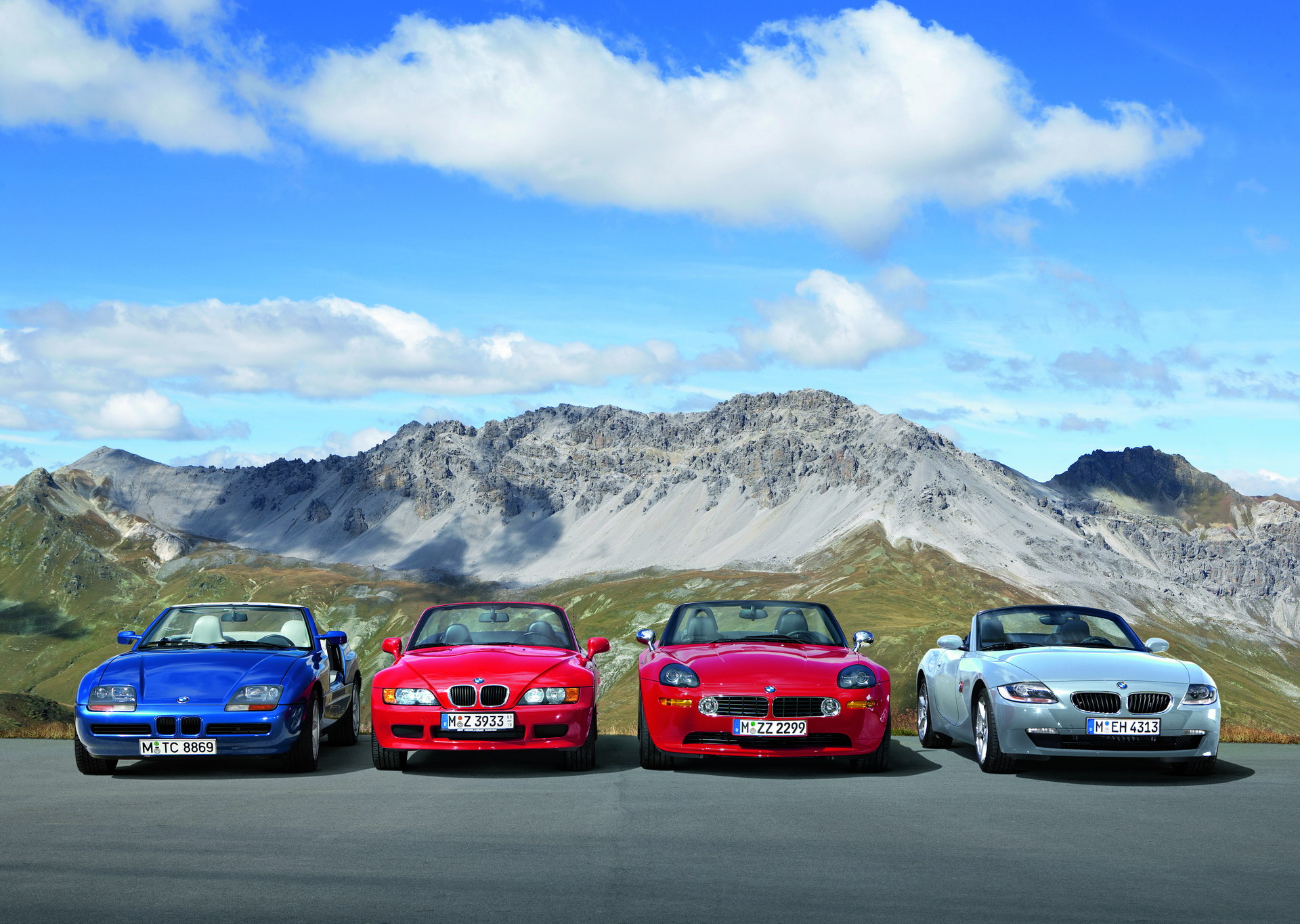
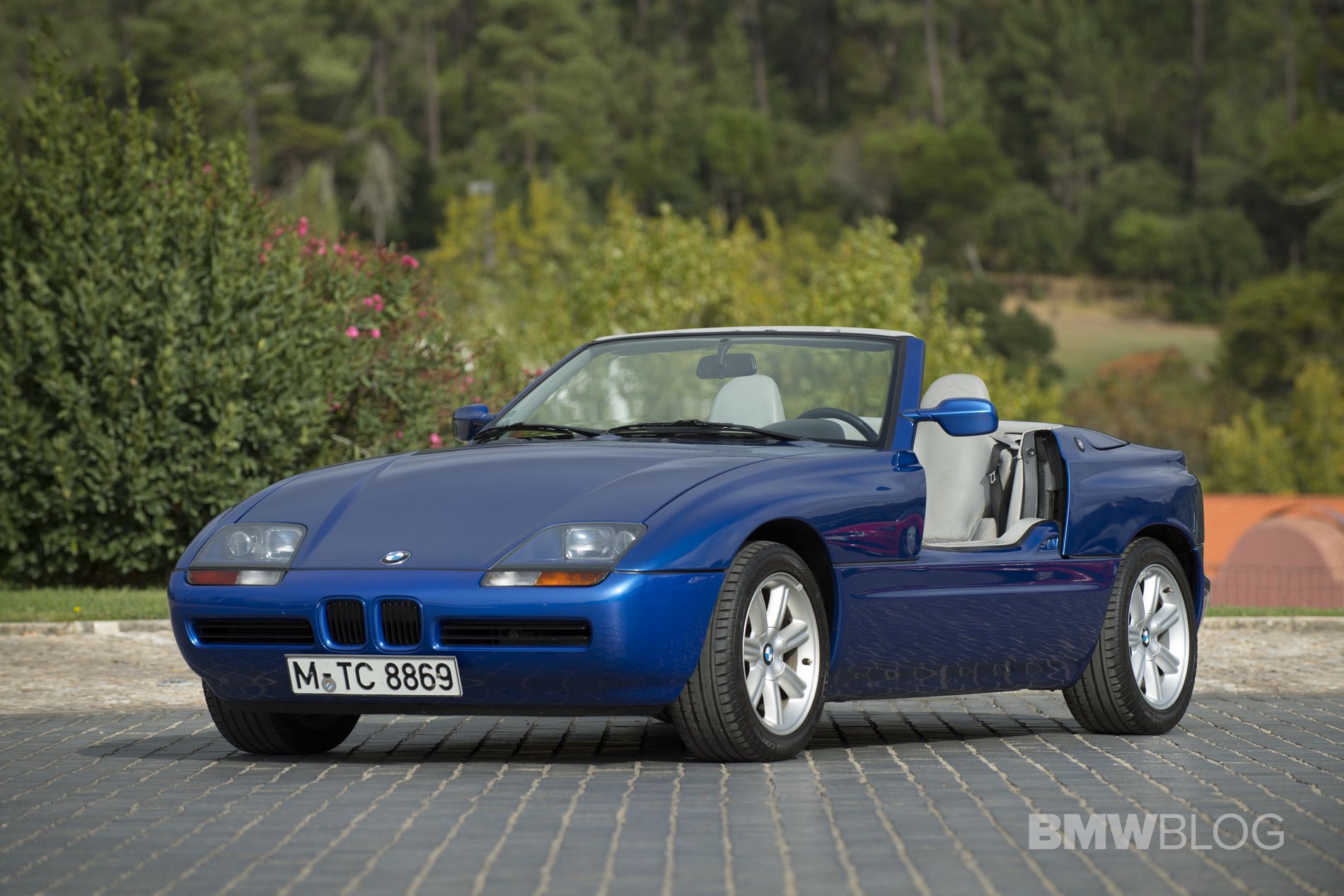
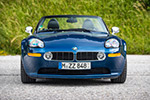
BMW’s history with Z models — from the Z1 to the Z8 — proves that comebacks can happen, sometimes years after a model line disappears. The roadster segment isn’t dead. Demand for compact, focused, two-seat sports cars hasn’t evaporated — it’s just gone underserved. The Z4 worked because it was mechanical, analog-leaning, and human in scale. Whatever comes next, if anything does, should be those things too. Hantig’s concept is a case for what that could look like — made by someone who has designed for the industry long enough to know the difference between a concept that flatters and one that’s actually buildable.