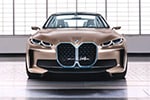
The BMW Vision Neue Klasse debuted about two and a half years ago. It was billed as “BMW reinventing itself,” and was one of the earliest looks at what direction the brand was going in. Not just for design, but technology and packaging, too. Arguably, our good friend Adrian van Hooydonk, head of BMW design, said it best back in 2023. “The design of the Neue Klasse is typically BMW and so progressive it looks like we skipped a model generation,” he said at debut time. Today, we got our first look at, essentially, the production version of the car. How does the real Neue Klasse compare to the concept from 2023? We put ‘em side by side to to see.
Exterior Design

Concepts usually see a pretty significant “dumbing down” from debut to production. That’s only half true here. Considering the Vision Neue Klasse was designed years ago and not exactly with production feasibility at the forefront, the new i3 sedan bears a surprisingly close resemblance. There are some obvious tweaks in the front grille, and the oversized spoiler and non-existent wing mirrors have shifted into more production-friendly iterations. But the familial look is certainly there, and you can see where the production car borrows from the Vision car.
Indeed, side and rear profiles tell a similar story. The wider taillights on the Vision car look great, and it’s a shame that design never made it into this generation’s design language. Instead, the i3 looks more like the BMW i5, with narrow lights and a little bit of an awkwardly proportioned rear end. From the side, however, little changes except the “2.5-box” design, which grows a bit from concept to production. A more gentle slope in the rear gives the i3 sedan a less angular and more streamlined look, which I think is becoming.
Interior Design

The Vision Neue Klasse showed us, conceptually, what BMW iDrive X was all about. The prominent displays are only slightly turned down in the BMW i3. Meanwhile, a more production-friendly steering wheel design and a center stack that connects to the dash highlight keep the car looking decidedly closer to reality. Switchgear also appears in a more familiar location, and impressively, BMW has added rather than subtracted ambient lighting. Usually, if anything, it’s the other way around. Overall, the i3’s cabin isn’t too far off from what BMW primed us for with the Vision Neue Klasse.
Performance

BMW never claimed any sort of performance figures for the Vision Neue Klasse. So, there isn’t a whole lot to say about straight-line speed or lateral g-forces. However, BMW did talk a lot about “newly-developed round battery cells.” That BMW Gen6 battery technology, as promised, makes an appearance here in the BMW i3 sedan. With dramatic milestones in range, performance, and weight, BMW was right to hype the new batteries up. A combined 463 horsepower and 645 Nm (476 pound-feet) of torque and range of around 440 miles (BMW estimated) means the i3 is every bit as transformative for the brand as Vision Neue Klasse was touted to be.
Technology

BMW teased lots of technology in the i Vision Dee that preceded the Vision Neue Klasse’s debut. Overall, much of that remained intact in the Vision Neue Klasse. That trend continued, with the i3 translating most of the Vision Neue Klasse’s tech details seamlessly into production. The Panoramic Display and central screen exist nearly untouched from their conceptual premiers.
BMW’s Vision Neue Klasse was divisive when it first landed. Do you think its debut — nearly three years ago now — makes the i3 sedan feel more familiar? Personally, I think the i3 looks as close as we could have expected to a concept car like the Vision Neue Klasse. Though I do wish the i3’s rear inherited more from the Vision car. What do you think?