 In This Article
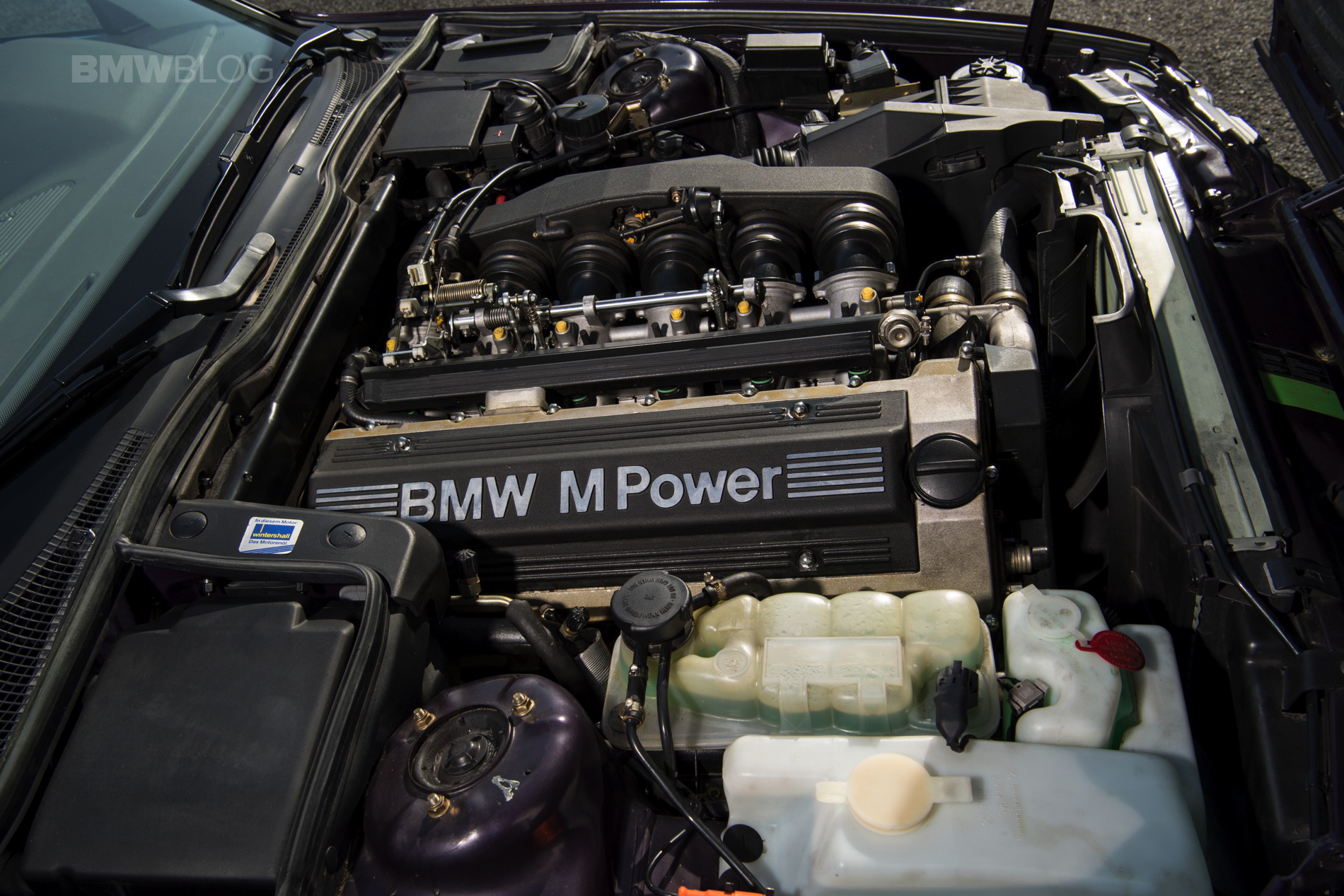
Before turbocharging took over, before variable valve timing became standard, and before BMW’s M division had anything close to a volume playbook, there was the S38. A naturally aspirated inline-six of near-surgical precision, the S38 powered the original M5 and M635CSi through some of the most celebrated years in performance car history. It was — and in many ways still is — everything a driver’s engine should be.
This is the definitive guide to the BMW S38: where it came from, how it works, what it’s like to own, and what it can do with a little encouragement.
Origins: From Racetrack to Road

The S38 doesn’t exist without the M88. In the late 1970s, BMW Motorsport developed the M88 — a 3.5-liter inline-six with a twin-cam, 24-valve head — to power the BMW M1 supercar. That engine produced around 277 hp in road trim and was considered state-of-the-art for its time. When the M1 project wound down, BMW Motorsport had an extraordinary engine on their hands and no new home for it.
The answer came in the form of the E28 M5, unveiled at the 1984 Amsterdam Motor Show. European-specification cars were fitted with the M88/3 — a road-tuned version of the motorsport M88 producing 286 PS (210 kW) — which retained the six individual throttle bodies and hand-built assembly process while adapting the engine for daily-driving demands: better drivability at low revs, updated fuel injection, and emissions compliance. Export-market cars destined for the United States, Canada, and Japan received a different unit: the
S38B35, a catalyst-equipped derivative producing around 256 hp, which entered production more than two years after the European launch.
When the E34 M5 arrived in 1988, the S38 evolved further into the S38B36, and the engine was subsequently enlarged to 3.8 liters in 1992 with the S38B38, giving the S38 its most powerful road-going form. Throughout its production life, from 1984 to 1995, the S38 remained a cornerstone of BMW M’s engineering identity.
Technical Specifications

The S38 is a naturally aspirated, DOHC inline-six with four valves per cylinder and six individual throttle bodies — one per cylinder. Construction is all-aluminum with a cast-iron block on early variants, and the engine was assembled largely by hand at BMW’s Garching facility. There are no hydraulic lifters; valve clearances are set mechanically, and the engine rewards proper maintenance with extraordinary longevity.
S38B35 (export markets, from 1986)
- Displacement: 3,453 cc
- Configuration: Inline-6, DOHC, 24-valve
- Bore × Stroke: 93.4 mm × 84.0 mm
- Compression Ratio: 9.8:1
- Power Output: ~256 hp (191 kW) @ 6,500 rpm
- Torque: 251 lb-ft (340 Nm) @ 4,500 rpm
- Fuel System: Bosch Motronic ML31.1
- Redline: 7,000 rpm
- Applications: E28 M5 (US/Canada/Japan), E24 M6 (US/Canada/Japan)
S38B36 (1988–1992)
- Displacement: 3,535 cc
- Configuration: Inline-6, DOHC, 24-valve
- Bore × Stroke: 93.4 mm × 86.0 mm
- Compression Ratio: 10.0:1
- Power Output: 315 hp (232 kW) @ 6,900 rpm (Euro)
- Torque: 266 lb-ft (360 Nm) @ 4,750 rpm
- Fuel System: Bosch Motronic 1.2
- Redline: 7,000 rpm
- Applications: E34 M5 (1988–1992 MY)
S38B38 (1992–1995)
- Displacement: 3,795 cc
- Configuration: Inline-6, DOHC, 24-valve
- Bore × Stroke: 94.6 mm × 90.0 mm
- Compression Ratio: 10.5:1
- Power Output: 340 hp (250 kW) @ 6,900 rpm (Euro)
- Torque: 295 lb-ft (400 Nm) @ 4,750 rpm
- Fuel System: Bosch Motronic 3.3
- Redline: 7,200 rpm
- Applications: E34 M5 (from 1992 MY)
Note: North American-spec E34 M5 models received a detuned S38B38 rated at 310 hp due to emissions compliance requirements.
Engine Variants
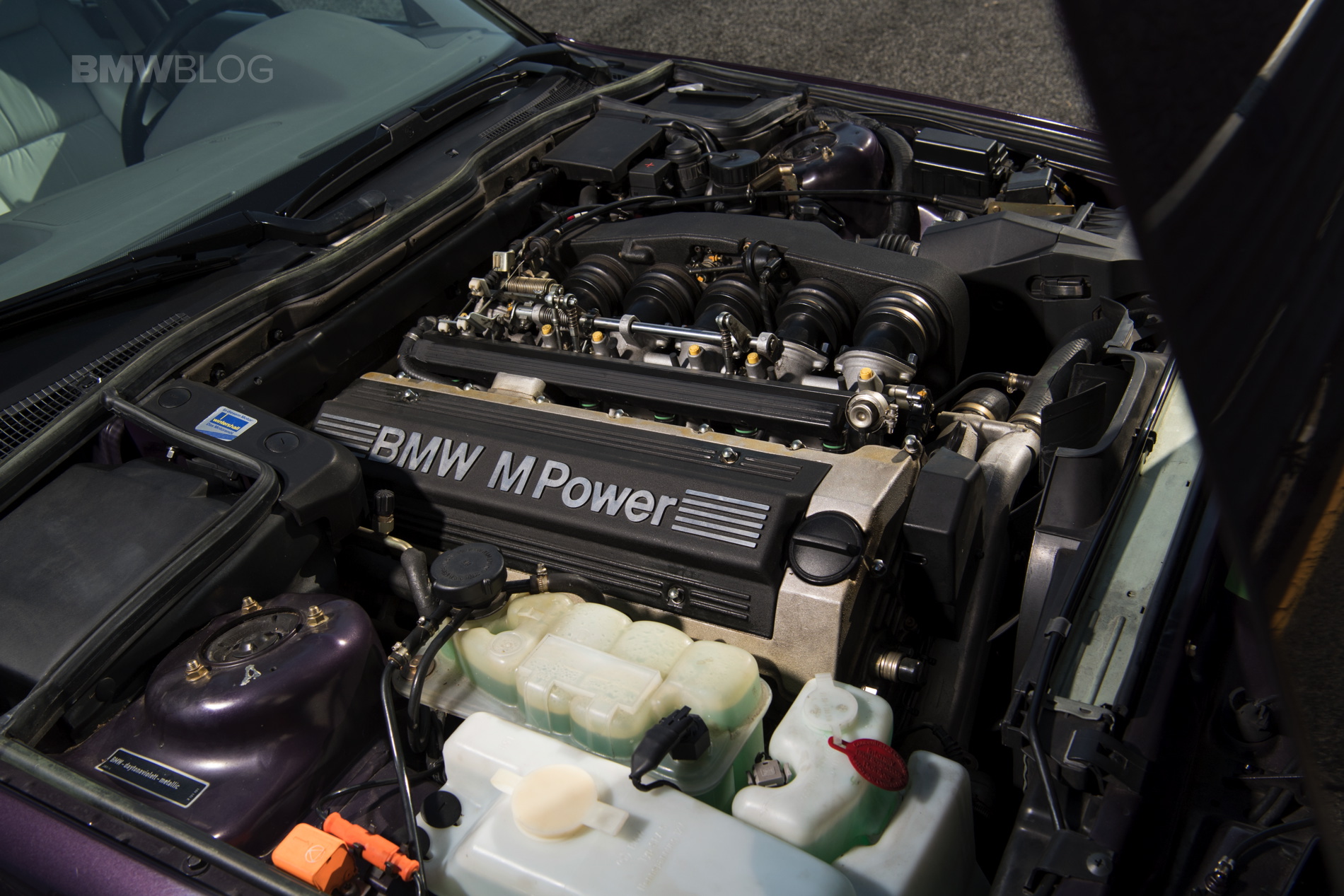
S38B35 — The export-market variant. Fitted to the E28 M5 and E24 M6 in the United States, Canada, and Japan, the S38B35 was a catalyst-equipped derivative of the M88/3 producing around 256 hp. It entered production more than two years after the European-specification M88/3-powered cars launched, adapted to meet the stricter emissions regulations of those markets. European cars received the M88/3, producing 286 PS (210 kW) without catalyst equipment.
S38B36 — The first evolution. Introduced with the E34 M5 in 1988, the B36 is a distinct engine in its own right — not a revised B35. Displacement grew to 3,535 cc via a longer stroke (86 mm vs. 84 mm), and the compression ratio rose to 10.0:1. New additions included a variable-length inlet manifold, revised camshaft profiles, equal-length stainless steel exhaust headers, and updated Bosch Motronic management. Power climbed to 315 hp (232 kW) in European specification. BMW produced 8,344 units of this variant.
S38B38 — The definitive version. Introduced for the 1992 model year E34 M5, the B38 stretched bore and stroke to reach 3,795 cc and raised compression to 10.5:1. Power climbed to 340 hp in European form — an enormous figure for a naturally aspirated street engine in the early 1990s. This was also the version offered to North American buyers, though with emissions equipment that reduced output to 310 hp.
The Cars It Powered
E28 M5 (1984–1988): The car that started it all. Built in limited numbers, the E28 M5 was essentially a homologation exercise that became a legend. European cars were powered by the M88/3; export-market versions for the US, Canada, and Japan received the catalyst-equipped S38B35. Both shared the same fundamental architecture — six individual throttle bodies, hand-built assembly, and a naturally aspirated character unlike anything else in a production saloon at the time. Today it’s one of the most collectible BMWs ever made.
E24 M635CSi / M6 (1984–1989): The grand tourer variant. The M635CSi (sold as the M6 in North America) paired the M88/3 in European specification — or the S38B35 in export markets — with a longer wheelbase and more luxurious cabin. It’s arguably the most beautiful application of the engine — a driver’s car wrapped in a touring-car body.
E34 M5 (1988–1995): The longest-running and most refined S38 application. The E34 M5 is widely regarded as the most well-rounded M car of its era — combining genuine supercar performance with a practical five-door body (in Touring form in select European markets) and a cabin that could pass for a luxury saloon.
Reliability and Common Issues

The S38 has earned a strong reputation for durability — when maintained properly. These engines were built to be serviced, not thrown away, and they respond accordingly to attentive ownership.
Valve clearances: This is the single most important maintenance item on any S38. The engine uses mechanical (shim-and-bucket) valve adjustment. Clearances must be checked every 30,000 miles or so, and if neglected, the consequences range from poor running to valve train damage. It’s a labor-intensive job but not a difficult one for a qualified BMW specialist.
Oil leaks: Expect them on any high-mileage example. The valve cover gasket is the most common culprit, followed by the oil pan gasket and the front and rear main seals. None of these are catastrophic issues, but they should be addressed when they appear to prevent oil contamination of belts and electrical components.
Throttle body synchronization: Six individual throttle bodies must be balanced for the engine to idle cleanly and pull evenly. This requires proper tooling (a manometer or similar vacuum balancing tool) and is best done by someone familiar with the engine. A poorly synced S38 will feel flat in the mid-range and may idle erratically.
Cooling system: The water pump is driven by the timing chain on the S38B35 and is a critical service item. Failure of the water pump or thermostat on a high-mileage engine can cause serious overheating damage. Replace both components as preventive maintenance during any major service.
Timing chain: All S38 variants — B35, B36, and B38 — use a dual-row (duplex) timing chain. The single-row chain was a characteristic of the earlier M88/3; BMW addressed this with the S38 from the outset. The chain itself is generally robust, but the plastic guide rails and tensioner can deteriorate on high-mileage engines with deferred service history. Inspect these components during any major service, and replace if there is any sign of wear or rattle at cold start.
Vacuum lines: The engine’s age means original vacuum lines have often deteriorated. Perished hoses cause rough idling, poor vacuum brake assistance, and inconsistent throttle response. A full vacuum line refresh is cheap insurance on any high-mileage car.
Maintenance Tips
- BMW’s original specification called for 15W-40. Many S38 specialists today recommend a 20W-50 high-zinc oil — mineral or semi-synthetic — to protect the valve train, as modern low-ZDDP fully synthetic formulations remain a subject of debate in the community. Change on a 5,000-mile interval or annually, whichever comes first.
- Find a specialist familiar with the engine before buying. Pre-purchase inspections should specifically include a compression test, leak-down test, and a listen for timing chain rattle at cold start.
- Coolant flushes every two years are worthwhile regardless of mileage. The aluminum components in the cooling system are sensitive to degraded coolant chemistry.
- Keep records of valve clearance checks. A documented service history on an S38 is worth considerably more than an undocumented car.
Tuning Potential

The S38 was not designed with aggressive aftermarket tuning in mind — it was already near the limits of what naturally aspirated development could achieve in period. That said, meaningful power gains are possible with the right approach.
ECU remapping is the most accessible route on the B38. Modern standalone ECU solutions (or mapped Motronic replacements) can optimize ignition timing, fuel delivery, and rev limit, typically yielding 15–25 additional horsepower on an otherwise stock engine.
Camshaft upgrades are available from a small number of specialist suppliers and can meaningfully improve top-end power at the cost of some low-rpm tractability. This suits track use better than everyday driving.
Throttle body porting and polishing, combined with high-flow individual throttle bodies from specialist suppliers, is a popular route on dedicated track cars. Paired with a free-flowing exhaust and ECU work, a well-built S38B38 can reach 370–385 hp while remaining naturally aspirated.
Forced induction is technically possible but rarely attempted, partly because the engine was not designed for boost and partly because the cars it powers are now too valuable to modify radically. The few turbocharged S38 builds that exist are serious engineering undertakings.
The honest truth is that most S38 owners don’t tune their engines — and this makes sense. The stock power delivery is so characterful and so well-matched to the car’s chassis and gearing that chasing numbers risks losing what makes the engine special.
Legacy
The S38 represents the end of a particular era in BMW M history: the era of hand-assembled, naturally aspirated engines built in small numbers by craftsmen at BMW’s Garching facility. These engines were put together with a level of individual care and attention that seems almost quaint today, but speaks to how these cars were conceived.
Later M engines would be faster, more technologically sophisticated, and more reliable. The S54 that followed in the E46 M3 is rightly celebrated. The current S58 is an engineering masterpiece. But none of them sounds like an S38 at full chat, and none of them quite captures the sense that you’re operating something that was made, rather than manufactured.
For that reason, the S38 retains a devoted following that shows no sign of diminishing. If anything, as the cars it powered climb in collector value, appreciation for the engine itself has grown proportionally. It is — as its lineage from the M1 would suggest — a genuine piece of automotive history.
Looking for a used BMW S38-powered car? Always prioritize documented service history, a verified valve clearance check, and fresh timing chain guide inspection. The cars are old enough now that deferred maintenance is the primary risk — but find a well-kept example and you’ll have something truly irreplaceable.