Article Summary
- The updated twin-turbo 3.0-liter engine is coming to the M2, M3, and M4 this year.
- BMW slashes fuel consumption without any performance loss as the power figures remain unchanged.
- The six-cylinder engine complies with the Euro 7 standard, which comes into force in November.
A few years back, M promised to safeguard the inline-six’s future even under the EU’s draconian emissions legislation. With Euro 7 around the corner, BMW’s high-performance division is living up to that pledge. The “S58” used by the M2, M3, and M4 has a bright future after a new engine technology patented in 2024 is about to make its way into production cars.
BMW M Ignite is marketing jargon for a pre-chamber ignition system derived from motorsport. Going forward, the twin-turbo 3.0-liter engine will feature a pre-chamber located within the cylinder head. It’s linked to the cylinder’s main combustion chamber through overflow openings, and since the pre-chamber has its own spark plug and ignition coil, the six-cylinder now features two ignition systems.
How does it work? When engine revs are low to medium, the traditional spark plug in the combustion chamber fires before the one in the pre-chamber. At higher revs, the newly added spark plug in the pre-chamber plays a bigger role. A portion of the fuel-air mixture flowing through the openings into the pre-chamber is also ignited. BMW claims the resulting flames exit the pre-chamber at “around the speed of sound.”

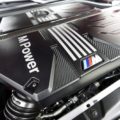
Since the ignition jets ignite the mixture in the main combustion chamber above the piston at multiple points simultaneously, combustion happens much faster. Coupled with a higher compression ratio and turbochargers featuring variable turbine geometry, fuel efficiency improves significantly. These gains will be particularly noticeable when the vehicle is under heavy loads, such as on a circuit.
The M3 and M4 models are the first to benefit from BMW M Ignite, with production kicking off in July. The smaller M2 will follow a month later, ahead of Euro 7’s implementation in November. You’ll be happy to hear the lower fuel consumption doesn’t come at the expense of performance. The S58 continues to deliver the same power as before, which we sadly can’t say about the larger S68.
BMW M’s Inline-Six Engine Keeps All Horses, But The V8 Is Detuned
As a refresher, BMW dialed down the twin-turbo 4.4-liter V8 used by the M5 and XM in Europe. Since March, the gas engine makes 41 fewer ponies to comply with Euro 7, but it’s not all bad news. The electric motor in the sedan/wagon and SUV is more powerful than before, fully offsetting the eight-cylinder engine’s output drop. Consequently, the V8-powered models retain their unchanged combined muscle, but the electric motor now plays a bigger role than before. Outside Europe and other markets that don’t follow EU directives, the V8 remains unchanged.
Having made both the inline-six and V8 engines Euro 7-compliant, BMW can continue selling M cars in the EU for many years to come. Future models are expected to include the next-generation M3 (G84) on the six-cylinder side and the X5 M (G95) on the eight-cylinder side. Additionally, the S68 will also live on in M Performance models, such as next year’s M760.