Article Summary
- The 102EX was a 2011 Phantom converted to full electric power — 389 hp, 71 kWh battery, 125-mile range — then taken on a world tour so Rolls-Royce customers could drive it and give direct feedback
- The 103EX concept in 2016 doubled down on the electric direction, previewing an autonomous, AI-driven future for the brand — a second listening exercise before any production commitment
- The Spectre arrived in 2023 as the first production electric Rolls-Royce, but the brand has since softened its 2030 all-electric deadline as sales came in below early expectations
There is something quietly audacious about what Rolls-Royce did in 2011. The company took a Phantom — its largest, heaviest, most traditionally minded car — ripped out the 6.75-liter V12, filled the engine bay with batteries and electric motors, painted the whole thing “Atlantic Chrome,” and drove it to every major city on earth to let wealthy customers sit in it. The car was called the 102EX. It was, officially, an experiment. Nobody was supposed to read too much into it.
Twelve years later, the Rolls-Royce Spectre arrived in customer garages. The first production electric car ever to wear the Spirit of Ecstasy. The 102EX had not been forgotten.
What the 102EX actually was
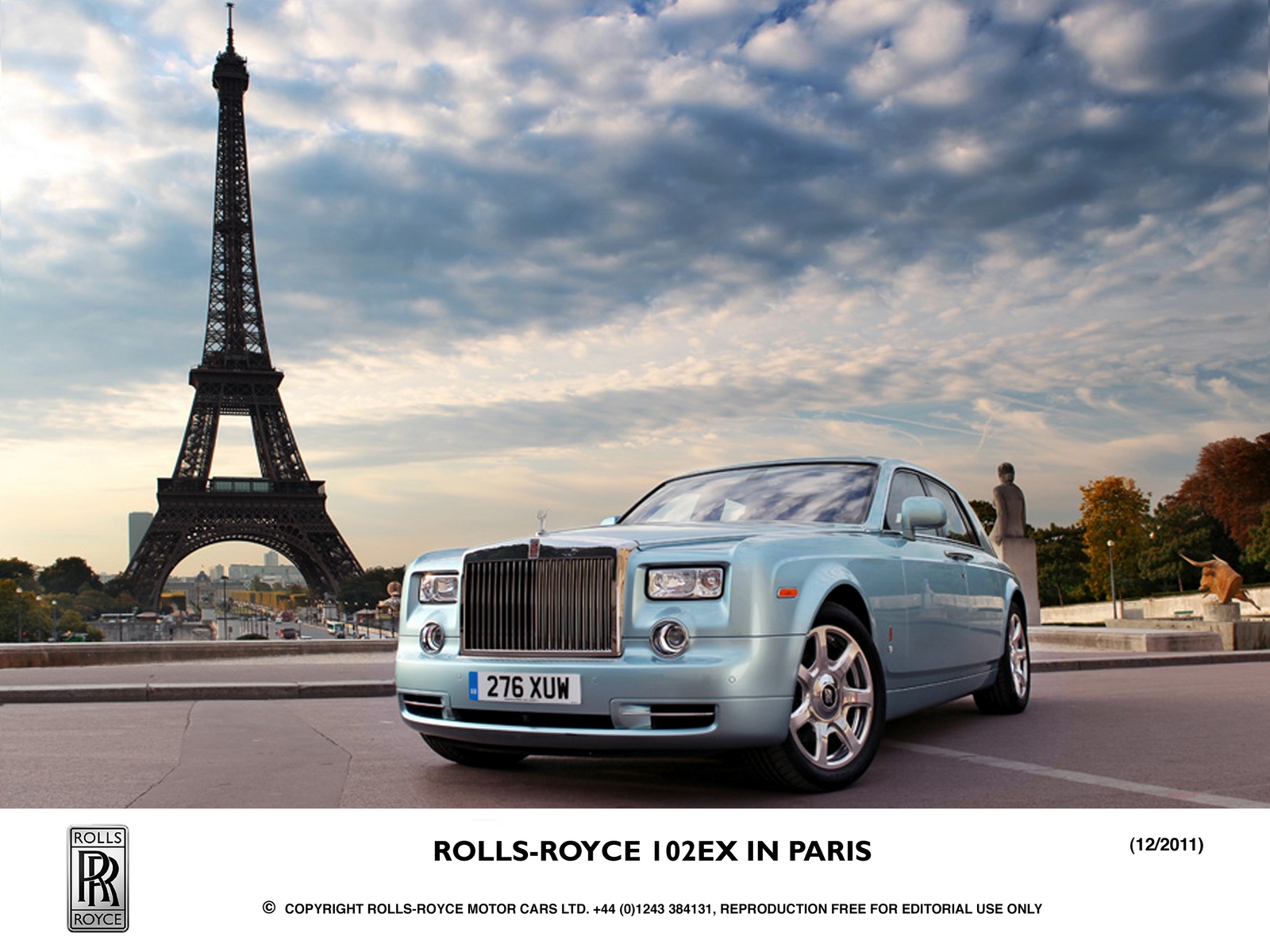
The 102EX, also called the Phantom Experimental Electric, was unveiled at the 2011 Geneva Motor Show as part of the broader “EX” series of concept cars Rolls-Royce had been running since 2004. Earlier entries in that series — the 100EX and 101EX — had explored open-top and fixed-head grand tourer body styles, both of which eventually made it into production as the Phantom Drophead Coupé and Phantom Coupé respectively. The 102EX was different. It wasn’t exploring what shape a Rolls-Royce should be. It was asking whether a Rolls-Royce could exist without its engine.
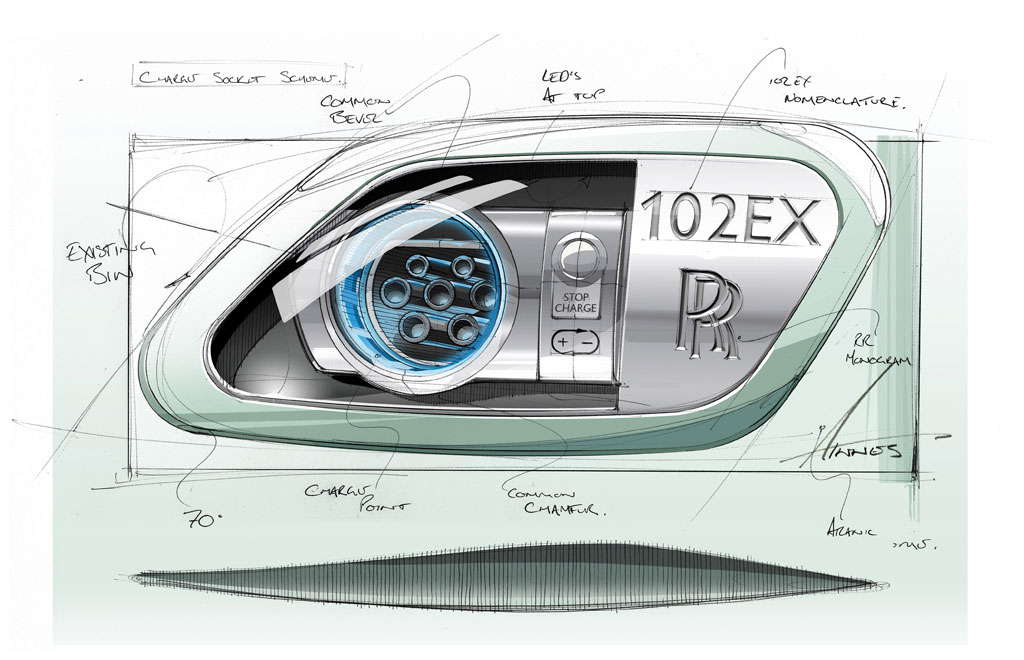
The answer required significant engineering. Two UQM-supplied synchronous permanent-magnet electric motors were mounted on the rear subframe, producing a combined 389 horsepower and 590 lb-ft of torque. The battery pack was a 71 kWh unit made up of 96 NCM cells running at 338 volts — Rolls-Royce claimed at the time it was the largest battery ever fitted to a road car, which, in 2011, was probably true. Range was around 125 miles. Top speed was electronically limited to 100 mph, and 0-60 mph arrived in under 8 seconds.
Those numbers won’t impress anyone today, but in 2011, before Tesla had changed what people expected from electric cars, a 71 kWh battery in a Phantom-sized vehicle was genuinely remarkable. The weight was a problem — the 102EX was even heavier than the standard Phantom, which already tips the scales at around 2,600 kg — but Rolls-Royce wasn’t building it to win drag races. They were building it to ask a question.
The exterior details were worth noting. The Spirit of Ecstasy was remade in illuminated polycarbonate, glowing blue. The paint contained ceramic nano-particles to increase reflectivity. Small gestures, but they signaled that Rolls-Royce understood an electric car needed to feel different, not just perform differently.
The world tour that did the real work
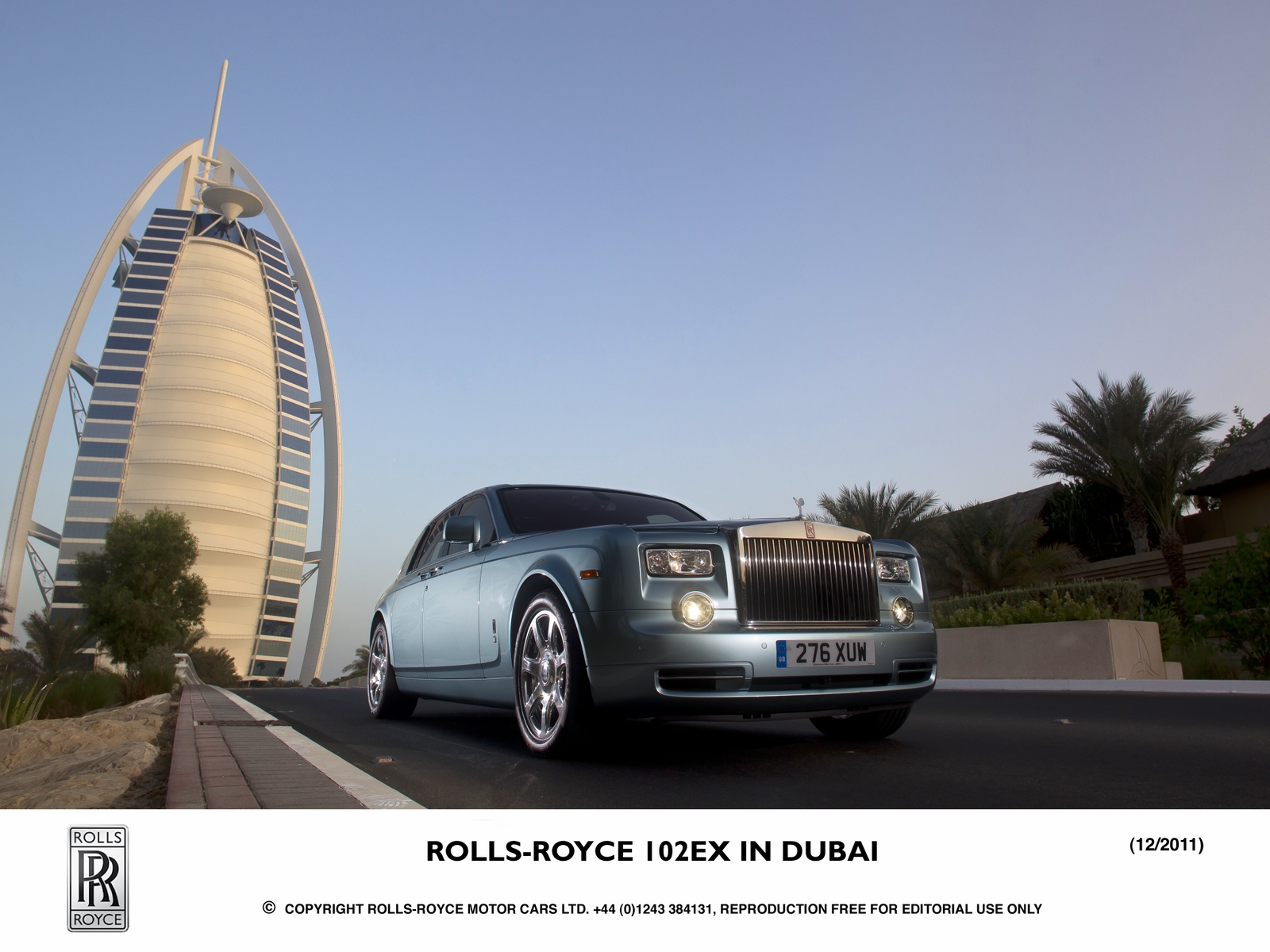
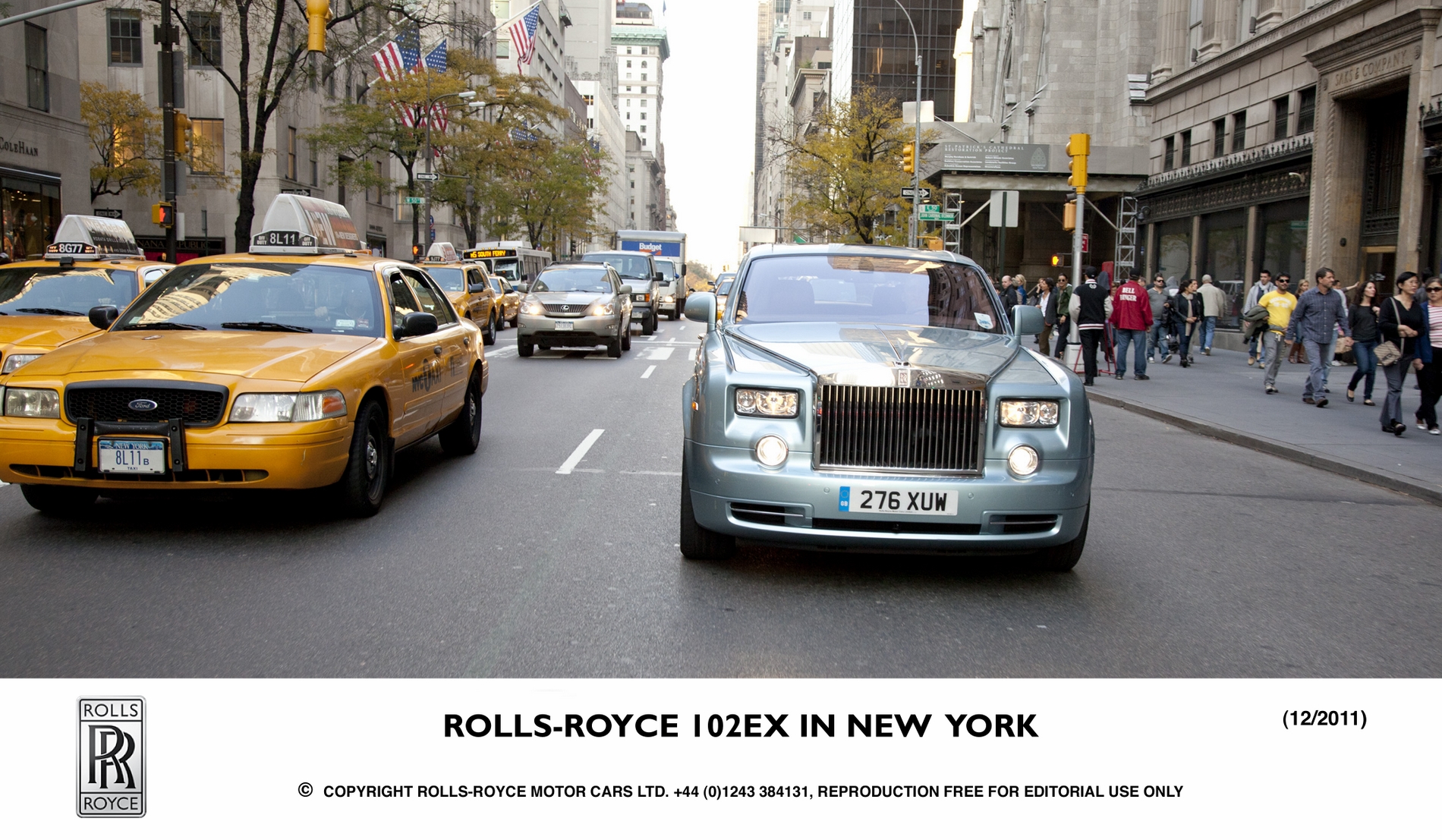
Here’s the part that doesn’t get talked about enough: Rolls-Royce actually drove the 102EX everywhere. Not in the usual motor show circuit sense, but on a deliberate global tour covering Europe, the Middle East, Asia, and North America. The point was to put existing and potential Rolls-Royce customers behind the wheel and collect their reactions directly.
This was an unusual move for a brand that typically tells customers what they want rather than asking them. The 102EX tour was a structured listening exercise, and what Rolls-Royce heard shaped everything that came after it. Customers were impressed by the silence, uncertain about the range, and — perhaps most importantly — willing to consider it.
The 103EX doubles down
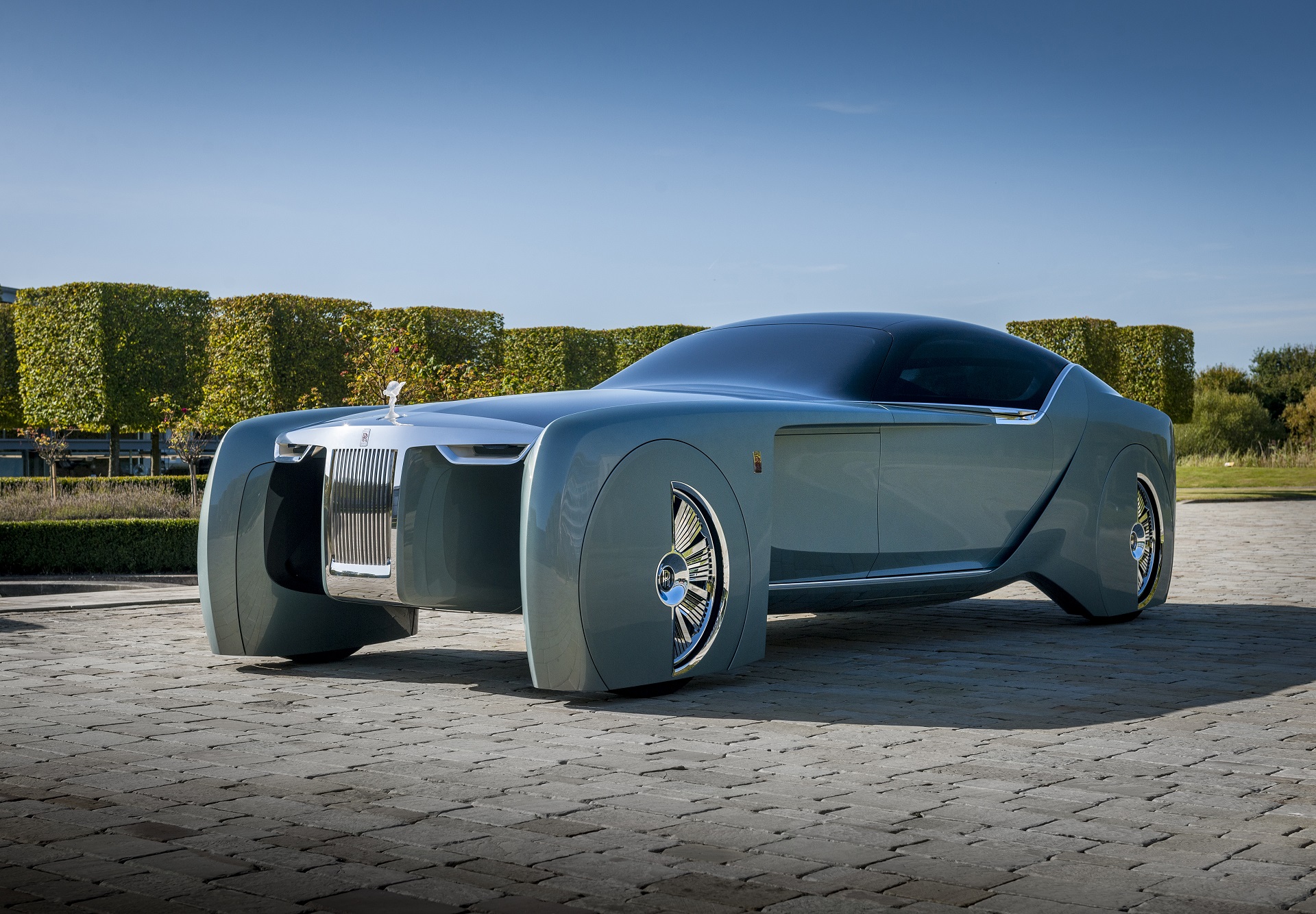
In 2016, Rolls-Royce unveiled the 103EX — the Vision Next 100 — and made clear that the 102EX had not been a one-off curiosity. If anything, the 103EX was more radical. At 5.9 meters long, it was fully electric and fully autonomous, driven by Eleanor, an AI assistant named after the company’s co-founder. The interior was a silk lounge chair, real wood, and handwoven wool carpet — a drawing room on wheels, except now the wheels drove themselves. The roof swung upward and the door opened wide enough to stand upright inside before sitting down.
Nobody expected the 103EX to go into production either, and it didn’t. But it was shown around the world for nearly four years, another rolling survey of what Rolls-Royce’s wealthiest customers might eventually accept. The answer, again, seemed to be: yes, if the experience is right.
Two concepts. Two world tours. Both pointing in the same direction.
What finally happened

The Spectre was announced in 2021, the same year then-CEO Torsten Müller-Ötvös declared that every Rolls-Royce would be fully electric by 2030. It went on sale in late 2022, arrived with customers in late 2023, and it’s the direct answer to the question the 102EX was asking over a decade earlier.
The engineering progress between the two cars makes the 102EX look almost experimental by comparison, which is, of course, exactly what it was. The Spectre carries a 105 kWh usable battery pack driving two motors. EPA range is 264 miles, with WLTP pushing to 321 miles. That’s more than double the 102EX’s 125 miles from a battery pack only about 50 percent larger — a straightforward measure of how much battery chemistry improved in the intervening years.
The drag coefficient of 0.25 Cd is the lowest Rolls-Royce has ever achieved on a production car, which required redesigning the Spirit of Ecstasy herself: her posture adjusted, her robes reshaped, her position on the bonnet lowered to reduce drag. The same icon the 102EX had illuminated in blue, now quietly reshaped for aerodynamics.
The part nobody saw coming
What the 102EX could not have predicted is how the 2030 deadline would start to soften before it arrived. Rolls-Royce’s current CEO, Chris Brownridge, has stepped back from the firm all-electric target his predecessor set. The Spectre took about 17.7 percent of Rolls-Royce deliveries in 2025, down from 33 percent in 2024. Still selling, but not at the pace the original announcements implied. The Ghost, Phantom, and Cullinan all continue on the V12 for now. An all-electric SUV is reportedly in development and expected around 2027.
Twenty years on
The EX series started in 2004 as a centenary project. The 102EX came seven years later and did something genuinely unusual: Rolls-Royce built an electric car not to sell it, but to drive it around the world and watch how people reacted. Most of them said they could picture it. Eventually. That “eventually” took another twelve years to become a car in a showroom. Whether that’s a slow success or a very long experiment probably depends on how patient you are. Rolls-Royce customers tend to be pretty patient.