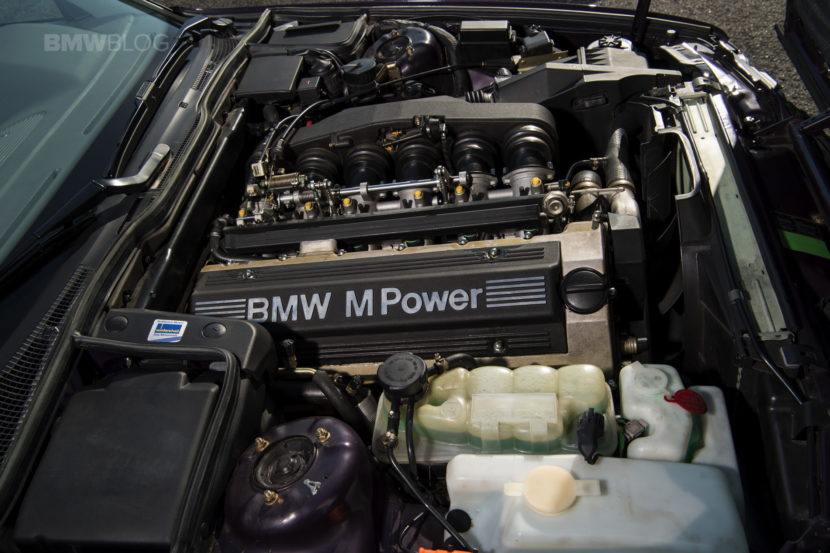
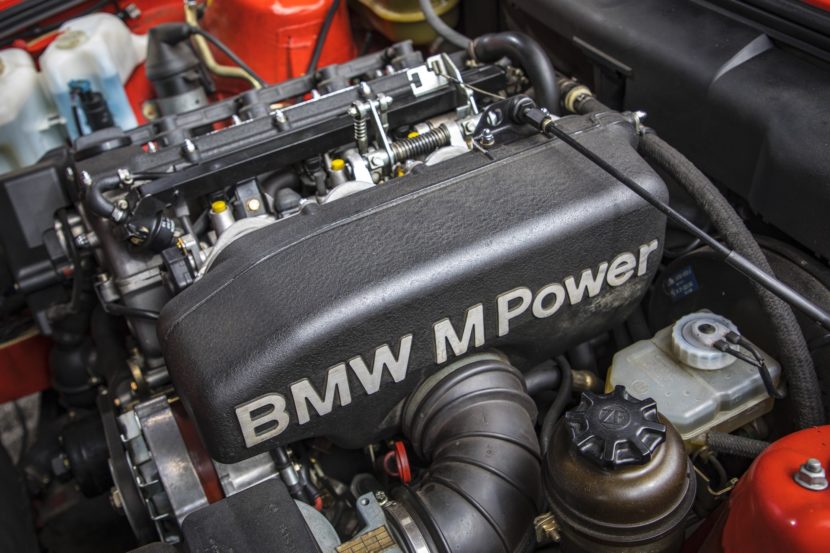
When you think of BMW engines, “six cylinders” is probably one of the first identifying characteristics called to mind. And even if you’re not a dyed-in-the-wool Bimmer head, you might know enough to assume that those six cylinders would be aligned in a straight line, rather than in a “V” arrangement found under the hood of some other automakers. But BMW M actually gave serious thought to throwing a V6 under the hood of one of its most iconic models — the BMW M5.
V6 Power in a BMW M5? It Was Possible
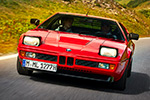
BMW M is, as its single-letter designation suggests, the Motorsport arm of BMW. As such, it stands to reason that an M V6 — a departure from the inline-six the brand is very familiar with — offered a potential competitive edge. Reportedly, Paul Rosche saw a route forward in 1993 or 1994 for the V6 as more than just the next-gen M5 power plant. If you don’t know, Rosche worked for BMW in various roles between 1957 and 1999. He had a hand in everything that makes the brand what it is today — from the legendary BMW M1, to the exotic V12 LMR, and even the ubiquitous BMW M3. In the 1990s, he was serving as Technical Managing Director of BMW M.

Anyway, as BMW M began work on the new E39 BMW M5, the V6 entered the conversation. While we’ve previously reported that BMW considered a V6 for the car, the “why” was never completely clear. Apparently, one driving reason for BMW M to invest in a V6 was motorsport application. Inline, or “straight” six-cylinder engines are much longer than engines assembled in a “V” configuration. The V6 would’ve been an attractive solution for the DTM racing series, where an inline-six wasn’t optimal for balance or packaging.
The Motorsport V6: The Missing Link
BMW M never followed through on the V6. Notably, the brand withdrew from DTM entirely as the E36 M3 debuted — which would’ve been nearly around the same time the brand was looking at this V6 engine. Also interesting to note is the fact that almost all Motorsport engines from this time on were either four-cylinder or bigger V8 or V10 motors.
Had the V6 come to fruition, BMW M would’ve had a low bar for production and sales volumes. The E34 M5, the E39’s predecessor, sold very slowly in the U.S., so BMW M was looking at “2,000 or 3,000 cars” per year. The real prize, after all, was developing a V6 competitive enough for motorsport application. Instead, BMW pivoted to the 5.0-liter S62 V8 engine, and we’re glad they did. After all, it’s only by way of the S62 that we eventually got the incredible S85 V10. Big thanks to Steve Saxty for helping source some of the information for this story. Check out his BMW books for more behind the scenes looks at the BMW brand.