Article Summary
- MINI's recent product blitz covers the bases, but the brand needs a conquest vehicle to attract younger buyers beyond its existing fanbase.
- A rugged compact crossover — positioned against the Rivian R3 and Ioniq 5 XRT — would revive the spirit of the Beachcomber Concept and the Paceman Pre-Runner in a segment that barely existed when MINI first imagined it.
- With both ICE and EV powertrains, this car could be MINI's most commercially and culturally significant launch in years — far more impactful than another niche GP model.
MINI has had a remarkably busy couple of years. A refreshed Cooper for the internal combustion faithful, the all-new Aceman EV slotting neatly into the lineup, a thoroughly overhauled Countryman, and an all-electric Cooper rolling off a Chinese production line — by any measure, the British-German brand has been on the move. Add in the jaw-dropping Deus Ex Machina one-off concept, which practically broke the internet among enthusiasts, and it starts to feel like MINI is finding the creative confidence it once had.
But the next chapter is where things get genuinely interesting. New products are in development, platform decisions hang in the balance (including whether a future MINI EV should migrate to BMW’s Neue Klasse RWD architecture), and the brand faces a question every niche automaker eventually has to answer: what do you build when you’ve refreshed the core lineup and need to grow without losing your soul?
We have a suggestion. And it involves some mud.
The Predictable Stuff Is Already Coming

Let’s be honest about what we already know. A new-generation MINI Cooper is inevitable — it’s the nameplate that defines the brand, as iconic as anything in the modern automotive world, and it will always be there. Ditto the Countryman, which has evolved from a quirky oddity into a genuine sales pillar and family car of choice for a loyal slice of the market. These are given. The Cooper and the Countryman will come, get better, get more electric, and continue doing what they do well.
The more pressing question is what MINI builds beyond those two anchors. Because if the answer is simply “smaller hatchbacks,” the brand risks painting itself into a corner. Subcompact hatchbacks, however charming, face a tough road in a world that has fundamentally shifted toward crossovers and SUVs. Being adorable only gets you so far.
The Case for Something Rugged
Here’s the argument in plain terms: MINI should build a rugged, adventurous crossover that targets a younger, more lifestyle-oriented audience — something that sits in the same emotional neighborhood as the Rivian R3 or the Hyundai Ioniq 5 XRT.
That might sound like a stretch, but look at the segment those cars are trying to carve out. It’s not full-on overlanding. It’s not luxury off-roading. It’s something hipper, more urban-adjacent, a vehicle for people who want to signal that their life has texture — weekend trails, surf trips, a general air of going somewhere interesting. The Rivian R3 has been teased as exactly that kind of car. The Ioniq 5 XRT adds rugged body cladding, raised suspension, and off-road intent to an already popular EV platform. The segment is being defined right now, and it’s wide open.
MINI, with its inherent personality and design language, could own this space in a way that neither a Rivian nor a Hyundai truly can. What Rivian offers in cool-factor engineering credibility and what Hyundai offers in EV value, MINI can match with character, heritage, and a design vocabulary that is genuinely unlike anything else on the road.
Crucially, this vehicle would need a combustion option. Not every market is ready for EV-only, and not every buyer who wants a fun, rugged MINI is ready to go fully electric. Offering both powertrains keeps the car accessible and commercially viable — essential for a brand that, for all its charisma, operates within the commercial realities of being a BMW Group subsidiary.
MINI Has Already Imagined This Car — Twice
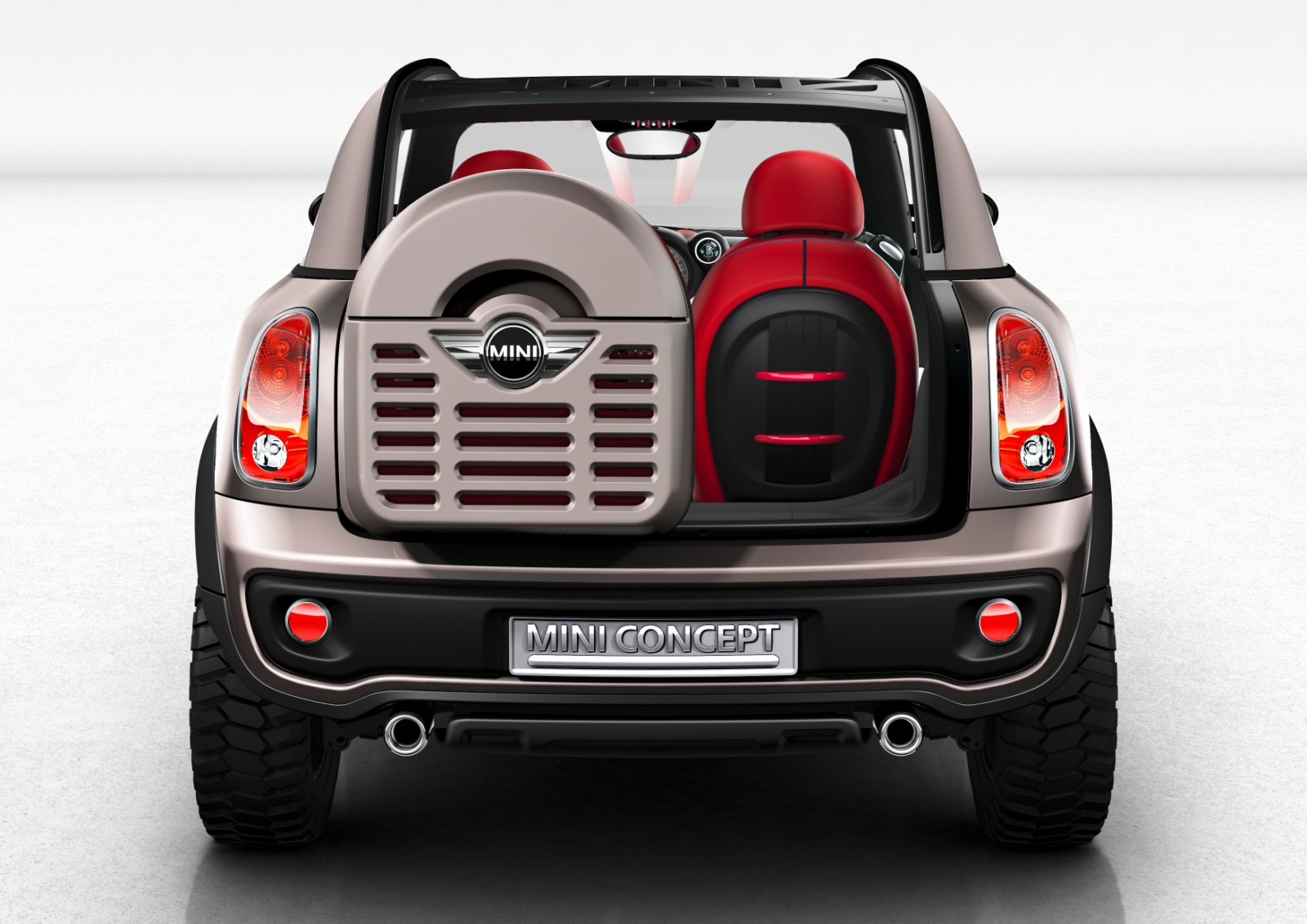
What makes this idea so compelling isn’t that it’s new. It’s that MINI has been here before.
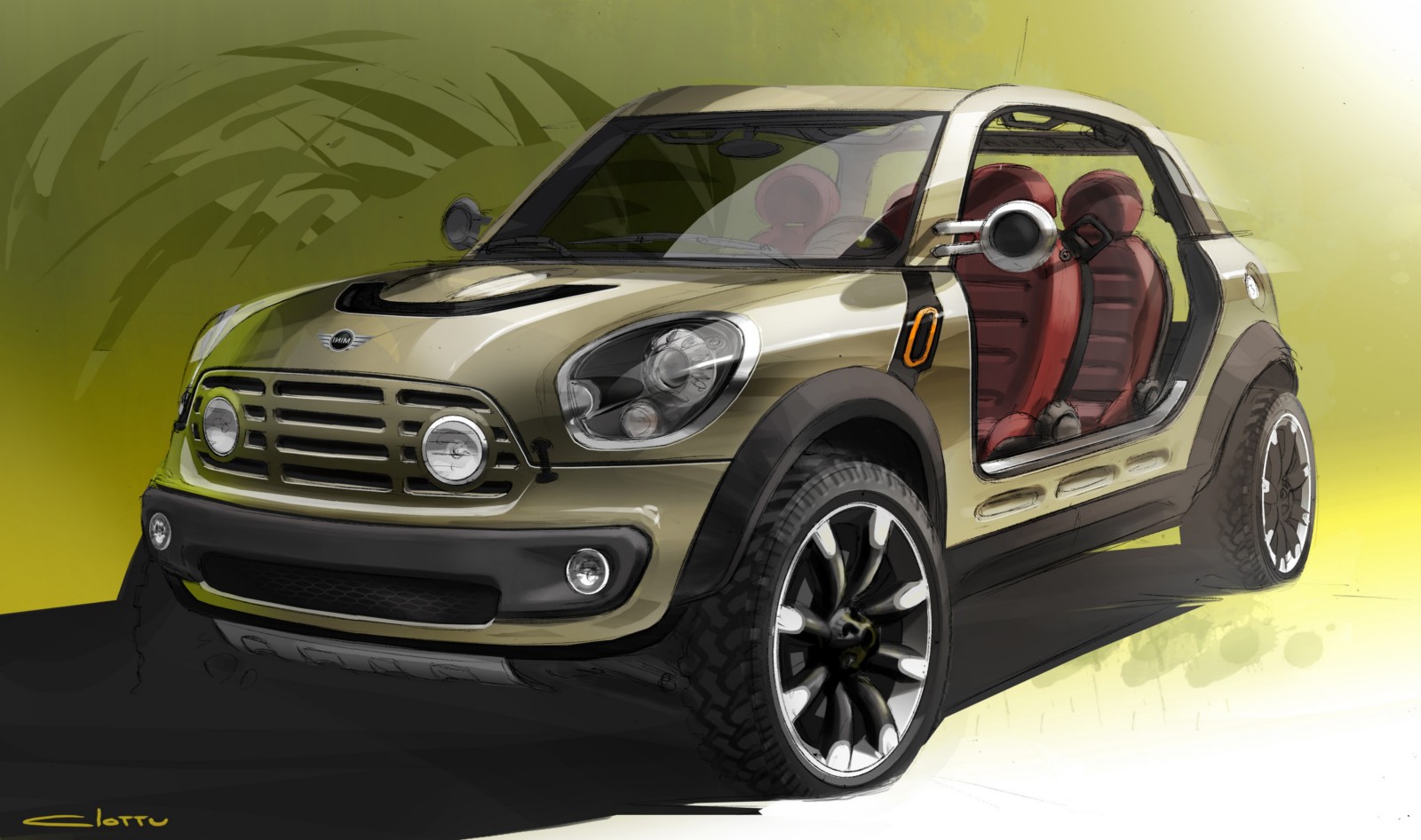
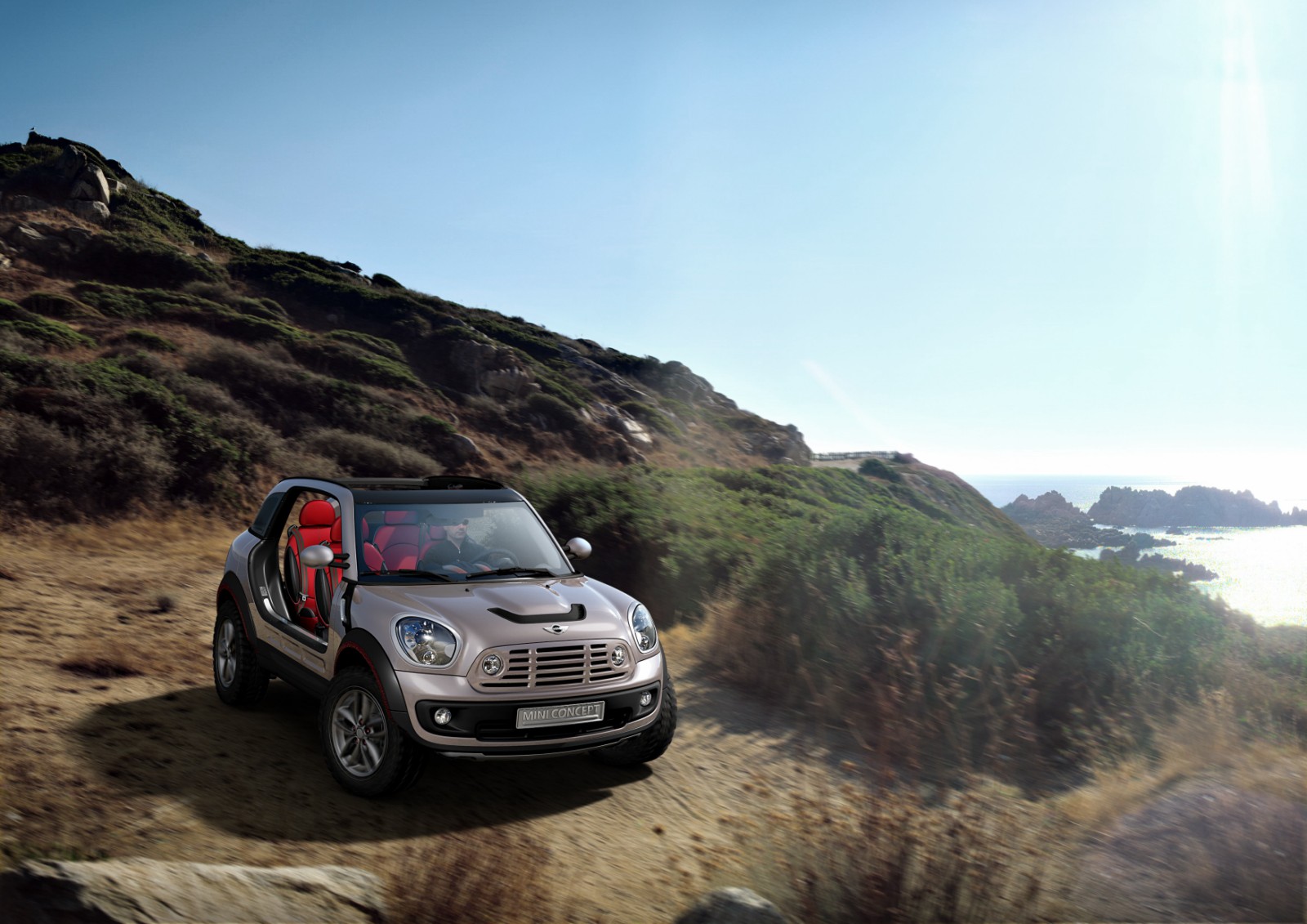
In 2011 — years before the Rivian R3 was a sketch on a designer’s iPad, before Hyundai thought to put knobby tires on an Ioniq — MINI unveiled the Beachcomber Concept. It was an open-sided, adventure-ready, utterly distinctive vehicle that looked like it had been designed for people who lived their weekends well. The reaction was enormous. Enthusiasts loved it. The automotive press loved it. And then, quietly, it went nowhere.
Looking back, the Beachcomber was simply ahead of its time. The market infrastructure for that kind of adventurous crossover — the social media ecosystem that would have made it a phenomenon, the customer base that now gravitates toward Rivians and Broncos and rugged EV adventuremobiles — didn’t fully exist yet. Today, it does.
Then there was the Paceman. Launched in 2013, the Paceman was a two-door coupe-crossover with genuine charm and a go-anywhere attitude that the marketing barely knew how to sell. It was smaller, more style-forward, and more niche than the Countryman, which worked against it commercially. It was discontinued in 2016. But the Paceman also proved something: the segment had potential, and MINI had the design instincts to play in it.
More recently, we had a chance to drive the Paceman Adventure Concept — a rugged, rally-ready take on the Paceman formula. Behind the wheel, it felt like exactly the kind of vehicle MINI should be making: purposeful, exciting, different.
What This Car Should Actually Be
So what does the right MINI rugged crossover look like in practice?
Think compact — smaller than or roughly equivalent to the Countryman in footprint, but with a completely different character. Raised ride height, proper all-wheel drive with real capability, chunky wheel arch cladding that earns its keep rather than just being cosmetic. A roofline that’s more upright and practical than a coupe-crossover, because this car needs to carry gear and it needs to be honest about that.
Design-wise, the brief writes itself: draw a line from the Beachcomber Concept to whatever MINI’s current design language allows. Keep the round lights, the go-kart proportions scaled up just enough, the sense of fun that is MINI’s most durable asset. Make it available in earthy, outdoorsy colors alongside the classic MINI palette. Give it roof rails that actually hold a surfboard.
On powertrains, offer a turbocharged four-cylinder with all-wheel drive for the traditionalists, and a dual-motor EV option with real range and real capability for the forward-looking buyer. If the Neue Klasse platform is in the conversation, this could be the vehicle that proves its case for MINI — a RWD-based architecture that allows for genuine dynamic performance and EV efficiency would suit this kind of car well.
The target buyer is not the existing MINI customer. It’s their younger sibling. It’s the person who thinks the Countryman is a little too sensible and the Cooper is a little too small. It’s the urban professional who rents a cabin on weekends, who follows overlanding accounts on Instagram without actually overlanding, who wants a car that communicates something about who they are. That buyer exists in large and growing numbers, and right now they’re being courted by Rivian, Hyundai, and a dozen others. MINI could walk into that conversation with a stronger hand than almost anyone.
The GP4 Is Lovely — But It’s Not the Answer
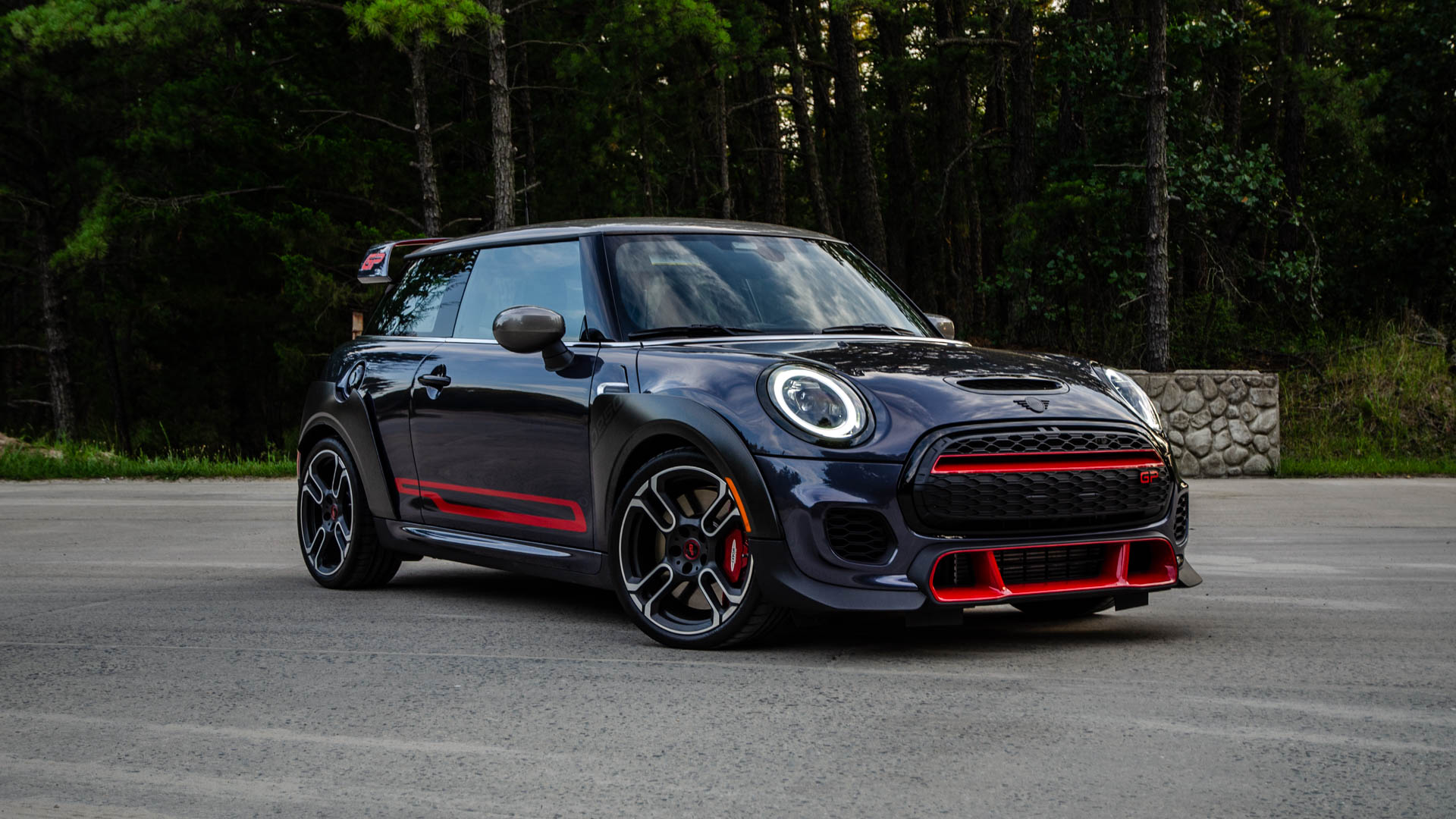
There will always be a contingent of enthusiasts calling for a new MINI GP. And we get it — the GP cars have been brilliant, focused, uncompromising driver’s cars that made the case for what MINI engineering could do when the brief was pure performance. A GP4 would be magnificent. It would win hearts and generate headlines and make a handful of lucky buyers very happy.
But it won’t move the needle commercially. It won’t bring in conquest customers or meaningfully expand MINI’s footprint in a market that is being reshaped by lifestyle and electrification. MINI needs volume products with character, not character products with limited volume.
A rugged crossover — executed with the vision of the Beachcomber and the capabilities of a modern rugged car — would be exactly that. It would be a MINI unlike any currently on sale, which is precisely the point. It would honor the brand’s history of creative risk-taking while targeting a market that is ripe, growing, and currently underserved by anyone with MINI’s particular kind of soul.
The segments that will define the next decade of automotive sales are not the ones being fought over by legacy players with legacy thinking. They’re being invented right now, in California design studios and Korean or Chinese engineering labs and, apparently, in MINI’s own concept garage.
The Beachcomber was right in 2011. It’s even more right today. Time to build it.
What do you think MINI should build next? Let us know in the comments below.