Wiesmann was a tiny family operation out of Dülmen, Germany — founded by brothers Martin and Friedhelm Wiesmann in 1985, started as a hardtop manufacturer, and only gradually worked their way into building complete cars. By the time they got to the MF5 in 2008, they’d spent years perfecting a simple, almost philosophical idea: take the best BMW M engines, strip away everything unnecessary, and wrap them in a body that looks like a 1950s Le Mans racer. Their logo is a gecko, their factory roof in Dülmen has a giant gecko built into it, and their stated mission was to build a car that “sticks to the road like a gecko to a wall.” It sounds like marketing, but in the MF5 they actually delivered on it.
The GT MF5 was their ultimate expression of that idea. BMW’s S85 — the 5.0L naturally-aspirated V10 from the E60 M5 and E63 M6, revving to 8,250 rpm and sounding genuinely like an F1 car — went into a bespoke aluminum monocoque chassis with fiberglass bodywork. The result weighed just 1,395 kg, roughly 400 kg less than the M5 that donated the engine. In the M5 and M6, the S85 was always somewhat muffled by the mass and luxury of those cars.
Lose 400 kg and the S85 stops being a luxury item. The throttle sharpens, the exhaust stops feeling filtered, and the climb to 8,250 rpm is something you brace for. Road testers kept reaching for the word “violent” — which, from automotive journalists, is basically a five-star review.
Impressive Performance and Very Rare
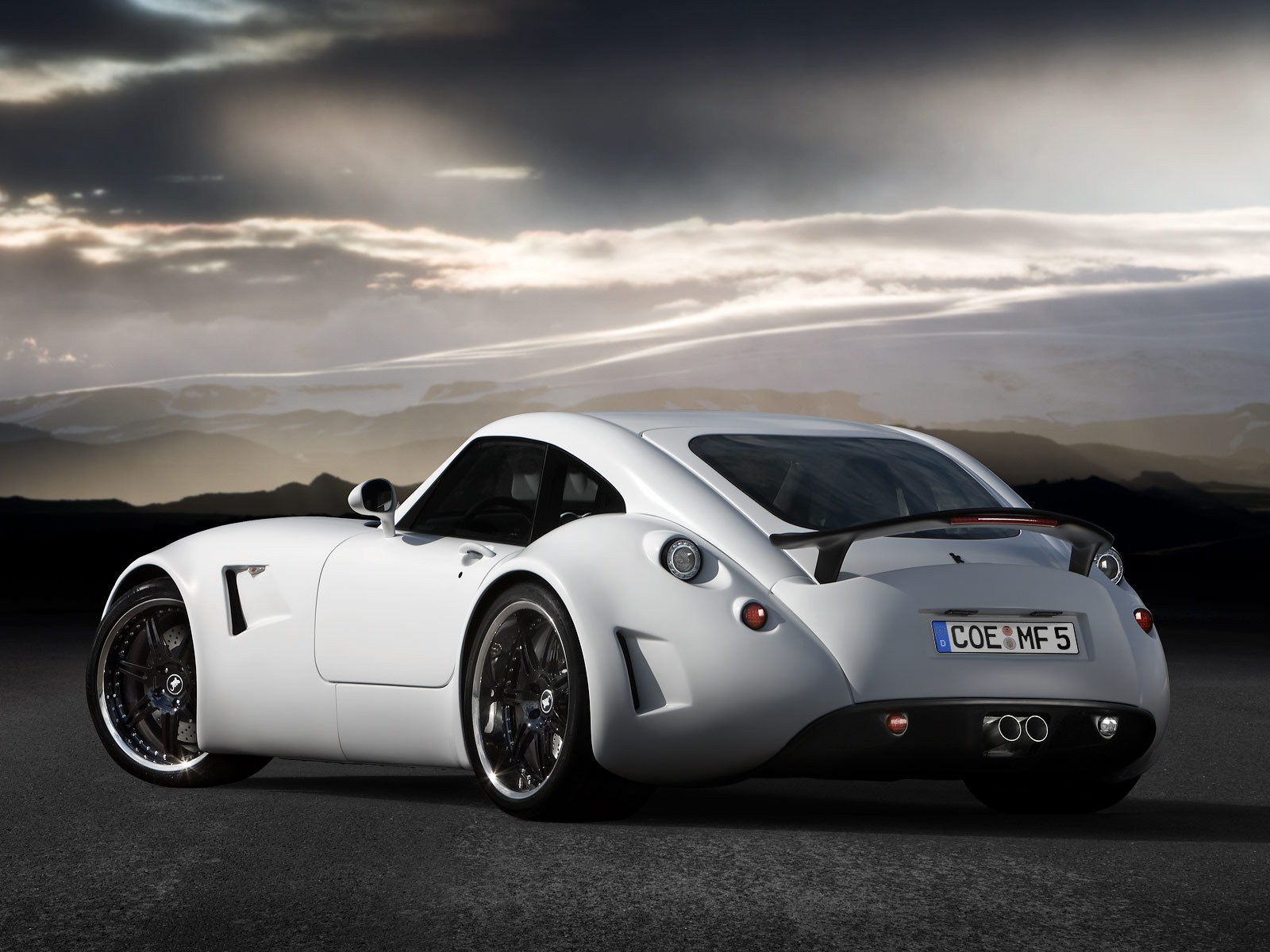
0–62 mph in 3.9 seconds, 192 mph top speed, 363 hp per ton. For context, that power-to-weight ratio beats the E60 M5 by a wide margin — and the 0–60 time was 0.6 seconds quicker than the M5 despite using the identical engine. That’s the whole point in one statistic. Inside, the cabin was entirely handmade: deeply bolstered sports seats, a minimal instrument cluster ahead of the driver, no fussy infotainment. For €179,000 in 2009, it was either charming or confronting depending on your expectations — but it was honest.
Fewer than 200 MF5s were built in total across coupe and roadster. The V10 roadster specifically — the purest, most exposed version — was capped at 55 units and only 43 were actually completed. The coupe V10 ran to around 56 cars before production switched to the twin-turbo V8. You’re talking about a car where the total population of the most desirable variant fits on a single floor of a parking garage.
But Why Did It Fail?
Timing was brutal. Wiesmann announced the MF5 at Geneva 2008 and launched it right into the teeth of the global financial crisis. The brothers had also just expanded their factory — worst possible moment. By 2013, the company was bankrupt. The brand was eventually picked up by Contec Global in 2016 and has been reviving ever since, most visibly with Project Thunderball — a fully electric roadster revealed in 2022 with 671 hp, 0–62 in 2.9 seconds, and a €300,000 price tag. It sold out its entire first year of production before a single car was delivered, which tells you everything about the demand that was always there.
What makes the MF5 particularly interesting as a story is that it was doing in 2008 what boutique manufacturers are celebrated for today — hand-built, ultra-lightweight, driver-focused, visually distinctive — but the market wasn’t ready for a €179,000 niche German coupe at that exact moment in history. Had it launched five years later, it would probably have been a sensation. Used examples now trade between roughly $250K–$370K, and they’re genuinely hard to find.
[Photos: wiesmann.com]