Article Summary
- Hit 2.7 mi/kWh in normal winter conditions, dropping to 2.4 mi/kWh in extreme cold. That's 25-35% range loss, exactly what BMW predicts.
- DC fast charging stretched past an hour in brutal cold. With preconditioning via the My BMW app it improves. Chicago's charging network (Tesla Supercharger + BMW) makes it workable, though home Level 2 would eliminate the friction entirely.
- Instant heat via heat pump, good traction on all-season tires with dual motors, and an interior that actually holds up to real family chaos.
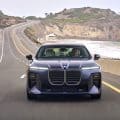
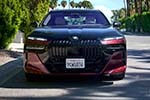
I spent a few weeks driving the 2026 BMW iX xDrive45 in Chicago during a brutal cold snap—temps ranging from -10°F to 20°F. No home Level 2 charger. No preconditioning before I’d head out. Basically, the worst-case scenario for an EV owner. Does it work? Yeah, it does. But there’s definitely more to unpack.
The Setup: Testing Without Shortcuts
Let’s be clear about the test parameters. The iX xDrive45 comes with an EPA-estimated range of 290-312 miles. That number exists in ideal conditions—temperate weather, optimized driving, full preconditioning. Chicago in January doesn’t offer ideal conditions.
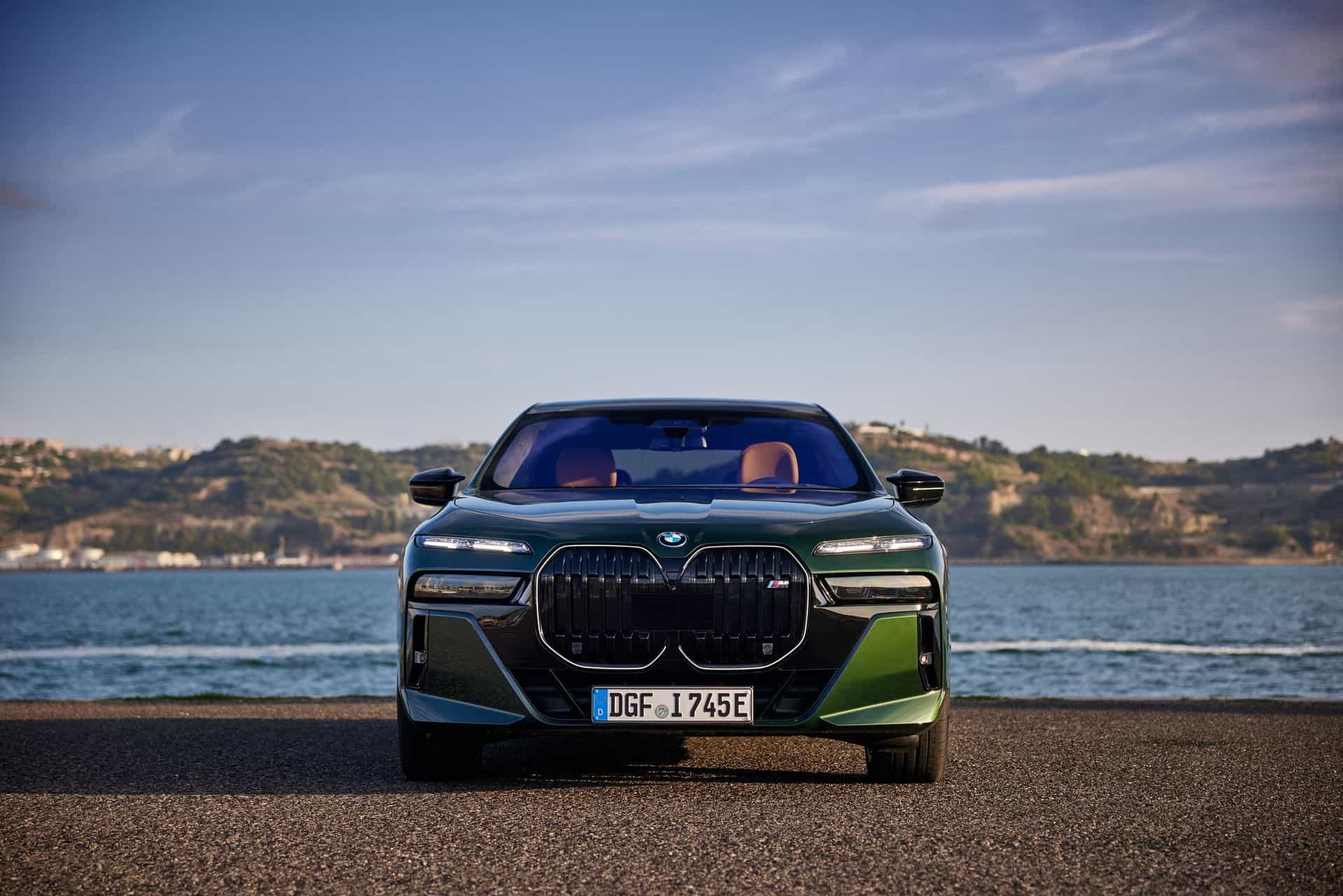
For this test, I drove the iX as most owners without home chargers would: no battery preconditioning before departing, no magical preparation routine. The cabin was set to 70°F with seat heaters and steering wheel heating engaged—real-world comfort settings that people actually use. Tires were HANKOOK ION EVO on 22-inch M Performance wheels—not the most efficient setup, but honest representation of how customers actually spec these cars.
The driving mix was practical: city streets at 30-40 mph mixed with highway runs at 60-70 mph. Nothing extreme, nothing coddled. Just normal driving in brutal cold.
The Real Numbers

Over seven days with the coldest weather I’ve seen in years, I was seeing 2.7 miles per kWh in normal winter conditions. When it got really brutal—those days when -10°F felt almost manageable compared to the wind chill—that dropped to 2.4 mi/kWh. So yes, that’s roughly 25-30% range loss. Maybe 35% on the worst days. BMW says expect 30-40% in extreme cold, so I was actually coming in on the better end of that prediction. The EPA rates this thing at around 3.5+ mi/kWh in ideal conditions, so winter hits you, but not as hard as I initially expected.
And here’s the thing—the car still has enough range to actually use since my daily commutes are fairly short – around 30 miles. But your mileage might vary.
Why Winter Hits EVs Harder (And Why That’s Not Evil)

Here’s the reality that separates EV owners from ICE drivers: in a gas car, cabin heat is essentially free. Your engine produces heat as a byproduct of combustion. Waste heat becomes your comfort.
In an EV, there is no combustion. Heat must be created, and that energy comes directly from the battery. The iX uses a heat pump system—more sophisticated than older resistance heating—but physics remains physics. Creating warmth costs range.
Add battery heating to the equation (necessary for optimal charging and performance), and you’re looking at a significant draw. On short trips, this penalty is disproportionately severe. Drive 10 miles in -10°F with the cabin warming up, and you’re using energy for comfort that a gas car gets for free.


But here’s what nobody talks about: EV heating is nearly instant. Start a gas car in -10°F weather and you’re sitting in a freezing cabin for 30 seconds, maybe a minute, waiting for the engine to warm up. Start an iX and the cabin begins heating immediately.
Charging: The Real Test

Here’s where winter EV ownership gets real. Without preconditioning, DC fast charging in -10°F is slow. Normally I’d see 10-80% in about 32-35 minutes. In that brutal cold? Pushing an hour easy. Did it ruin my week? Not really. I wasn’t doing long road trips where DC charging speed is critical. I was doing normal Chicago driving—maybe needing 100-150 miles of range to cover the next few days. Getting that charge took longer, but it wasn’t a crisis.
If I’d used preconditioning through the My BMW app before hitting a charger, it would’ve been faster. I just didn’t think about it most of the time since I wasn’t in a rush. The preconditioning feature definitely helps—you can see it making a difference—but it requires you to be intentional about the process.

Chicago’s charging infrastructure actually stepped up though. Tesla Supercharger access plus BMW’s network means options exist. During the worst cold snaps when everyone was panicking, yeah, you’d see lines. But that’s temporary panic.
Without a home Level 2 charger, charging in winter requires planning. With one? It basically disappears as an issue. You leave the car plugged in, preconditioning handles battery management while you sleep, and you start each day fully charged. That’s the experience I’m missing here.
The iX xDrive45 Versus Other Winters I’ve Driven
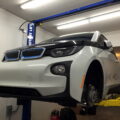
I previously owned a BMW i3s and spent several months with an iX M60 during winter months. The iX xDrive45 is noticeably more efficient than the i3s—that older car suffered significantly in cold conditions. Against the M60, the xDrive45 performs slightly better, likely due to the slightly lower performance orientation and the inherent efficiency of its powertrain configuration.
The 94.8-kWh battery helps. It’s substantial enough that the proportional penalty of cabin and battery heating doesn’t devastate range the way it does in smaller battery packs. A 40-kWh EV might lose 40-45% of range in brutal cold. The iX xDrive45’s larger capacity means the percentage hit is real but not crippling.
Where Winter Actually Becomes Relevant: Traction

I drove the iX on all-season tires in Chicago snow and ice. The HANKOOK ION EVO tires—engineered specifically for EV low rolling resistance—provided decent traction. Adequate for normal winter driving. Not ideal for intentionally aggressive winter driving. Winter tire recommendations exist for a reason. Snow tires provide superior grip and stopping distance on ice. But here’s the trade-off: winter tires often have higher rolling resistance than all-seasons, which means efficiency takes another hit. It’s a choice between range and grip—and in true winter conditions, grip usually wins.
The iX’s dual-motor system helps. All-wheel drive provides inherent traction advantages that front-wheel-drive EVs don’t enjoy. In the city driving and highway runs during this test, I never felt the traction was compromised. Confidence remained high even when the road conditions deteriorated.
The Family Experience

The M Sport Black Sensatec interior held up surprisingly well despite traveling with two toddlers and car seats. I was worried about durability with car seats and winter gear getting dragged through it all week, but it’s fine. The Sensatec synthetic leather also doesn’t get cold to the touch like regular leather does in -10°F weather. That sounds like a tiny thing until you’re getting in the car and your hands aren’t getting shocked by ice-cold material.
The only thing that sucks in Chicago winter is the constant interior cleaning due to snow, ice, salt or mud. But a small price to pay in keeping that cabin pristine.
What Can I Do Better?
If you’ve got a Level 2 home charger, winter EV ownership gets better. Overnight charging with preconditioning, wake up to a full battery, infrastructure fills the gaps for longer trips. The efficiency hit still exists, but you feel it less. Without home charging? You need to be intentional. Route through chargers before you’re desperate, use the My BMW app to precondition before you head out, accept that some charges will take longer than summer.
Real talk: if you’re in Chicago without home charging and you’re thinking about an EV, the iX xDrive45 can work. It won’t be as frictionless as someone with home charging, but it’s doable. The infrastructure exists, the car’s capable, and even without preconditioning, the real-world efficiency gets you through normal daily driving.