Article Summary
- The G50 marks the most significant styling departure from one 3 Series generation to the next.
- Despite looking strikingly similar to the electric i3 inside and out, the new ICE 3 Series doesn't share the same underpinnings.
- It launches with four- and six-cylinder gasoline engines, while a plug-in hybrid will join the lineup in 2027. The diesel is gone.
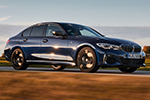
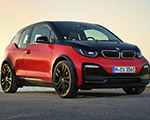
With more than 18 million cars sold since the E21 came out back in 1975, the 3 Series is unquestionably BMW’s most important model in history. Now, perhaps more than ever, the generational change brings sweeping shifts, as the G50 marks a significant departure from the G20 it replaces. And yes, you could easily mistake it for the fully electric i3, even though the two vehicles are fundamentally different underneath.
Although the new 3 Series sticks to the tried-and-tested CLAR platform, it now wears a fully redesigned hat. Virtually nothing carries over from the preceding generation, as the eighth 3er appears cut from the same cloth as the i3. It embraces the Neue Klasse design language with a “less is more” approach, moving away from the increasingly busy lines of BMW’s recent past.
Starting at the front, BMW has given the kidney grille a fresh take with a horizontal layout that expands to meet the headlights, which still have a whiff of the long-running twin-light motif. With the German luxury automaker claiming LEDs are the new chrome, the front grille lights up. Step up to the range-topping M350 xDrive, and the so-called M Yellow Lights set it apart from the four-cylinder versions. We’ll also see these race-car-inspired lights on next year’s i3 M60 xDrive.
Predictably, all the press shots feature the 3 Series with the optional M Sport Package. However, BMW is also planning a base model, and it should tone things down once it hits the online configurator. For example, the illuminated grille won’t be standard, and some black accents will likely make way for body-colored surfaces.
Pop-Out Door Handles, But What About China?

Since we mentioned the electric sedan, the similarities with the i3 continue once you move to the profile. The aero-driven door handles sit flush and pop out automatically when you unlock the car. We won’t be surprised if the long-wheelbase 3 Series (G58) gets conventional door handles to meet a new safety regulation in China, where BMW had to redesign the stretched iX3 in a rush. After all, China’s new i3 already has the old-school handles.
Elsewhere, one subtle change you might have noticed is that the 3 Series has regular window seals, whereas the i3 tucks them away for an even cleaner look. Wheel sizes for the combustion-powered models start at 18 inches and rise to 20 inches, compared to the electric i3 sedan’s larger 19- to 21-inch alloys.
At the rear, the 3 Series embraces the latest design trend with much wider taillights, bisected by the BMW roundel placed on the so-called valley. With the four-cylinder models tucking the exhaust tips underneath the bumper, they’ll look even more like the i3. Only the M Performance model will instantly stand out with its standard quad-exhaust arrangement.
New Rear Badging

Not that we’re surprised, but the new 3er adopts BMW’s new badging by dropping the “i” and making the “3” bigger than the other digits. In the M350 xDrive’s case, it gives the untrained eye the initial impression of an M3, even though it’s only an M Lite version. There’s no xDrive badge on the M350, but the sportiest of the bunch comes with standard all-wheel drive.
Before we hop inside, let’s talk colors. At launch, the new 3 Series comes in nine metallic finishes: Sapphire Black, Space Silver, M Brooklyn Grey, Eucalyptus Green, M Le Castellet Blue, Mineral White, Fire Red, Polarized Grey, and Ocean Wave Blue. Alpine White solid is the base color, while Frozen Space Silver will be available from March 2027 with a matte look. Additional Individual finishes are coming next year.
The 3 Series Interior Is Truly All-New

The interior is a clean-sheet redesign from the previous-generation 3 Series. This G20-to-G50 transition comes with further simplified switchgear. Yes, BMW killed the beloved iDrive rotary knob, and did the same with most of the conventional controls. The revamped dashboard layout is borderline identical to the i3’s, as the gas-fueled car inherits the 17.9-inch touchscreen and the windshield projection. The latter has three fixed tiles in the line of sight to effectively replace the digital instrument cluster. To the right, up to six configurable widgets sit. For an additional cost, you can order an optional 3D head-up display to show relevant information, including navigation instructions, in the driver’s line of sight.

Hop into the rear seats, and you’re quickly reminded this is a 3 Series with combustion engines. There’s an evident hump in the floor, as the central tunnel accommodates the driveshaft. Go electric, and the i3 will have a completely flat floor without robbing rear passengers of precious legroom. But other than that, the two are very much alike. Options include ventilated front seats, heated rear seats, three-zone automatic climate control, and an upgraded Harman Kardon sound system.
BMW fits the body-hugging M Sport seats with an illuminated “M” logo in the backrest as standard on the M350 xDrive, while buyers can also add them to the regular 3 Series when they choose the M Sport Package. Those looking for a more daring spec can order the car with a Digital White interior paired with a matching steering wheel. Speaking of which, the steering wheel designs are already familiar, and all come with shift paddles behind them.


The Biggest 3 Series Yet
Car bloat is still very much a thing in 2026. At 4,765 mm (187.6 inches) long, 1,850 mm (72.8 inches) wide, and 1,455 mm (57.3 inches) tall, the new 3 Series is bigger in every dimension than its predecessor. It also has a stretched wheelbase of 2,860 mm (112.6 inches), while the front and rear tracks are wider than before. Of course, it’s also on the heavy side, with the M350 xDrive tipping the scales at 1,860 kilograms for the European model and 4,169 pounds for its American cousin.
Until the 3 Series Touring G51 arrives later this decade, you’ll have to make do with the sedan’s already decent practicality. The trunk can swallow 450 liters (15.9 cubic feet), which is actually 30 liters (1.1 cu ft) more than the i3. However, the EV makes up for it with a 31-liter (1.1 cu ft) front trunk. As you’d expect, the rear bench folds in a 40:20:40 split configuration when you want to carry more stuff.
The New BMW 3 Series Has Four- And Six-Cylinder Gas Engines
With diesel dead and the plug-in hybrid not arriving until next year, the initial engine lineup is relatively simple. All powertrains have mild-hybrid tech and run on the Miller cycle to cut fuel consumption and improve efficiency. Not coming to the United States, BMW kicks things off in Europe with a rear-wheel-drive-only 318. The latest B48 engine with a dash of electrification delivers a combined 154 hp and 250 Nm (184 lb-ft). With a sprint to 62 mph (100 km/h) in 9.5 seconds and a top speed of 134 mph (215 km/h), it certainly won’t set your pulse racing.
Up next is the 320, which isn’t coming to America either. It uses a beefier version of the same 2.0-liter four-cylinder mill, producing 208 hp and 330 Nm (243 lb-ft) of torque. The sprint time drops to 7.4 seconds, and top speed rises to 149 mph (240 km/h). Unlike the entry-level version, customers can combine the B48 engine with xDrive for all-weather capabilities.
Over in America, the lineup starts with the 330 and its xDrive counterpart. Both push out 255 hp and 400 Nm (295 lb-ft) and hit 60 mph (96 km/h) in 5.9 seconds. Flat out, neither will go any faster than 130 mph (209 km/h), unless you spring for sport tires, in which case the top-speed limiter is loosened to 155 mph (250 km/h).
The M350 xDrive Tops The 2027 BMW 3 Series Lineup

Saving the best for last, the M350 xDrive is the crown jewel of the 3 Series range. Well, at least until another M3 (G84) arrives in 2028. Europeans no longer get the short end of the stick, as the B58 hasn’t been detuned to pass emissions regulations as was the case with the M340i. BMW rates the mild-hybrid inline-six at 437 hp and 580 Nm (428 lb-ft) on both sides of the pond. All-wheel drive comes out of the box, but a pure RWD driving mode will be added via an over-the-air update next year.
The cream of the crop among G50s takes just 4.1 seconds to reach 62 mph (100 km/h), or 3.9 seconds if you prefer the 0-60 mph (0-96 km/h) benchmark. Top speed is once again capped at 155 mph (250 km/h), so if you want to go even faster on the Autobahn, you’ll have to wait for the next M3. It’s supposedly coming out in 2028, and from what we’ve heard, it’ll use a mild-hybrid S58.
Regardless of which one you go for, don’t bother looking for a manual because it’s likely not planned. We wouldn’t hold out much hope for the G84 to get a third pedal either, but we obviously wouldn’t mind if BMW proves us wrong. Chances are the G20 and G80 were the last 3 Series models to let drivers row their own gears.


2027 BMW 3 Series: Production Start And Pricing
Meanwhile, production of the regular versions and the spicy M Performance kicks off in November, but not in Munich. BMW is moving the 3er to Dingolfing, leaving the historic plant to assemble the purely electric i3.
Pricing in the U.S. kicks off at $51,250 for the rear-wheel-drive 330 and continues with its xDrive sibling at $53,250. Upgrade to the M350 xDrive, and you’ll be spending at least $67,250, with all prices including the mandatory destination and handling fees.