Article Summary
- The BMW Group's Head of Design Adrian van Hooydonk explains why the 8 Series Gran Coupe served as the basis for the Vision BMW ALPINA.
- If BMW were to build the car, it would have to be based on a different model, considering the 8 Series has gone out of production.
- The Vision design study is a lavish GT coupe to show how ALPINA can complement the core lineup with a product BMW itself doesn’t offer.
Ever since we first laid eyes on the Vision BMW ALPINA, we wondered which vehicle it was based on. One-offs typically rely on the underpinnings of an existing model, since developing everything from scratch would incur enormous costs. With the coupe stretching to 5.2 meters, or nearly 205 inches, it was clear this wasn’t a reskinned 4 Series or 8 Series Coupe.
Although the concept’s interior gives off a strong 2027 7 Series vibe, the Vision BMW ALPINA is not a coupe-ified G70. In an interview with the media at the Concorso d’Eleganza Villa d’Este over the weekend, the BMW Group’s Head of Design revealed the identity of the donor vehicle. To our surprise, the gorgeous GT is actually based on a car the company no longer sells.
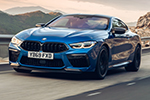
Adrian van Hooydonk announced the Vision design study was built on an 8 Series Gran Coupe chassis. Although the two-door 8 Series Coupe might seem like a more natural fit, the four-door body style was deliberately chosen for its longer wheelbase. As a refresher, the G16 measures 3023 millimeters, or 119 inches, between the axles. That allows for the spacious rear seats you’d expect in a luxury grand tourer. Compared to the Coupe and Convertible, the Gran Coupe’s wheelbase is 201 mm, or almost 8 inches, longer.

An 8 Series-Based ALPINA Coupe Can’t Happen
Even if BMW were to turn the Vision into reality, the company would have to use a different base car. Why? The 8 Series has gone out of production. Consequently, a stately coupe can’t be built on the bones of a now-discontinued vehicle.
As for why BMW chose a sumptuous four-seat coupe body style, the decision stemmed from a desire to show how ALPINA can complement the core lineup with different products. Adrian van Hooydonk explains:
“We deliberately chose to take something that is not already in existence, because we want to make clear this is a new chapter for ALPINA, and it’s not a thin layer on the BMW. We want to set the brand on its own course within the BMW Group. There’s no better way of documenting that than to do a standalone vehicle.”
The concept also portrays how familiar design cues carry over into the new era. Retro touches like the deco lines, elliptical quad exhaust, and 20-spoke wheel design are all set to continue. The same goes for the ALPINA wordmark as a machined, polished metal element in the lower bumper. Additionally, BMW will offer that extra layer of customization that the Buchloe-pampered cars were known for.
ALPINA’s reset under the BMW Group will start at the top and gradually trickle down through the range. The 7 Series will get the ball rolling next year, followed most likely by a second-generation X7 later this decade. However, that doesn’t necessarily mean all future ALPINAs will be based on existing BMWs, as the company is keeping its options open.