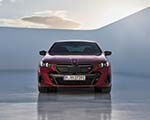
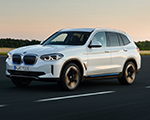
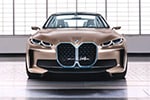
The EU has backed away from its 2035 ban on sales of new cars with combustion engines. Nevertheless, electric vehicle adoption continues to grow. According to the European Automobile Manufacturers’ Association, EVs accounted for 16.4% of total new car sales in the EU during the first ten months of the year. That marks a notable increase compared with the same period in 2024, when ACEA reported that just 13.2% of vehicles sold lacked a combustion engine.
While EV adoption remains uneven across the continent, BMW points to a dramatic surge in popularity in Belgium and Luxembourg. In 2025, nearly half of the cars it sold in two Western European countries were without combustion engines. EV market share climbed from just 3% in 2020 to 49% in 2025.
Looking ahead, BMW expects EV momentum to continue in 2026 with the arrival of the second-generation iX3. The first modern Neue Klasse model is projected to lift EVs to a 60% share of overall deliveries in Belgium and Luxembourg. The “NA5” is already receiving an “enthusiastic reception” ahead of deliveries starting next spring.

The i3 sedan will also launch in 2026, though not until late in the year. As a result, the “NA0” is unlikely to significantly affect sales until 2027. Likewise, the iX4 and iX5 crossovers, arriving in 2026, are expected to have a real impact the following year. In the meantime, corporate fleet sales are playing a major role in boosting EV numbers. Late last month, PwC Belgium took delivery of 423 BMW iX1s in eDrive20 guise.
Plug-in hybrids, by contrast, are losing ground in Belgium and Luxembourg. BMW models combining a combustion engine with an electric motor accounted for more than a third of deliveries in 2023, but their share dropped to just 13% in 2025. Traditional gasoline and diesel cars have accounted for roughly a third of sales over the past three years, a share expected to remain largely unchanged in 2026.
Although EVs are on the rise, the company’s head for Belgium and Luxembourg stresses that all powertrains remain important. Here’s what BMW Group Belux CEO Alexander W. Wehr says:
“BMW Group remains committed to the principle of ‘technology openness’. We do not believe in a single solution for the future of mobility, but embrace a wide range of propulsion technologies, from fully electric vehicles to hybrids, gasoline, diesel, and even hydrogen models. This versatile approach allows us to respond flexibly to the diverse needs of our customers and different market conditions, while working together for sustainable and innovative mobility for all.”