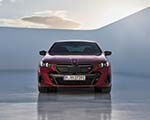
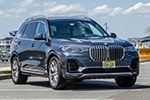
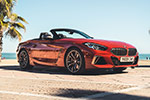
A 2.5-star result out of five doesn’t look impressive on paper, and that’s exactly the rating the BMW 5 Series (G60) and BMW X2 (U10) received in the latest Green NCAP test. But taken at face value, the number misses an important point: the test itself has shifted so far toward favoring small electric cars that conventional gasoline models are now graded against standards they were never meant to meet.
But what is Green NCAP? It’s an independent European vehicle assessment program that evaluates how clean and energy-efficient cars really are in everyday use, not just in a lab. Think of it as Euro NCAP for emissions, efficiency, and environmental impact — instead of crash safety.
Why Green NCAP Now Favors Small Electric Cars

Green NCAP’s post-2025 criteria are designed around overall environmental impact, not class-to-class comparisons. Under that framework, four- and five-star results are realistically achievable only by compact EVs such as the MINI Cooper E (J01). The cars tested here—the BMW 520i and BMW X2 sDrive20i—are larger, heavier vehicles with combustion engines, which puts them at an inherent disadvantage before testing even begins.
That makes the results easier to understand. The BMW 520i uses a 2.0-liter turbocharged four-cylinder B48 engine, while the X2 sDrive20i is powered by a 1.5-liter turbocharged three-cylinder B38 producing 156 horsepower. Within the context of gasoline-powered midsize sedans and compact SUVs, their scores are competitive rather than alarming.
What Green NCAP Testers Actually Say About the Results

Green NCAP’s testers acknowledge this directly. In their assessment, both BMWs show what modern exhaust aftertreatment systems can achieve when properly engineered. Despite being internal-combustion vehicles, pollutant emissions remain low, particularly outside of laboratory conditions.
Cold-weather testing also plays to the strengths of combustion engines. While fuel consumption increases in low temperatures, the impact is less severe than it is for electric vehicles. Cabin heating in the 520i and X2 relies largely on engine waste heat, whereas EVs must draw heating energy from the battery, reducing usable driving range. It’s a practical detail that still matters in daily use and one Green NCAP explicitly points out.


Numerically, the BMW 520i records an overall environmental score of 46 percent and earns 6.5 out of 10 points in the Clean Air Index. The BMW X2 sDrive20i edges slightly ahead with 49 percent overall and 6.6 out of 10 points in the same category.
The on-road results are where both cars perform best. Green NCAP’s Real Driving Emissions testing shows that the engines remain clean outside controlled lab environments. The 520i scores 7.4 out of 10 points in laboratory conditions, then improves to 9.2 out of 10 during on-road testing. The X2 posts 7.3 points in the lab and 8.5 points on public roads.
Real Driving Emissions
That gap matters. It indicates that emissions performance isn’t tuned solely for test cycles, but holds up in everyday driving—an area where many combustion cars have struggled in the past.
In the end, the 2.5-star rating reflects the direction Green NCAP has chosen, not a failure of engineering. As long as the system continues to reward compact electric vehicles above all else, gasoline-powered cars in higher segments will struggle to score higher, regardless of how clean they are by real-world standards. For the BMW 520i and X2 sDrive20i, the data shows well-controlled emissions and solid real-world behavior, even if the headline rating suggests otherwise.
[Photos: Green NCAP]