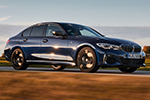
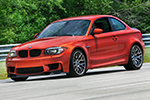
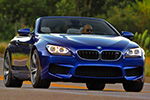
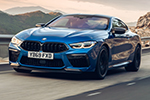
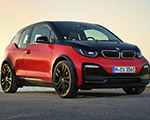
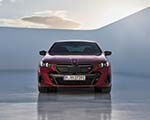
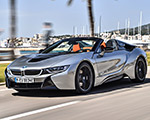
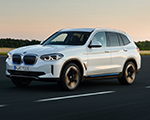
The frozen lake in Ostersund, Sweden stretches wide and flat under grey winter skies—an ideal canvas for testing how BMW’s new electric performance actually behaves when traction disappears. We attended the BMW Winter Driving Experience with a lineup of vehicles spanning the new and older BMWs, and among them was something unexpected: the 2026 iX3. The iX3 shared space on the frozen course with more traditional performance cars—M models, 8 Series Convertibles and 3 Series Touring variants, and other winter-tested machinery.
A Different Kind of Performance

Drifting an electric vehicle requires a mental recalibration. The iX3’s immediate torque delivery—instant electric motor response—changes the throttle modulation game entirely compared to traditional internal combustion engines. On the frozen surface, this translates to a car that responds with precision to input but demands respect for its weight distribution. The 2026 model’s platform carries the battery pack low and centered, which fundamentally alters how the chassis behaves. In a drift, this manifests as composed, predictable handling traits—the iX3 doesn’t fight you, so you need to dance with the car.

Where traditional combustion engines require throttle buildup and turbo response, the iX3 offers flat, linear power application. On ice, the immediate surge of electric torque means smoother transitions through drift angles, but it also requires drivers to recalibrate their threshold awareness. We tried drifting the car with both DSC off and on, and naturally, it’s the nanny controls off mode that’s more fun.
Why? Because the Heart of Joy supercomputer does such a great job keeping the car planted, even on icy surfaces without studded tires. During more aggressive exercises, you notice the intelligent integration of the powertrain and chassis—they communicate constantly, refining delivery rather than simply limiting it.
Regenerative Braking in Dynamic Conditions

Brake regeneration in performance driving reveals itself differently than in regular driving. During our ice exercises, the iX3’s regenerative braking system remained engaged, which creates a noticeable, almost seamless braking feel that differs from friction braking alone. The car recovers energy even during aggressive maneuvers, which means drivers feel a slightly softer brake engagement than a traditional setup might offer. It’s also fun to almost never having to use the brake pedal during a drift, other than maybe tapping it to throw the weight to the front and rear out.
The images captured throughout these drifting sessions document this engagement visually—the iX3 mid-drift, rear wheels throwing up snow and ice crystals, the car leaning into its lines while staying composed. It’s actually quite impressive how unbothered the chassis is even when leaning hard into it.
Why Driving It On A Frozen Lake?

The 2026 iX3 on Ostersund’s frozen surface proves that BMW’s electric SUV isn’t merely acceptable in dynamic conditions—it’s genuinely capable and engaging when driven hard. For winter markets like Sweden, Germany, and Canada, this distinction carries real weight. It’s also a fun exercise to show how even high-riding electric vehicles can be fun, when pushed hard. [Photos: BMW Sweden]