Article Summary
- Extra horsepower comes from retuning the turbocharger while the torque boost is mostly delivered by the mild-hybrid setup.
- The updated mild-hybrid system isn't just there to improve efficiency; it also helps compensate for turbo lag.
- Unlike the M340i it replaces, the new M350 won't be detuned in Europe to pass emissions regulations.
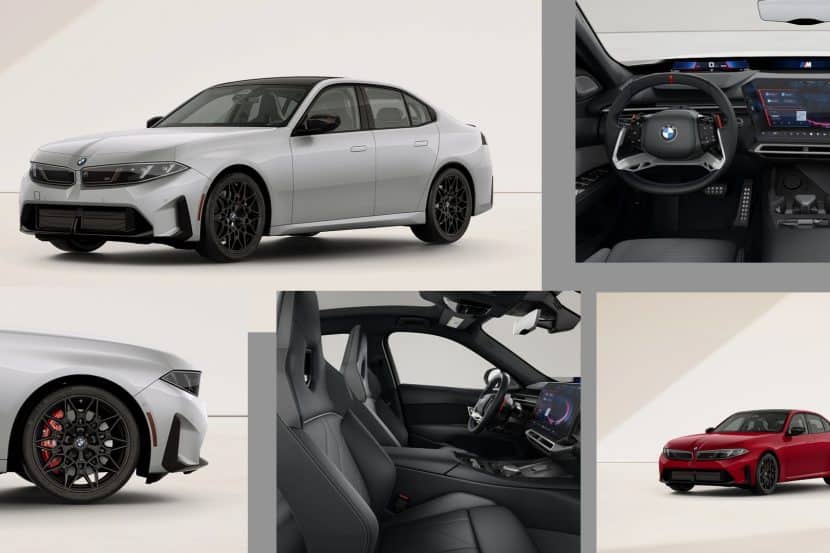
BMW’s new M350 is not reinventing the wheel when it comes to its powertrain. Instead, the upcoming M Performance 3 Series sticks with a familiar formula: the company’s turbocharged B58 inline-six, 48-volt mild-hybrid assistance, an eight-speed ZF-sourced automatic transmission, and xDrive all-wheel drive.
If that sounds familiar, there’s a good reason. When asked whether the M350 uses the same updated B58 already found in the X3 M50, BMW confirmed that it does. The core hardware is the same; the differences come down to application-specific tuning and a different cooling setup, not a fundamentally new engine.
That means BMW is getting more performance out of an engine that has already proven remarkably versatile. In the United States, the M350 is rated at 437 horsepower, while German-market specifications quote 443 PS. Torque stands at 580 Nm (428 lb-ft), putting the new sedan well above the outgoing M340i in terms of both power and torque.

How The Power Boost Is Possible
But the most interesting part isn’t necessarily the headline horsepower figure. An engineer revealed that the additional torque comes largely from the hybrid system rather than the combustion engine itself. BMW retuned the turbocharger to extract the extra horsepower, but the mild-hybrid system is responsible for almost all of the torque increase. The 48V setup can contribute around 40 Nm (nearly 30 lb-ft) directly to the transmission, helping fill the gap before the turbocharger has fully spooled up.
It’s a clever way to make the powertrain feel more responsive instead of slapping a bigger turbocharger and calling it a day. The electric motor effectively covers the moment when the gasoline engine is still building boost, giving the M350 a stronger initial shove while the B58 gets into its stride.


The Most Powerful B58 Yet
However, don’t expect the difference to be night and day from behind the wheel. Compared with an M340i, drivers will probably struggle to notice the extra assistance unless they drive the two cars back-to-back. Nevertheless, it’s another example of how BMW is using mild-hybrid technology for more than just improving fuel economy and emissions as regulations tighten.
The B58’s extra oomph also sets things right in the inline-six world after the Toyota Supra Final Edition, ironically, had the most powerful version of the engine. Okay, the M350’s output factors in the mild-hybrid system, so it’s not exactly an apples-to-apples comparison. Be that as it may, there’s something we can all agree on: BMW won’t detune the M Lite 3 Series in Europe, as it did with the outgoing M340i.
With the not-quite-M having so much power, it’s reasonable to expect the next-generation M3 (G84) to deliver more than 500 hp even in its most basic form. Surely, BMW will want to maintain a safe distance between the two M flavors, and anything starting with a “4” simply wouldn’t feel right. We’re in for a long wait to find out how many Bavarian-bred horses will separate the two. While the M350 breaks cover at the end of the month, the future M3 with a gas engine isn’t coming until 2028 at the earliest.