Article Summary
- The BMW M boss says there’s limited technology transfer between Formula 1 cars and production models.
- BMW prefers to focus on WEC and IMSA, applying lessons learned on the race track to its road cars.
- The M division considers F1 “too far removed,” while a return would require an entirely separate R&D team.
BMW has no shortage of motorsport experience, but Formula 1 isn’t where M CEO Frank van Meel believes the company should be spending its racing budget. While an F1 comeback would undoubtedly generate plenty of attention, BMW sees greater value in competing in series where technology can make the jump from the racetrack to the road.
That means the WEC and IMSA remain much better fits for M. Speaking about the company’s motorsport strategy with Motor1 Deutschland, Frank van Meel highlighted the direct technology transfer between its race cars and production models.
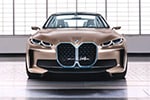
“The WEC and IMSA are a good fit for us because there’s a direct technology transfer. In the M Concept Neue Klasse, for example, you can see elements from the M4 GT3, such as the airflow-optimized hood and the diffuser. The lighting graphics come from our LMDh race car.”

Major Changes Ahead At BMW M
That connection is particularly important for BMW M as it enters a major transition period. The division is developing its first high-performance EVs while continuing to evolve its gas-fueled models, making motorsport an increasingly useful testing ground for technologies that eventually find their way into production. The powertrain is perhaps the clearest example. BMW currently races a V8-powered hybrid system in the M Hybrid V8, while the M5 and XM also use V8 hybrid powertrains. According to the #1 at M, the connection goes deeper than simply using similar hardware:
“In some cases, the same engineers work on these powertrains.”
Win On Sunday, Sell On Monday
That overlap allows BMW to accelerate development by exposing components and engineering solutions to the extreme demands of endurance racing. Rather than developing technology in isolation, BMW can use motorsport as a real-world proving ground before bringing certain solutions to its road cars:
“Through these racing series, we can test certain aspects more quickly and in a way that’s closer to production. Formula 1 is too far removed for us—too much of a laboratory and not transferable enough to production cars. In Formula 1, that would be a completely separate technology center, detached from the rest.”
The strategy doesn’t mean BMW will never return to F1. As Frank van Meel told us in an interview last year, the series isn’t ignored. For now, BMW’s message is straightforward: WEC and IMSA aren’t just about winning races. They’re about developing technology that can eventually make M cars better. F1 doesn’t make sense now because lessons learned there can’t trickle down to cars carrying a license plate.

Budget Constraints
Of course, the global exposure that comes with competing in Formula 1 can’t be ignored. F1 remains the biggest stage in motorsport, and having the BMW name on the grid would undoubtedly boost the brand’s visibility around the world. However, while rivals such as Mercedes and Audi are enjoying the spotlight, BMW is content to watch from the sidelines.
But instead of pouring the enormous resources required to compete in F1, BMW M would rather focus on racing series such as WEC and IMSA, where the connection between the track and the road is much clearer.
The budget concerns raised by the man in charge of M are also why a mid-engine supercar isn’t on the agenda. Still, we’re not giving up hope of seeing a modern-day M1 before our time is up. Frank van Meel himself recently said he’d love a new model to pick up where the E26 left off.
Source: Motor1 Deutschland