Article Summary
- The 2027 Q7 and SQ7 are the first Audis to bring Digital Matrix LED headlights to the US market.
- The tech dims only the LEDs aimed at other cars, giving drivers high-beam visibility without blinding anyone.
- A 1967 US safety rule blocked matrix headlights for decades — BMW still hasn't brought them stateside despite offering them in Europe.
Audi has just revealed the redesigned 2027 Q7 and SQ7, and while the three-row SUV gets more power across the board, the biggest news for American buyers isn’t under the hood — it’s in the headlights. For the first time, U.S. customers can option Audi’s Digital Matrix LED headlights, a technology Europeans have had access to for more than a decade but that American safety regulations kept off our roads until very recently.
What Matrix Lighting Actually Is

Traditional headlights force a compromise. Low beams illuminate a short distance ahead safely, while high beams throw light much farther down the road but blind anyone driving toward you or ahead of you. Matrix LED headlights get rid of that trade-off entirely. Each headlight module on the new Q7 and SQ7 uses more than 25,000 individually controllable micro-LEDs, and cameras built into the car continuously track the position of oncoming and preceding vehicles. Rather than switching the entire beam between low and high, the system selectively dims only the tiny cluster of LEDs pointed directly at another car, carving out a small moving “shadow” that follows that vehicle down the road while every other LED in the headlight stays lit at full strength.
The practical effect is that a driver essentially gets the benefit of permanent high beams — maximum illumination of the road, shoulders, and surrounding area — without ever blinding another driver, cyclist, or pedestrian. As soon as the other vehicle passes or turns off, the system fills that section of the beam back in, all happening automatically and in real time.
Why It’s Taken So Long to Reach the U.S.
This isn’t a case of Audi choosing to withhold the feature from American showrooms. It’s been a regulatory issue. Since 1967, U.S. federal motor vehicle safety standards prohibited high-beam and low-beam elements from being illuminated at the same time, which is precisely what adaptive matrix systems rely on to function. Europe never had that restriction, so automakers began selling matrix headlights there well over a decade ago while U.S. models were stuck with simpler automatic high-beam systems that could only switch entirely on or entirely off.
That changed only after the NHTSA amended the relevant safety standard, a rule change set in motion by a 2021 infrastructure bill. Audi has spent the years since re-engineering its matrix system to comply with American rules, and the Q7 and Q9 are the first Audi models to bring it to the U.S. market.
The Benefits

The core advantage of matrix lighting is simple: better visibility for the driver without sacrificing safety for everyone else on the road. Drivers get dramatically improved illumination of the road ahead and its edges, which helps with spotting pedestrians, cyclists, and animals sooner. At the same time, oncoming and preceding drivers are spared the glare of a full high beam, since the system only dims the precise section of light aimed at them rather than cutting the beam entirely.
In markets where the technology has been available longest, it’s also been extended to project helpful information directly onto the road surface, such as lane markers or warning icons for icy conditions. Regulators in the U.S. specifically pointed to improved nighttime visibility of vulnerable road users as a key reason for finally allowing the technology here, and broader research on adaptive headlight systems has linked them to fewer nighttime collisions. It’s worth noting that matrix headlights only control what your own car’s lights do; they can’t do anything about glare coming at you from an oncoming car that lacks the same technology.
Audi Gets There Before BMW

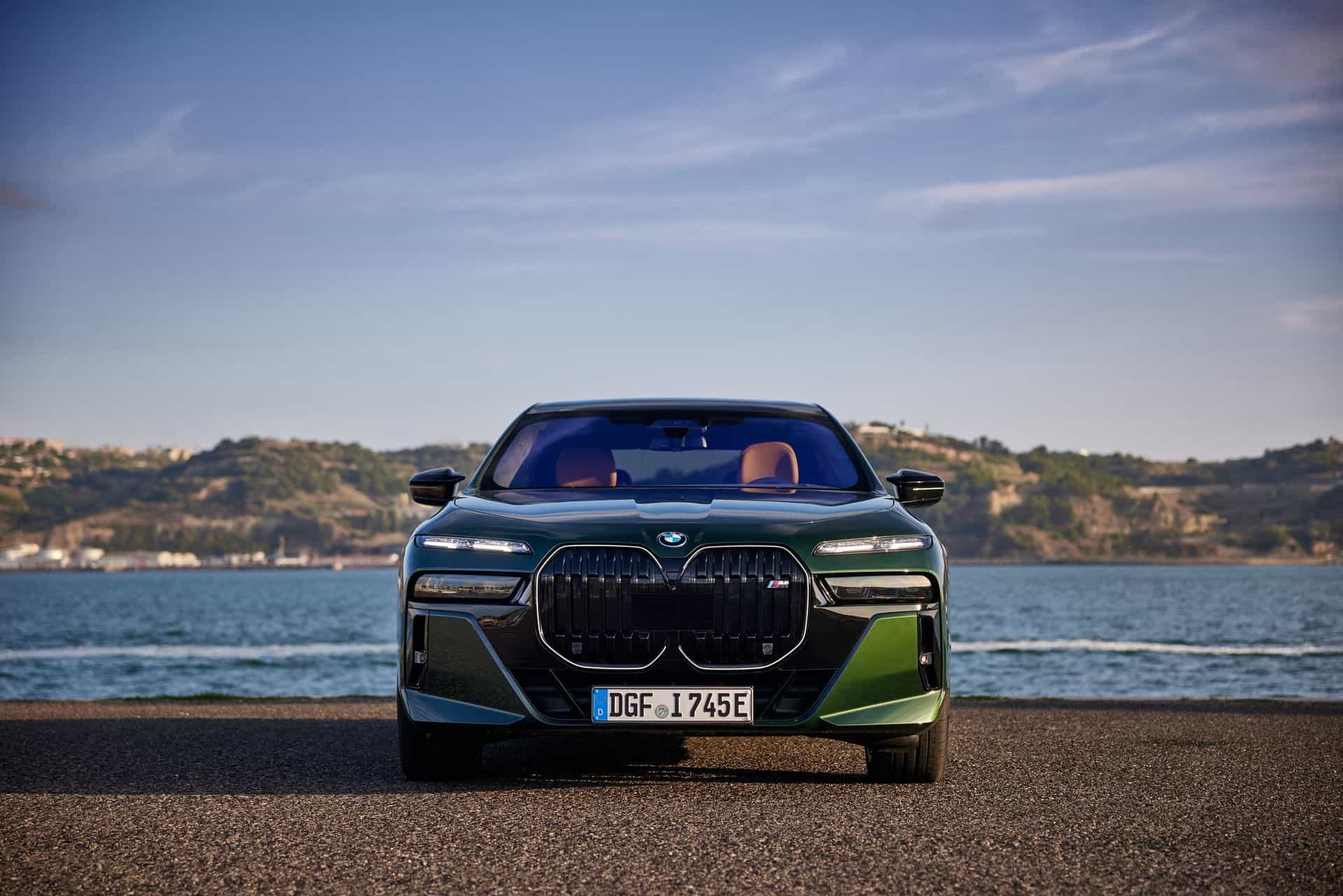
Matrix and adaptive-beam headlights aren’t new to the luxury segment — Mercedes-Benz and Audi have both sold versions of the technology in Europe for years, and BMW has offered true matrix and laser-based adaptive headlights on European models like the 5 Series and X5 for just as long. What’s notable is that BMW has not brought that same matrix headlight technology to its U.S.-spec lineup even now that the regulatory barrier has been lifted.
American BMW buyers currently get adaptive LED headlights with automatic high-beam assist, but not the segmented, glare-canceling matrix beam pattern offered on the same models in Europe. Audi’s move with the 2027 Q7 and SQ7 makes it one of the first brands to actually deliver full matrix lighting to American customers now that it’s legal, putting it a step ahead of BMW in bringing this particular piece of European tech stateside.
The 2027 Q7 and SQ7 are expected to arrive in U.S. showrooms in the fourth quarter of 2026.