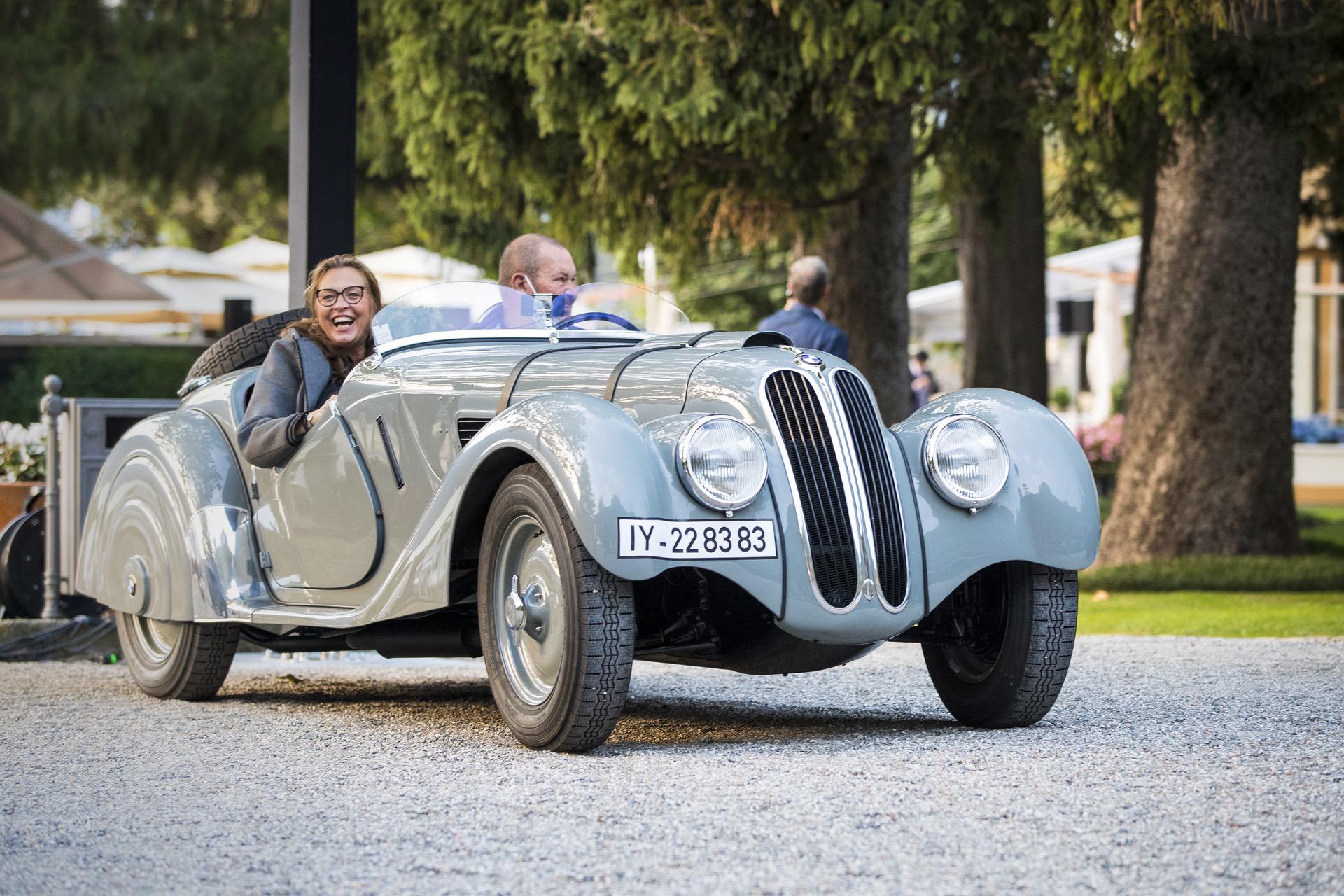
In June 1936, a car nobody had heard of showed up at the Nürburgring and quietly humiliated every rival in sight. No press release. No motor show debut. Just a small, silver German roadster — 830 kilograms, 80 horsepower, a two-liter engine — that turned up in the paddock one day before its first race, and won.
That car was the BMW 328. And in the 90 years since that debut, virtually everything BMW stands for — the inline-six, the driver’s car philosophy, the obsession with lightweight — traces directly back to this roadster.
This May, at the 2026 Concorso d’Eleganza Villa d’Este on the shores of Lake Como, BMW will put the 328 center stage for its 90th anniversary. It belongs there. Only 464 were ever built. Fewer than 200 survive. The right example will cost you over a million dollars. And yet the 328 is somehow still one of the most underappreciated cars in BMW’s entire history.
Here’s why that needs to change.
A Secret Weapon Born in the Shadows

The story of the BMW 328 starts with almost no story at all. BMW released a modest brochure in late 1935 hinting at a new 2-liter sports car called the “Typ 328.” A handful of insiders knew the car existed. Journalists discovered the 328 for the first time in the Nürburgring paddock on June 13, 1936. Motorcycle world record holder Ernst Henne was in the car, preparing to race it the very next day.
Henne won. Average speed: 101.5 km/h. The supercharged competition — the Kompressor machines that were supposed to rule the class — was left to watch a naturally aspirated 2-liter disappear up the road.
The Engineering That Changed Sports Cars

The BMW 328 was designed by two men. Rudolf Schleicher handled the engine. Fritz Fiedler built the chassis. Between them, they made a car that was genuinely ahead of its time — not in a theoretical sense, but in a measurable, repeatable, you-can-see-it-in-the-lap-times way.
Fiedler’s chassis was unlike anything else in series production. Instead of the heavy rectangular steel channel that almost every manufacturer was still using in 1936, he developed and patented a lightweight tubular A-frame that tapered toward the rear. The result: superior bending and torsional stiffness at a fraction of the weight of conventional designs.
BMW called the philosophy *Leichtbau* — lightweight construction — and had been applying it since the early 1930s. With the 328, it became a genuine competitive weapon rather than just a design principle. The rack-and-pinion steering, also unusual for the time, gave drivers a directness that heavier, more powerful rivals simply couldn’t match.
The Cylinder Head Nobody Could Copy
The engine is where the 328 gets properly interesting. Schleicher’s 1,971cc inline-six looks conventional on paper: cast-iron block from the BMW 319, side-mounted camshaft. But the cylinder head was something else.
Rather than using the camshaft in the traditional position to operate the valves directly, Schleicher used an arrangement of needle-thin pushrods and rockers to actuate inclined valves in an aluminum hemispherical combustion chamber. In practice, this achieved the breathing efficiency of a twin-cam layout using a single camshaft — a technical trick so good that BMW patented it in 1939.
Three downdraft carburetors fed the result. Output: 80 horsepower from 2.0 liters, without a supercharger, in 1936. At a time when serious power typically required forced induction, that was a significant achievement.
Total weight in road form: 830 kilograms. Top speed: 155 km/h. Those numbers made the 328 one of the fastest production cars on sale anywhere in the world.
141 Victories from 172 Starts
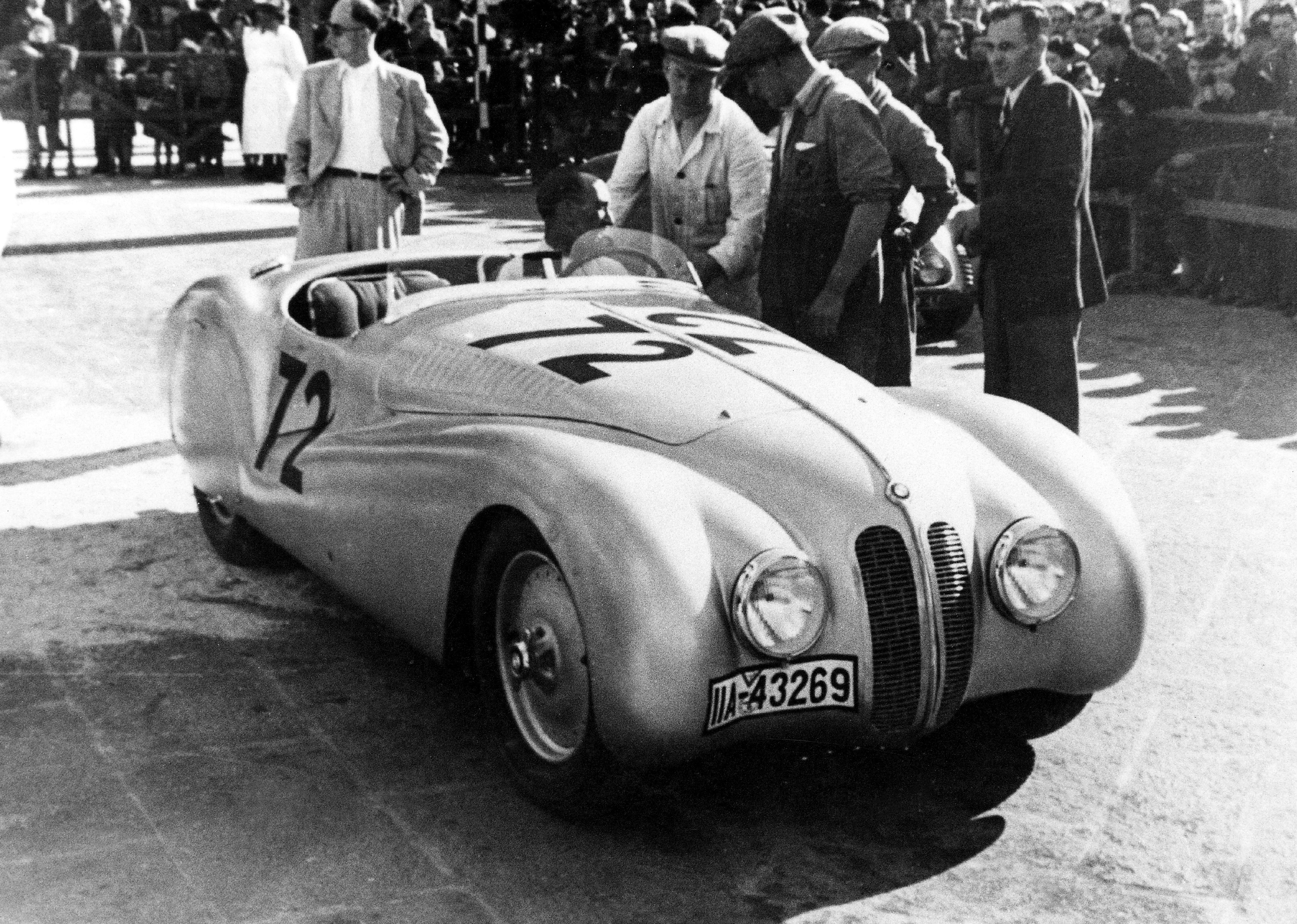
What makes the BMW 328’s racing record remarkable isn’t any single win. It’s the relentlessness of it. In 1937 alone — the first full year of series production — the 328 accumulated over 100 class victories. The RAC Tourist Trophy. The Österreichische Alpenfahrt. The La Turbie hillclimb. Race after race, the little roadster from Munich showed up and beat cars with more power, more budget, and far bigger reputations. The formula was always the same: when your rivals are faster in a straight line, make sure the corners are where the race is won, and make sure you weigh less.
1938 brought more of the same: class wins at the RAC Tourist Trophy, the Alpine Rally, and the Mille Miglia. At Le Mans in 1939, a 328 finished fifth overall and first in class — in a race historically dominated by far larger machinery. By the time the pre-war chapter closed, the 328 had started 172 races and won 141 of them.
No pre-war sports car came close to that record. And it was all done without a supercharger, without a factory budget that could overwhelm the opposition, and in a car you could drive to the circuit, race, and drive home again.
The 1940 Mille Miglia: A Record That Will Never Be Broken

Then came 1940, and the race that made the 328 permanent.
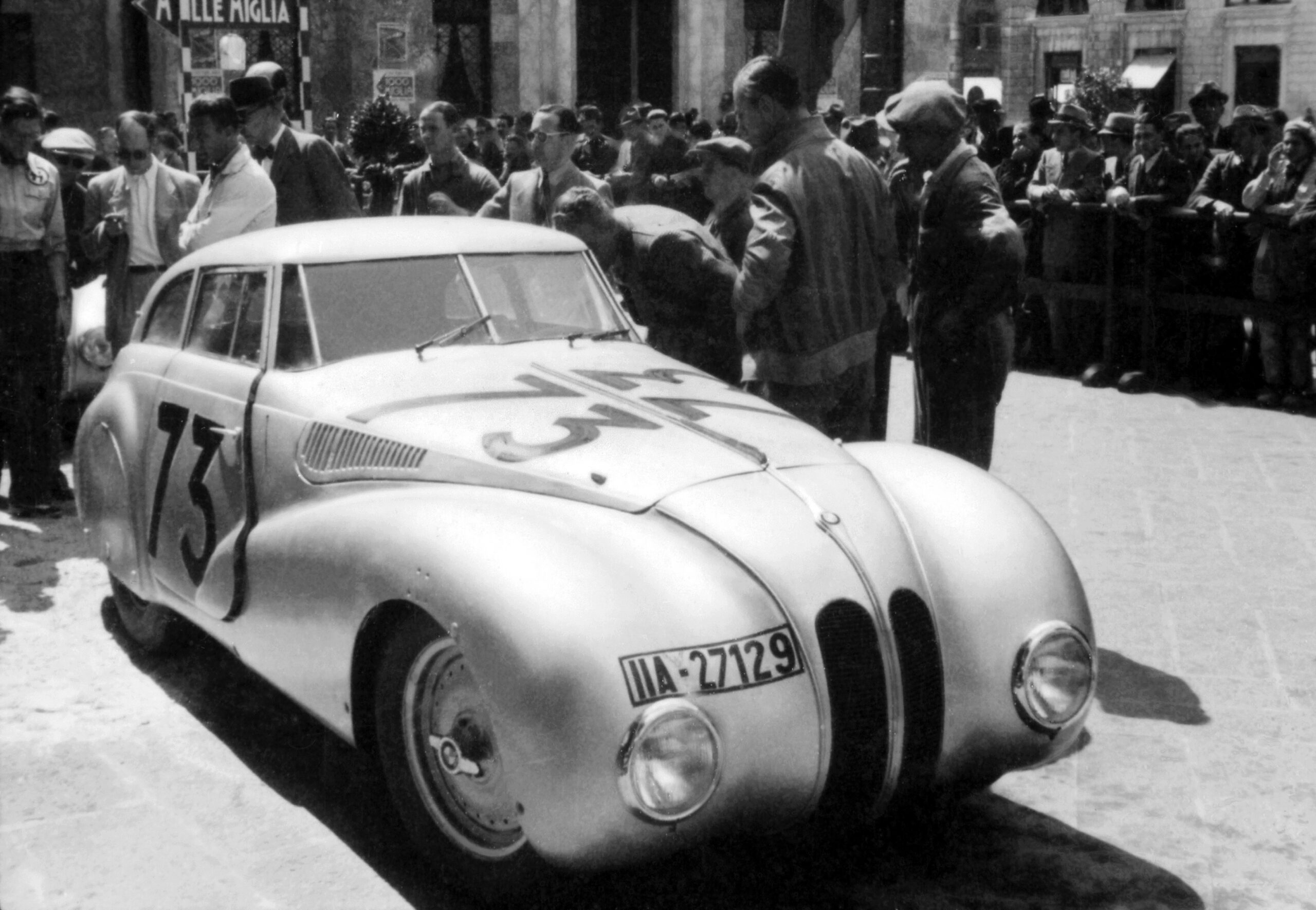
The original Mille Miglia had already been banned once for being too dangerous. The 1940 edition was a compromise: nine laps of a 167-kilometer triangular circuit between Brescia, Cremona, and Mantua, run on open roads. Of the 70 Italian cars entered, five silver-painted BMWs lined up among the sea of red. The crowd’s reaction was not warm.
BMW had prepared something special. Working with Milanese coachbuilder Carrozzeria Touring, the factory built three extraordinary machines: a pair of streamlined roadsters and two closed coupés. The coupés used Touring’s Superleggera method — a delicate load-bearing tubular space frame with thin aluminum skin stretched directly over it. Weight: 780 kilograms. With the race-tuned engine pushing 135 horsepower, the cars were capable of exceeding 220 km/h. A third car — the Kamm Coupé, developed with aerodynamics researcher Wunibald Kamm and built from Electron alloy (80% magnesium) — weighed just 760 kilograms and was the most technically advanced racing car BMW had ever built.
Fritz Huschke von Hanstein and Walter Bäumer drew the Touring Coupé. Their instructions were straightforward: go fast, and don’t break anything. They went very fast.
When Bäumer crossed the line, the BMW had beaten the second-place Alfa Romeo by fifteen minutes. Average speed across nine laps: 166.7 km/h — a number never seen before at the Mille Miglia, and never seen since. The 328s took first, third, fifth, and sixth overall. Only the Kamm Coupé retired, sidelined by mechanical trouble on lap seven.
That speed record cannot be broken. The Mille Miglia hasn’t run on closed public roads like that since the war, and it never will again. The 166.7 km/h stands as a permanent marker of what the 328 was capable of when BMW committed fully to a race.
One more thing worth knowing: in 2004, the original Touring Coupé entered the modern Mille Miglia Storica and won. It became the only car in history to win both the original race and its modern revival — 64 years apart, same car, same result.
The Three Race Cars Built for One Race
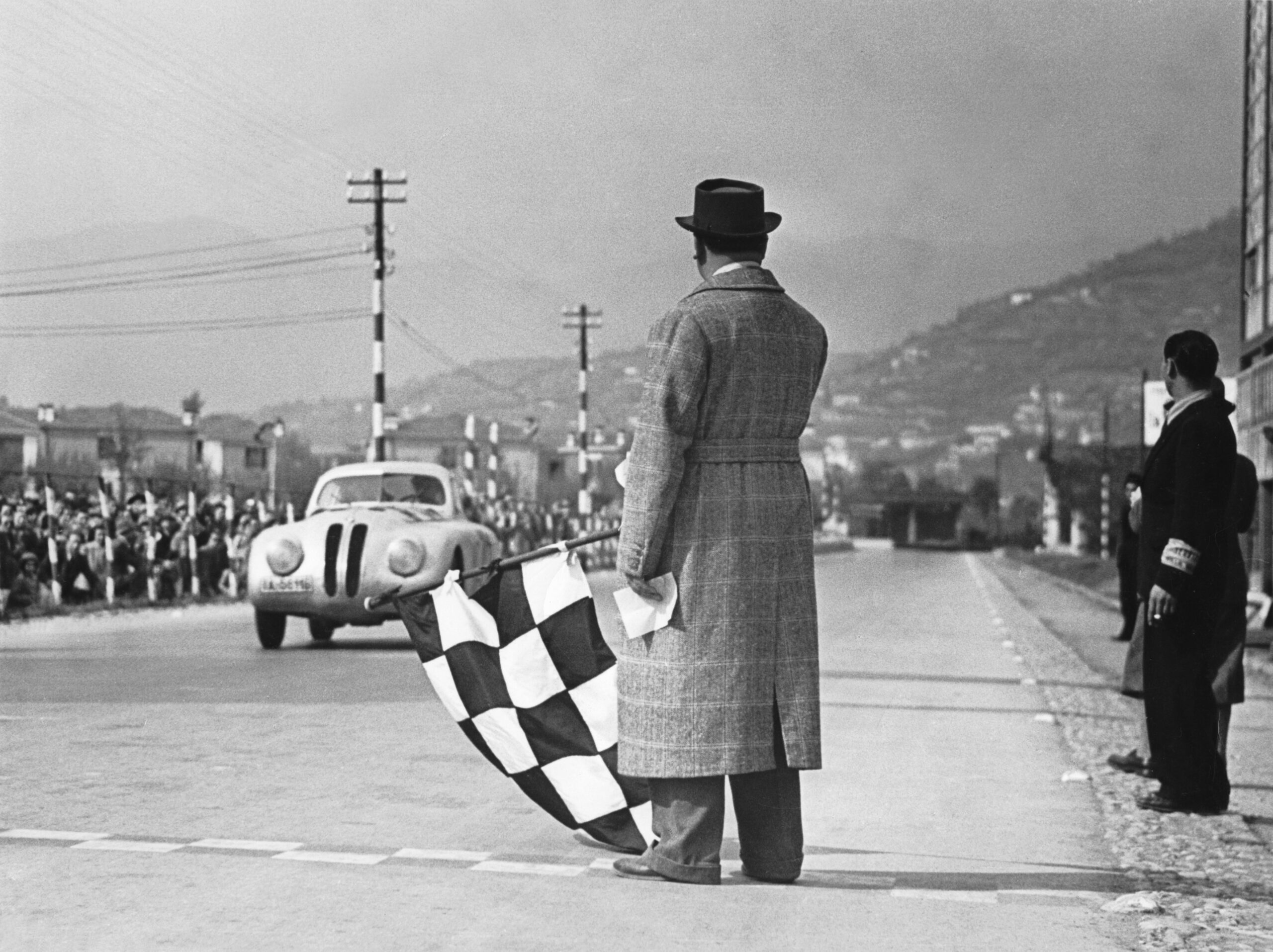
It’s worth spending a moment on the three variants BMW sent to Brescia in 1940, because each one tells a different part of the story.
The Mille Miglia Roadster was essentially the production car given aerodynamic bodywork — lighter, slipperier, still recognizably a 328. The Touring Coupé was something more radical: the Superleggera construction gave it a body that weighed almost nothing, drawn entirely by instinct and empirical testing since Carrozzeria Touring had no wind tunnel. It worked anyway.
Then there was the Kamm Coupé. Named after Wunibald Kamm, whose research into rear-end airflow gave us the truncated Kammback tail still used in aerodynamics today, this was the most advanced of the three. Electron alloy bodywork, a tubular space frame, and the most developed 328 engine. It retired from the 1940 race and disappeared entirely in 1953. In 2010, BMW Classic spent two years reconstructing it from original drawings and photographs. It now lives in the BMW Museum in Munich, which is exactly where it should be.
Rarity, Prices, and the Collector Market
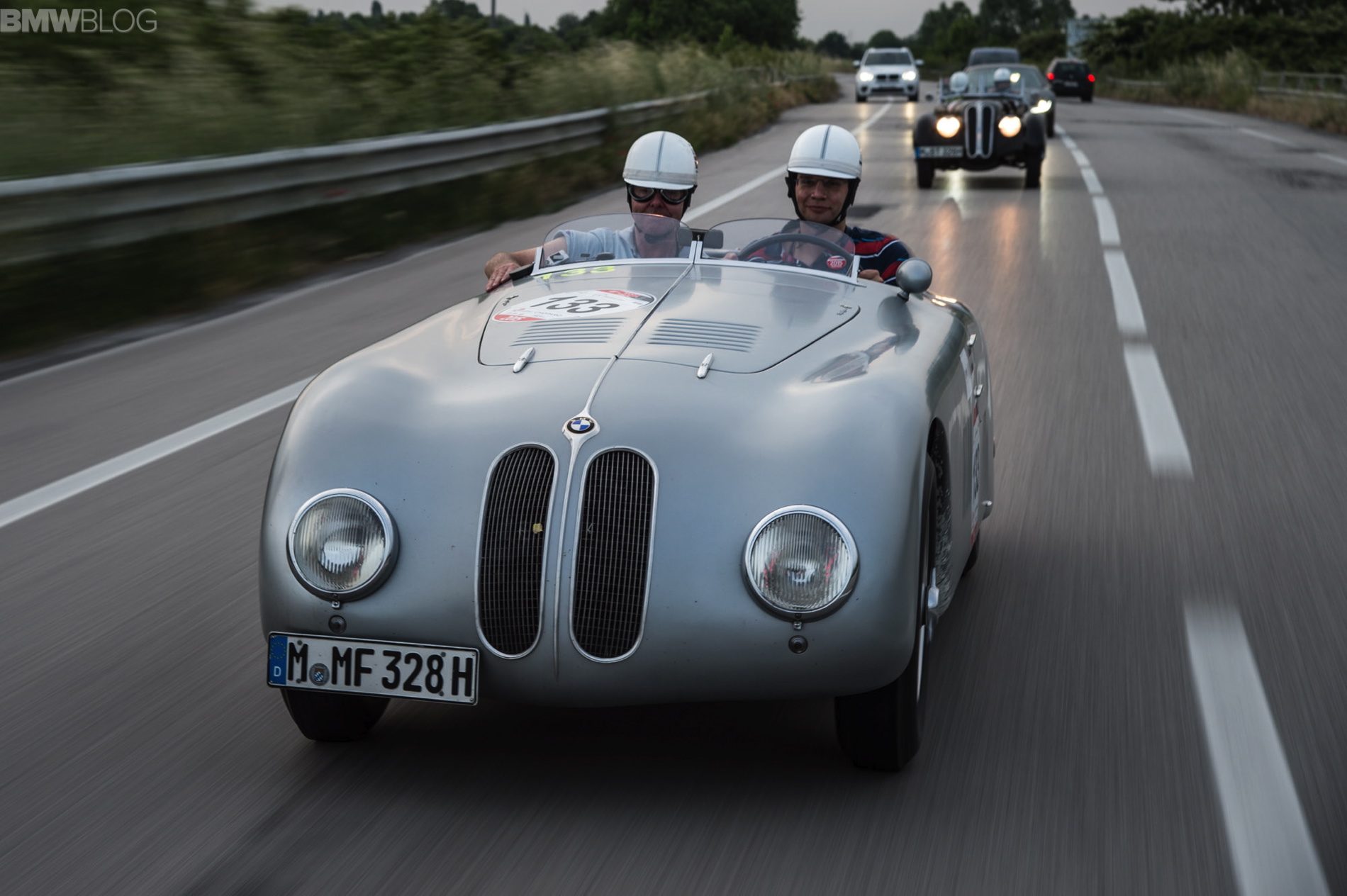
When the 328 went on sale in 1937, the price was 7,400 Reichsmark. That was roughly three years’ salary for a highly qualified BMW technician — which is to say, the people buying them weren’t weekend warriors. They were wealthy gentleman racers who wanted something they could race seriously and still take to dinner.
Production ran from spring 1937 until 1940, when the war made everything stop. Total output: 464 cars. Of those, approximately 200 survive today, with around 120 still in Germany. In the UK, they were sold under the Frazer Nash-BMW badge — a dual branding arrangement that was partly commercial, partly a concession to rising anti-German sentiment in the British market.
Today, values sit in a wide range depending on condition, history, and body style. Standard roadsters in honest condition typically trade between $400,000 and $600,000 at major houses. Gooding & Company sold a 1937 example at their Pebble Beach auction in August 2022 for $874,000. The highest recorded result for a roadster is just under $1 million.
Cars with documented period racing provenance push past that floor comfortably. And the Mille Miglia race cars — the Touring Coupé, the reconstructed Kamm Coupé — sit in the category of things that don’t really have a price because their owners won’t sell at any rational number.
With only 200 examples left in the world, the direction of travel on values isn’t difficult to predict.
The Car That Spawned Bristol, Frazer Nash, and a British Era
Here’s a piece of BMW 328 history that tends to get overlooked — and that makes the story considerably stranger.
After the war, with BMW’s Munich factory in ruins, British Army officers with connections to the pre-war UK BMW importer AFN visited what remained more than once. They left with the technical plans for the 328 — engine, chassis, suspension — and persuaded Fritz Fiedler himself to come to Britain.
What followed is one of the more remarkable technology transfers in automotive history. The Bristol Aeroplane Company used those plans to found Bristol Cars. The Bristol 400, launched in 1947, used a direct derivative of the 328’s M328 inline-six, a chassis based on the BMW 326, and body proportions drawn from the BMW 327. Even the kidney grille survived the English Channel, reinterpreted in British steel.
The same Bristol-derived engine then powered the post-war Frazer Nash range, and went on to appear in AC sports cars, Lotus racing cars, and Cooper single-seaters through the 1950s. Until 1961, every Bristol built used a variant of the 328’s engine.
90 Years Later: Villa d’Este, May 2026
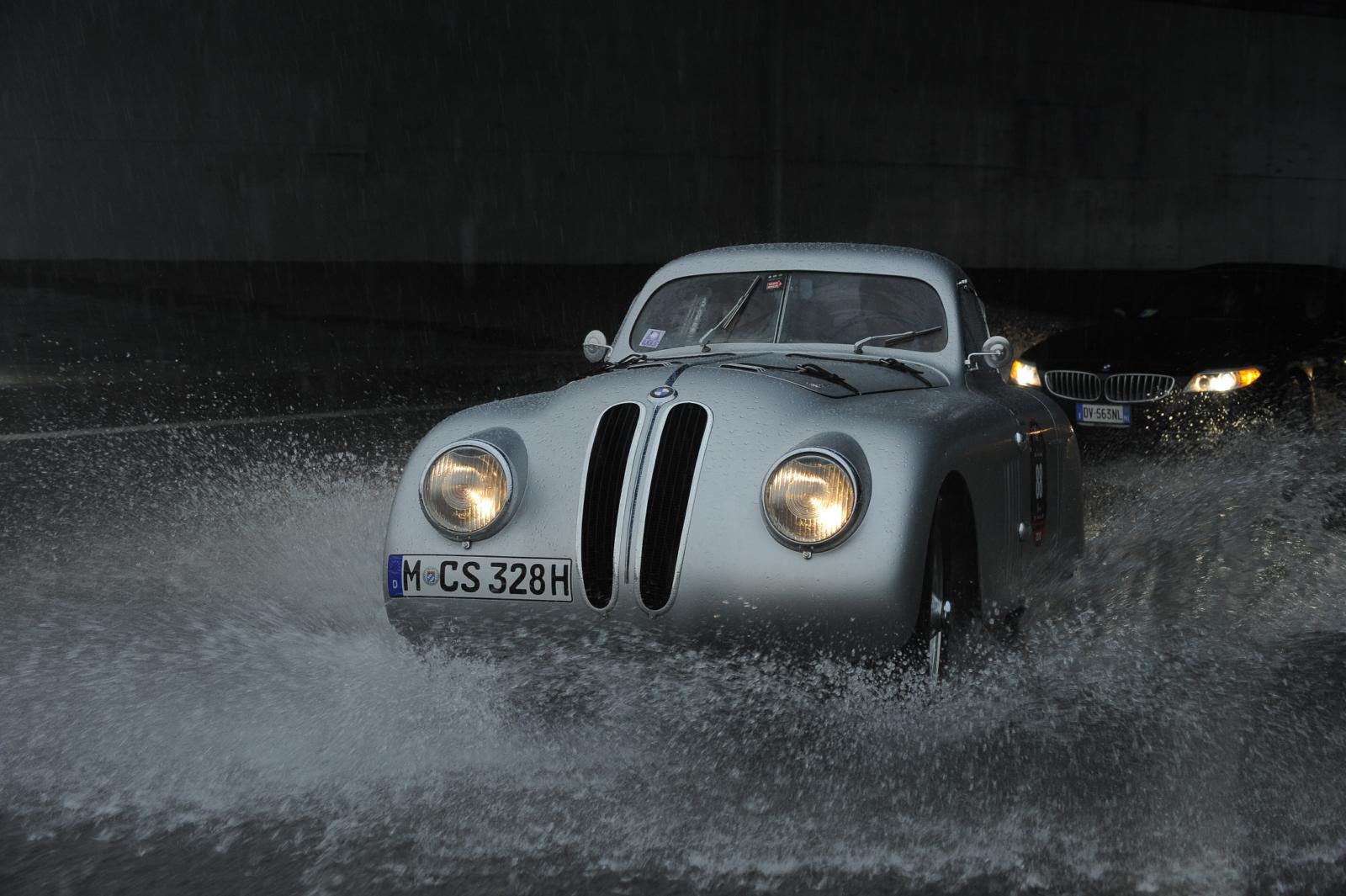
The 2026 Concorso d’Eleganza Villa d’Este runs May 15 to 17 at Villa Erba in Cernobbio on Lake Como. BMW Group Classic has organized the event for the past 20 years, and this edition carries more anniversaries than most: the 328 at 90, the M3 at 40, the 6 Series at 50, the 02 Series at 60. Four generations of BMW performance identity, all in one place.
Around 50 historic cars will compete across six categories for the traditional BMW Trophy. The Best of Show winner receives an A. Lange & Söhne 1815 Chronograph in 18-carat white gold — a prize that suits the occasion. Broad Arrow Auctions returns for the second year running, with sales on both Saturday May 16 and Sunday May 17.
Whether BMW uses the moment to unveil a concept car is the question every BMW watcher is already asking. Recent history suggests they might: the Skytop appeared at the 2024 Concorso and went to 50 customers. The Speedtop followed at the 2025 edition, limited to 70 examples. If there’s a moment to put something 328-inspired on the lawn at Villa Erba, this is it. Public days are Sunday May 17. If you can get there, you should.