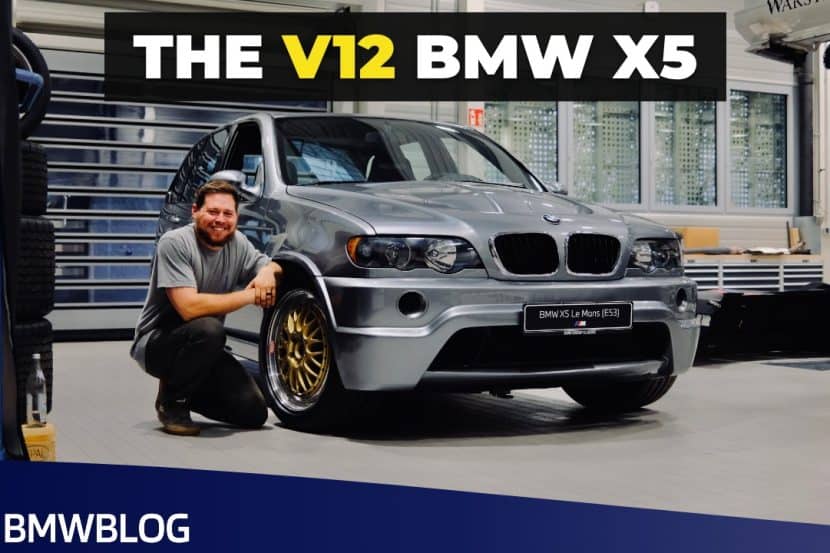
BMW Put A Le Mans-Winning V12 In An X5 In 2000. A Guy Who’s Owned 100+ X5s Found What Else It Hides
BMW’s one-off E53 X5 Le Mans uses the V12 from the 1999 Le Mans-winning V12 LMR, yet it kept its all-wheel drive and its sunroof.
BMW’s one-off E53 X5 Le Mans uses the V12 from the 1999 Le Mans-winning V12 LMR, yet it kept its all-wheel drive and its sunroof.
Before the XB7, ALPINA built a secret V8 X5. It sold BMW on the idea and gave rise to 10,467 X5 4.6iS SUVs.

The facelifted E53 3.0i and 3.0d were the last X5s with a clutch pedal. Manual 3.0i cars still sell for under $10,000.

Kith founder Ronnie Fieg reengineers the first-gen X5 around an S85 V10 and a six-speed manual.

ADVERTISEMENT
In 100 years, only three BMW models truly changed everything. Here's why the 2002, M1, and X5 remain the most transformative cars in the brand's history.
BMW is recalling 2000–2001 X5 models because some vehicles may contain Takata PSDI-4 air bag inflators installed as replacement parts.

The original BMW X5 was shaped not in Munich but in California, where BMW Designworks defined its proportions, stance, and identity and helped launch the modern X lineup.

In the mid-1990s, BMW nearly sold Range Rovers in its dealerships instead of creating the X5. Here’s how internal debates, Land Rover ownership, and a U.S. push for an on-road SUV changed BMW’s future.

Discover how BMW’s California-based Designworks studio helped create the iconic first-generation X5, changing the brand’s future in the SUV market.

Introduced in March 2000, the BMW X5 Le Mans took the center stage at this year's Concorso d'Eleganza.

This SUV wasn't just a game-changer, it rewrote the rules. 25 years ago, BMW unleashed the X5. Was it a revolution or a mistake?