Article Summary
- The F10 BMW M5 has reached bargain territory, with early examples trading under $20,000 despite once offering six-figure performance.
- F90 M5 values remain much stronger, especially post-LCI and Competition models, helped by modern performance and xDrive usability.
- The new G90 M5 is still too fresh to judge, but early data suggests the M5 Touring could hold value better than the sedan.
Depreciation is a funny thing when it comes to M cars. Enthusiasts love to talk about future classics, special engines, analog appeal, and the models that will one day be “the one to have.” The market is usually less romantic. Expensive luxury performance sedans are still expensive luxury performance sedans, and few cars prove that better than the BMW M5.
Looking at trade-in values to find where each model sits on the depreciation curve has several benefits. For one, it tells us exactly what kind of bargains are out there. Lurking at the cheap end of the pool is sub-$20k F10 M5s — tempting. It also paints a picture of how far the once and future king, the F90 M5, stands on the secondhand market. More importantly, we get a good idea of what to expect from the G90 (and G99!) M5 as it ages.
The F10 M5 Is Deep in Bargain Territory

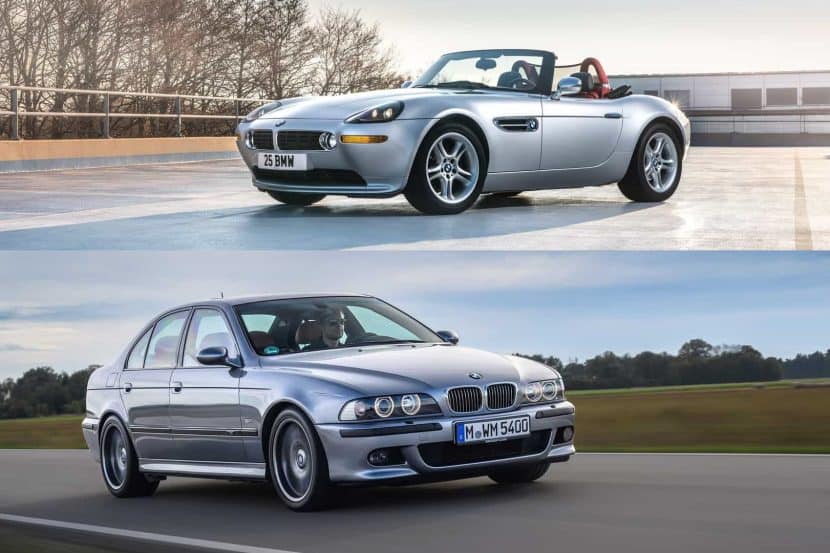
The F10 BMW M5 has officially entered the dangerous part of the used-car market. Dangerous because the numbers are tempting, but the running costs are still attached to what was once a six-figure super sedan. According to the trade-in value data, a 2013 M5 averages just $16,477. A 2014 model climbs to $21,437, a 2015 car comes in at $28,091, and the final 2016 model year sits notably higher at $34,380.
That spread makes sense. Later F10s tend to be more desirable. The 2016 model benefits from being the last year of the generation. But the larger point is obvious: the F10 M5 has depreciated hard, representing the bottom of the depreciation curve. This was BMW’s twin-turbocharged V8 flagship sedan, with 560 horsepower, a dual-clutch transmission, and the kind of straight-line speed that made some supercars look silly. Now, early examples trade for less than many new economy cars. Caveat there being maintenance costs, of course. Still, from a pure performance-per-dollar standpoint, few BMWs look more outrageous on paper.
The F90 M5 Is Holding Much Stronger

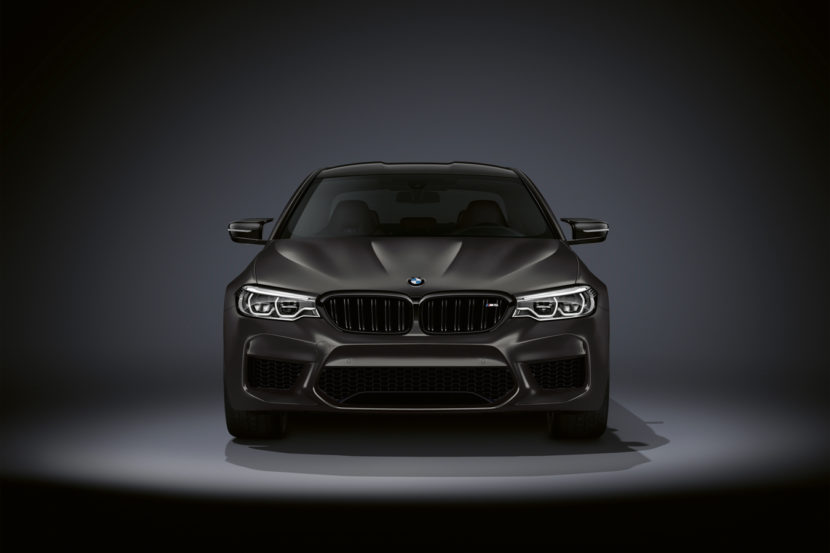
Move into the F90 generation and things escalate quickly. A 2018 M5 averages $43,677, while a 2019 model sits at $44,666. Add the Competition package, and the number jumps to $48,494 for 2019. The 2020 standard M5 comes in at $46,183, while the 2020 M5 Competition averages $51,274. From there, values climb sharply. A 2021 M5 averages $52,929, a 2022 model sits at $60,507, and a 2023 car still commands $64,546. Not surprising when you remember the F90 M5 saw a pretty nice LCI for the 2021 model year. It’s also worth noting how relatively expensive the F90 remains, relative to the F10. While Competition trim breakouts weren’t available for later model years, it stands to reason that Comp models will likely continue to trade at much higher values. It’s a 10% premium for a Competition trim F90 — sometimes more — and we’ll definitely some serious outliers as low mileage, late-model examples come to market in the next few years.
That tracks with the car itself. The F90 M5 is still modern, brutally quick, and far easier to exploit than the older rear-drive F10. It brought xDrive all-wheel drive to the M5 formula, while still giving drivers the option to switch into rear-wheel drive. For many buyers, it remains the sweet spot: still combustion-powered, still relatively traditional, but much more usable.
The G90 M5 Is Too New to Judge — But Not Cheap

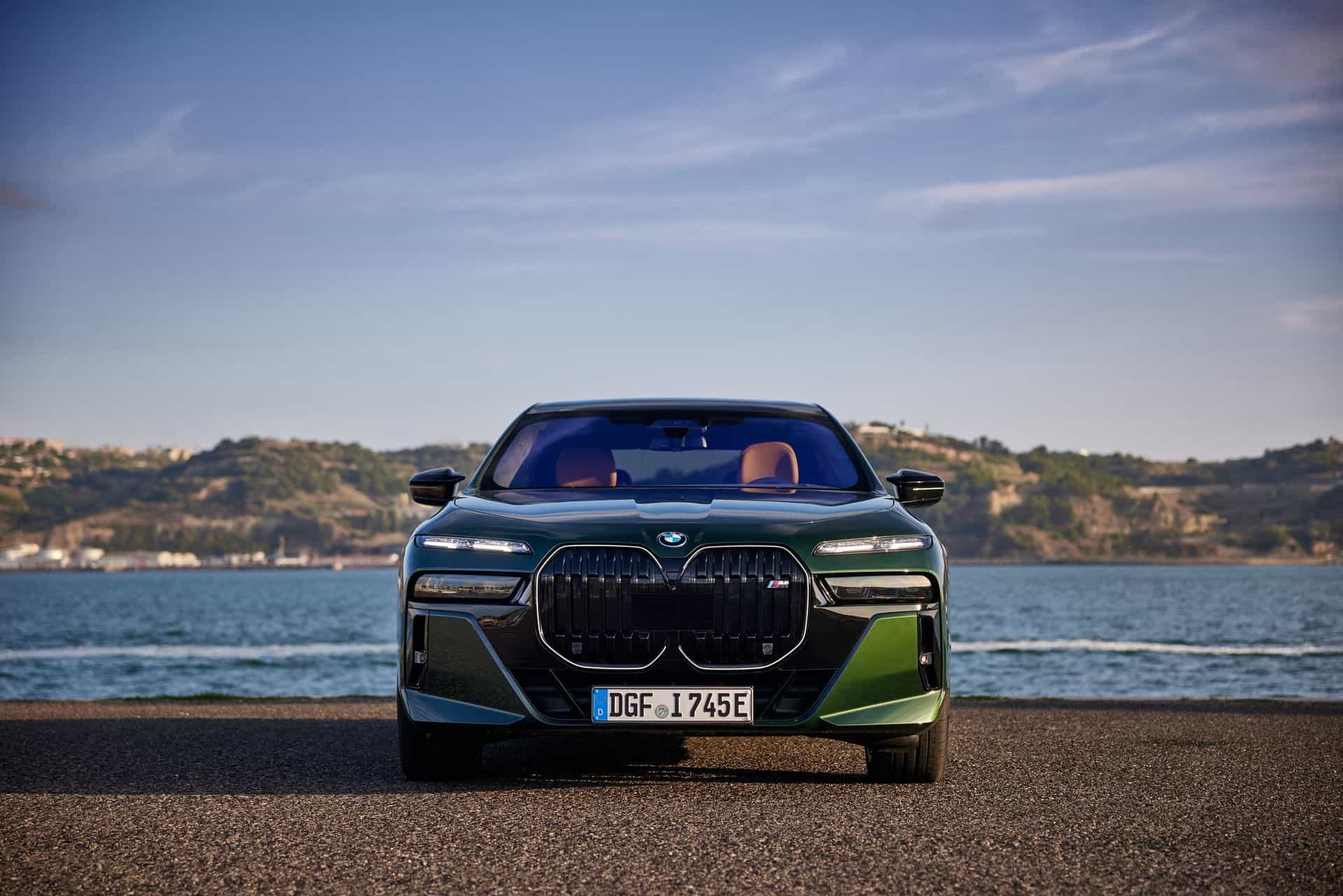
Then there’s the new G90 BMW M5, which is harder to chart fairly because it is essentially brand new. There is not enough depreciation history yet, and the market is still figuring out where BMW’s hybrid super sedan — and its wagon sibling — will land. But even with a small sample size, there’s an interesting trend emerging. It’s also, perhaps, predictable: Touring models are where the money is. This probably doesn’t surprise anyone who’s taken the BMW M5 Touring for a drive.
Using the same 7,358-mile figure as the earlier M5 comparisons, a 2025 BMW M5 Sedan shows an estimated trade value of $86,583. The 2025 BMW M5 Touring, meanwhile, comes in much higher at $98,609. That gap is not shocking. The Touring is “exotic,” at least to U.S. customers. Even mileage does not move the numbers dramatically yet. Double the mileage to 15,000 miles, and the M5 Sedan still trades at $83,737. The M5 Touring remains way up at $95,367. That suggests early G90 and G99 values are being supported more by new-car demand and availability than mileage sensitivity, at least for now.
That could change. The G90 M5 is heavier, more complicated, and more controversial than any M5 before it, largely thanks to its plug-in hybrid powertrain and substantial curb weight. But controversy does not automatically mean weak resale value. For now, the newest M5 is still commanding serious money, with the Touring clearly standing out.
How the M5 Compares to AMG and Porsche

Watching rivals adds another layer to the M5 depreciation tale. For the Mercedes-AMG E63 and Porsche Panamera GTS, iSeeCars average annual mileage estimates are different: 9,503 miles per year for the E-Class and 7,179 miles per year for the Panamera GTS. However, for this comparison, the same mileage as the equivalent-year M5 was used to maintain parity. Otherwise, you end up comparing a 100,000-plus-mile car to something with far fewer miles, which does not isolate depreciation in a meaningful way.
Against the AMG E63, the F90 M5 looks relatively compelling. A 2019 E63 averages $47,122, while a 2019 M5 comes in at $44,666 and a 2019 M5 Competition at $48,494. For 2020, the E63 rises to $54,100, above both the standard 2020 M5 at $46,183 and the 2020 M5 Competition at $51,274. The Porsche Panamera GTS is stronger still. A 2019 Panamera GTS averages $52,968, while a 2020 model reaches $59,655. That puts it above the comparable M5 and M5 Competition in both years. Porsche’s stronger residual values are hardly a revelation, but the spread is still interesting to see laid out this clearly. It’s also worth noting that the Panamera GTS was a significantly more expensive car than the M5 and more directly analogous to the M8 Gran Coupe.
One extra note: wagon variants consistently trade around 15 percent higher than sedan counterparts. Given the current fascination with the new M5 Touring — and the long-running enthusiast obsession with fast wagons — that should surprise absolutely no one.
What Does It All Mean?

The broader takeaway is that M5 depreciation is not one-size-fits-all. The F10 shows what eventually happens to big, complex, high-performance luxury sedans once age, maintenance risk, and mileage catch up. The F90 shows what happens when the market still views a car as modern, usable, and desirable. That split is important because the new G90 has elements of both.
On paper, the G90 has the ingredients for heavy depreciation: it is expensive, complicated, very heavy, and built around a plug-in hybrid system that not every traditional M5 buyer wanted. Those factors could put pressure on values once supply improves and the earliest cars start moving through the used market. If history is any guide, the sedan will probably face the steeper depreciation curve. The Touring is the obvious outlier. High-performance wagons — historically, as we’ve learned — tend to trade around 15 percent higher than sedans. The G99 M5 Touring has the added advantage of rarity, novelty, and long-standing enthusiast demand in the U.S. That does not mean it will be immune to depreciation, but it does strongly suggest it could be the G9X M5 that holds value best.
So, the G90 is the expensive question mark with a very strong wagon-shaped exception. The sedan still has to prove where it lands once the market has more used inventory to work with. The Touring, meanwhile, already looks like the safer value play. It’s not cheap, but the research shows it has the clearest long-term value behind it.
A parting note on methodology: for this comparison, trade-in values come from Edmunds. Mileage for each model year is based on average annual mileage data from iSeeCars, which estimates the BMW M5 at 7,358 miles per year.