Article Summary
- The ALPINA Roadster V8 swaps the Z8's S62 V8 and six-speed manual for a softer-tuned M62 4.8-liter and five-speed automatic, making it a true grand tourer rather than a sports car.
- Only 555 were ever made — 450 of them sold in the US — making it significantly rarer than the 5,703 Z8s BMW produced.
- Behind the wheel, the automatic transmission and compliant suspension aren't compromises. On a wet run from Bolzano to Como, they're the whole point.
The E36 M3 was the right call for the first half of the drive. Munich to Bolzano, through the Alps, over the Brenner Pass, in rain that turned to sleet somewhere above Innsbruck and briefly to snow on the descent — that is not a day for a car you want to keep pristine. The E36 M3 is a car you trust completely in those conditions. It tells you everything through the steering wheel and the seat, it doesn’t care about the weather, and it has that lovely S50 inline-six that makes every wet mountain road feel like a reasonable idea. It was brilliant.
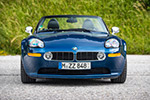
And then, in Bolzano, I swapped into the ALPINA Roadster V8. There are cars you drive, and there are cars that happen to you. The ALPINA is the second kind. It was sitting in a parking garage looking completely out of place next to everything around it, only because it was the most beautiful car of the bunch. And the moment the M62 4.8-liter V8 cleared its throat at startup, the E36 M3 — which had just been perfect for six hours — felt like it belonged to a different trip entirely.
This car is not a Z8. Or rather, it is a Z8 the way a bespoke suit is a suit. The bones are the same. Everything that matters is different.
The De-M-ification Of The Z8

To understand the Roadster V8, you have to understand what BMW offered first. The E52 Z8 came with the S62 — the same naturally aspirated 4.9-liter V8 that powered the E39 M5 — making 394 horsepower, available only with a six-speed manual, and tuned for a driving experience that demanded your full attention at all times. It was brilliant and exhausting. For a car built to cross continents rather than lap circuits, it had a fundamental problem: it never really let you relax.


ALPINA’s answer was to ask a different question. Instead of “how do we make the Z8 faster?”, Buchloe asked “how do we make the Z8 better?” The M62 4.8-liter engine from the X5, bored and stroked and retuned, makes 381 horsepower and 520 Nm of torque — down 13 horsepower from the S62, but the torque arrives earlier and more gently, exactly where the five-speed ZF automatic with ALPINA’s Switch-Tronic wants it. Top speed is electronically limited to 260 km/h. The 0-100 km/h sprint takes 4.7 seconds, which is not slow by any measure.

The suspension was softened. The run-flat tires on 18-inch BMW wheels were replaced with conventional rubber on 20-inch ALPINA-specific rims, which adds compliance and ride quality. The steering was smoothed. The result is a car that can cover ground at a pace that would embarrass most sports cars while keeping its driver calm and comfortable rather than wrung out.
Only 555 were made. Each one carries a numbered plaque. The original window sticker was $136,000, which in today’s money lands somewhere north of 200,000. At auction, clean examples regularly clear $300,000. The point is not to dwell on prices — it’s to understand that ALPINA made something genuinely rare, and they knew it while they were making it.
Bolzano South: Where The ALPINA Makes Its Case

The first leg — Munich to Bolzano, over the Brenner Pass in rain and snow — had been the E36 M3’s moment. That car is at home in bad weather on mountain roads in a way that the ALPINA never needed to be and probably shouldn’t be. The E36 was the right tool. The ALPINA is a different kind of right.
South of Bolzano, the A22 follows the Adige valley down through Trento and toward the lake district, and the weather was doing what Italian weather does in the shoulder season — undecided. Rain for twenty minutes, then a break where the clouds thinned enough to let something resembling sun through, then rain again. Not ideal roadster conditions. Good enough.
The Roadster V8 settles into a long-legged cruise effortlessly — the engine barely above idle at 130 km/h, the five-speed automatic sitting in fourth and not looking for a reason to change its mind. With the hardtop fitted, wind intrusion is minimal and the V8 makes its presence known as a low-frequency undertone more than a mechanical noise. The five-speed shifts with a deliberate smoothness that the Z8’s six-speed manual, for all its pleasures, never needed to bother with. On this kind of road, on this kind of day, it was perfect.

When the rain came properly, the ALPINA’s changes from the standard Z8 stopped being theoretical. The conventional tires on 20-inch ALPINA wheels — replacing the Z8’s run-flats on 18s — give the car a communication that run-flats simply can’t. The suspension, softened from the Z8’s already reasonable baseline, soaks up the wet road surface without losing its composure. The steering — three solid spokes on the ALPINA wheel, Switch-Tronic buttons at 9 and 3 rather than paddles — loads up on the valley curves with enough feel that you know what the front tires are doing without having to think about it. When the sun broke through at times and lit up the vineyards above the valley walls, it felt like the car had been waiting for it.
The Interior Is Still One Of The Best BMW Has Ever Produced

The Z8’s interior was designed by Scott Lempert, and it is, without exaggeration, one of the finest car interiors of its era. Possibly of any era. The ALPINA version layers on top of it with blue-faced gauges — red needles on blue dials, an ALPINA signature — and Nappa leather that was specified to be softer and more supple than the standard Z8’s upholstery. There is a gear selection display mounted in front of the steering wheel, small and purposeful, that shows you which gear the automatic has selected without requiring you to look down.

The dashboard curves toward the driver in a way in a deliberate way, the old school typical driver orientation of BMWs. Every instrument you might want is right where your eyes go naturally. The gauges are large and analog — no screens, no haptic anything, no digital abstraction between you and the information. There is a speedometer, a tachometer, temperature, fuel, oil pressure. That’s it. In 2026, sitting in an ALPINA Roadster V8, the instrument cluster looks forward-looking in a way that modern digital screens somehow don’t. It’s clean and clear and completely legible at speed.
The Harman Kardon audio system is period-appropriate and entirely adequate. The satellite navigation was exotic for 2003. None of that matters now because you’ll be listening to the engine anyway.
What the interior does best is wrap around you. The cockpit is snug without being cramped — this is a genuine two-seater, with no pretense of rear seats or cargo space, and no apologies for it. Getting in requires a swing of the leg over the high sill, and once in, you’re low and surrounded by leather and gauges and that curved dashboard, and the rest of the world is somewhere outside and higher up. It is exactly what James Bond felt in “The World Is Not Enough,” and the feeling does not diminish when you’re the one driving rather than watching.
On Design: The 507’s Shadow, And Fisker’s Answer To It

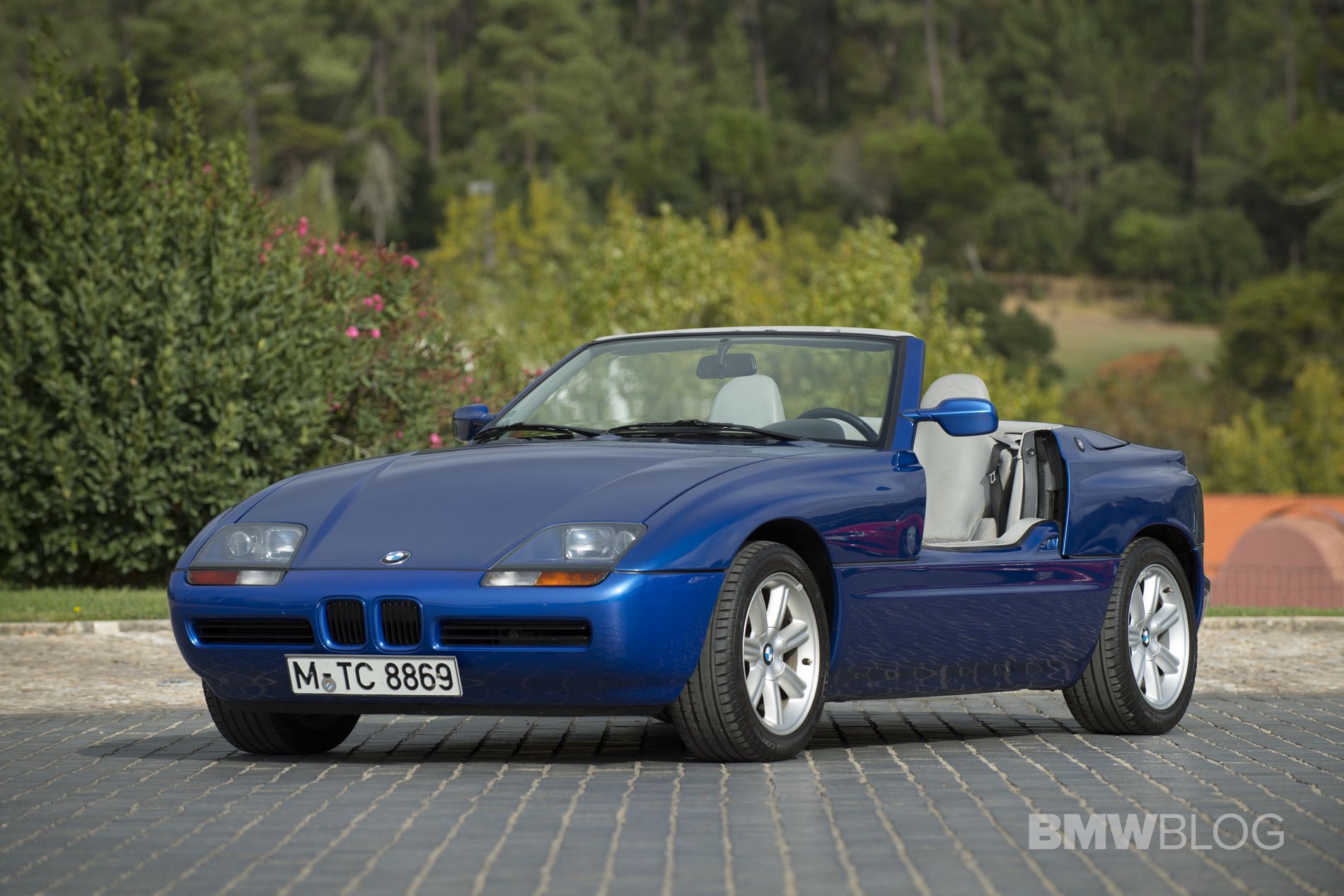
The E52 Z8’s origin story is one of BMW’s better ones. In the early 1990s, Bernd Pischetsrieder and Wolfgang Reitzle drove a classic BMW 507 and asked, not entirely seriously, why BMW didn’t have something like it anymore. Chris Bangle, then head of design, heard about the conversation and started an unofficial skunkworks project. Henrik Fisker, the Danish designer who would later style the Aston Martin DB9, volunteered to lead it and gave up his summer holiday to draw what became the Z07 concept, shown at the Tokyo Motor Show in October 1997.
Fisker’s stated goal was not to copy the 507 but to ask what it would look like if it had never gone out of production and had simply evolved. The result has the 507’s long hood, its short rear overhang, its kidney grilles — wider and more cylindrical in the Z8 — and its chrome side vents behind the front wheels. Set the two cars side by side and the bloodline is immediately obvious. What’s remarkable is that both designs work. The 507 is sublime. The Z8, 40-plus years later, is also sublime. Very few design exercises aimed at heritage come out that well.

The Z8 lost the Z07 concept’s double-bubble headrest fairing between show and production — a small loss — but kept nearly everything else. The aluminum spaceframe chassis, the push-button door handles, the exterior-mounted door mirrors integrated into the body in a way that doesn’t look bolted on. The production car was remarkably faithful to the concept, which almost never happens.
As a piece of design, the Z8 belongs in a very short conversation. The 507. The E31 8 Series, perhaps. The E38 7 Series at a stretch. Cars that looked right from the moment they appeared and still look right today, without nostalgia doing any of the work. The ALPINA version does nothing to spoil any of that — the 20-inch wheels look better, if anything, filling the arches more convincingly than the 18s.
South Of The Alps, Into Occasional Sun

Open, the Roadster V8 is a different car. Not noisier in the way that cheaply built roadsters become unpleasant when the roof goes down — quieter in the sense that the sounds you’re left with are the right ones. Wind at the shoulders. The V8 note rising on upshifts. Tires on the now-smooth Italian tarmac. The chassis does not flex or shake in any way that reminds you the roof is missing. ALPINA’s suspension tuning earns its keep here: at speed with the top down on slightly rough road, the Roadster V8 does not feel like it’s working hard to stay together. It feels settled. Mature. GT rather than sports car, which was always the intention.
Lake Como arrived in the late afternoon between showers, the water grey-green and perfectly still. The Roadster V8 fit the setting embarrassingly well. It is not a modest car — the proportions and the sound make sure of that — but it is not a loud or aggressive one either. It attracts attention the way well-dressed people attract attention: without demanding it. And fun fact, as we parked the car in front of the Hilton Como, Paris Brosnan, the son of “James Bond” happened to be there and was in awe how amazingly looking this ALPINA was.
What The Roadster V8 Is, Exactly

It is a grand tourer. A cruiser. ALPINA’s own word for what they were building. Not a sports car pretending to be luxurious, and not a luxury car pretending to have sporting intent. A car designed to cover 600 kilometers in a day and leave the driver feeling better than when they started.
The automatic transmission was controversial at the time — ALPINA’s Roadster V8 was the first ALPINA model to offer less power than the BMW it was based on, and the first American-market ALPINA product, with 450 of 555 examples going to US buyers who presumably welcomed the automatic. That trade-off makes complete sense once you’ve used the Switch-Tronic buttons for a few hours on a long drive.
The car is also simply fun to drive quickly. Small by modern standards — 173.2 inches long, about 72 inches wide — it fits Italian roads well and changes direction with the kind of willing compliance that heavier GT cars can’t manage. Not a scalpel. A very good kitchen knife: precise enough for careful work, confidence-inspiring enough that you’ll actually use it.
By the time I parked it in Como, I had covered roughly 300 kilometers in the ALPINA since Bolzano, and felt no particular desire to stop driving. That is the highest compliment I can pay any long-distance car. It is also the entire point of the ALPINA Roadster V8.