Everyone knows that BMW prides itself on being the “ultimate driving machine.” At the same time, it also doesn’t want to be left behind in self-driving tech. It views the shift as a marathon rather than a sprint, avoiding a rush to bring new features to market. Safety is paramount for the Munich-based luxury automaker. That is why it won’t hastily launch new tech just to beat rival brands to the punch.
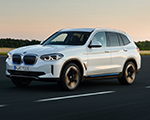
In an interview with Australian magazine CarExpert, the iX3’s advanced driver assistance systems (ADAS) engineer emphasized that safety comes first. Falk Schubert assured customers that BMW will never compromise on safety to sell a feature a rival brand might not yet offer. The company remains cautious about introducing new technologies, preferring gradual evolution over pushing out systems that aren’t fully mature:
“We want to be safe. Because the thing is, if you go too easy on features and then have one critical accident, that is not something that BMW wants and stands for. So, we really mean this by safety first, not to be overly cautious, but because it’s the design principle.”
Schubert explained that the company is currently focused on the Highway/Motorway Assistant function. In the new iX3, it enables hands-free driving at speeds of up to 81 mph (130 km/h). You’ll still have to keep an eye on the road ahead and be prepared to intervene to avoid potential hazards. Automatic lane changes can be triggered by looking into the side mirror, but only when the system suggests a lane change.
The iX3 also features a City Assistant that detects traffic lights and automatically stops at a red light. When the light turns green, the electric SUV sets off again, but only if the camera below the rearview mirror can confirm you’re paying attention. If you’re distracted, the “NA5” will remain stationary. As Schubert emphasized, it’s all about making safety the absolute priority.
It’s worth noting that the new Highway and City Assistants will initially be rolled out in select markets: Germany, Austria, Italy, France, Belgium, the Netherlands, Luxembourg, Switzerland, and Liechtenstein. The United States is expected to have the tech available at launch next summer. Availability will expand later in the model’s life cycle, which reportedly runs until late 2034.
Source: CarExpert